Design Your Life Platform (DartWorld)
A spatial and reflective system for understanding one’s evolving identity
Project Lead | Career Desing Lab at Dartmouth Center for Career Design × DALI Lab | Nov 2024 – June 2025
Overview
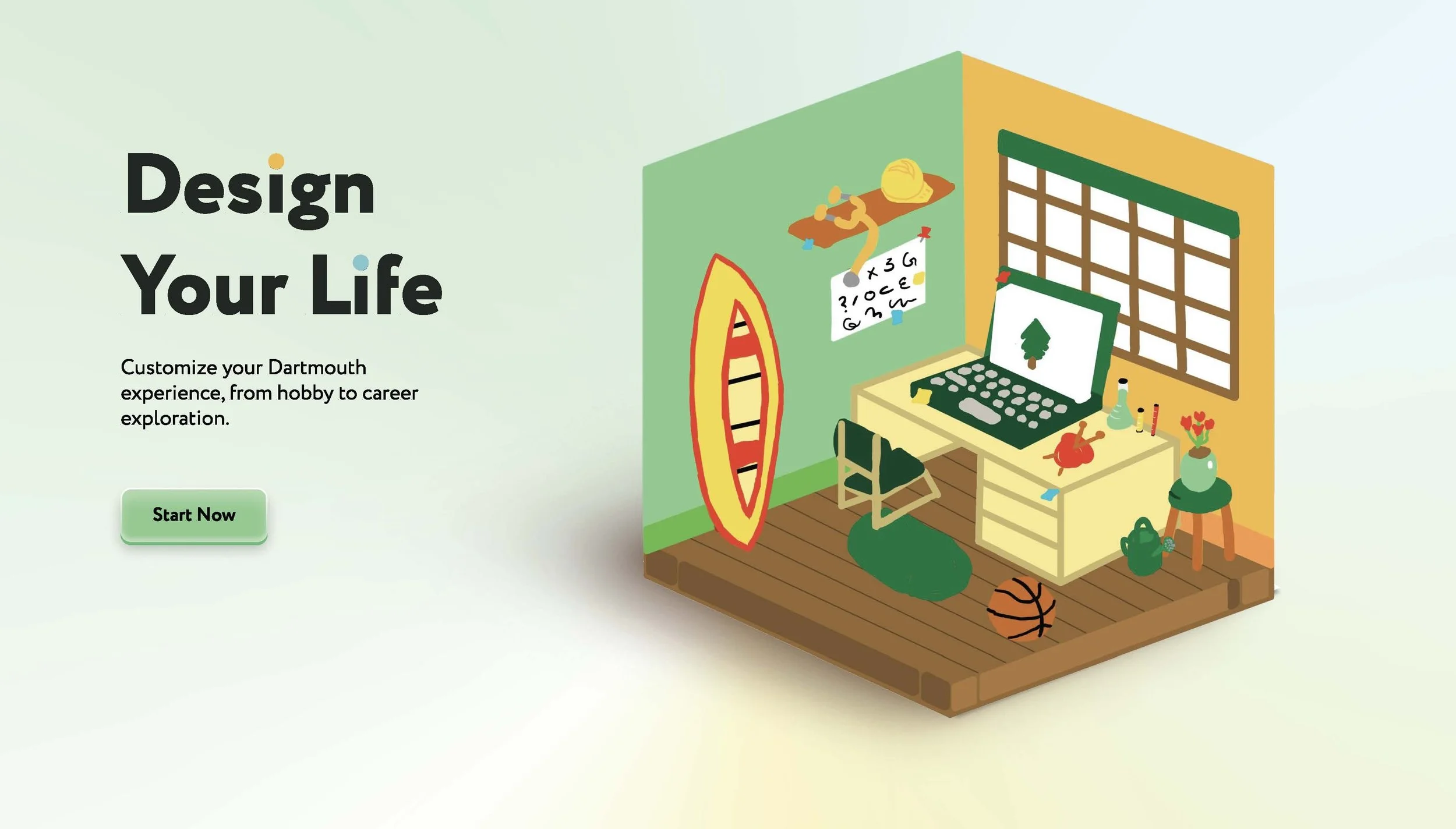
The Design Your Life Platform (DartWorld) is a spatial, narrative-driven system that helps students externalize their thinking, reflect on lived experience, and build a coherent understanding of who they are becoming. Developed in collaboration with Dartmouth’s Digital Applied Learning & Innovation (DALI) Lab, the platform integrates reflective onboarding, a navigable 3D world, and a journaling pinboard into a unified environment for sense-making.
Rather than functioning as a traditional advising resource, DartWorld offers a constructive communication environment—a designed space where reflection becomes embodied, paced, and supported through interaction. Students explore ideas, revisit memories, and construct meaning from accumulated reflections over time.
This project draws on spatial cognition, narrative psychology, and reflective learning. It aligns with emerging work in computational identity representation, multimodal communication, and the design of environments that support clarity, agency, and trust.
Case Study: DartWorld — A Spatial Platform for Reflective Identity Work
Problem
Students often struggle to see how their experiences, values, and questions connect to a coherent sense of identity. Conventional advising and career tools tend to focus on decisions and outcomes, offering little support for slower, deeper reflection. We wanted to create a contemplative environment that allows students to explore their inner landscape with less pressure, more curiosity, and a stronger sense of agency.
Approach
Working with the DALI Lab, we used iterative prototyping and insights from spatial cognition and reflective learning. We designed a low-fidelity 3D world to encourage calm exploration, built an onboarding flow to surface guiding motivations, and created a journaling pinboard where reflections accumulate visually. Each design iteration focused on two questions: Does this environment help students think more clearly? and Does it support reflection that leads to insight rather than overwhelm?
Prototype / Outcome
The final prototype includes three interlocking components:
a 3D environment that slows pacing and reduces cognitive pressure
guided reflective prompts that help students name experiences and values
a pinboard where thoughts and insights become visible over time
Together, these elements create a reflective space where students can return, notice changes, and gradually construct a more coherent personal narrative.
Impact
Early testing indicated that the spatial format helped students reflect more deeply than in traditional text-based tools. Many described DartWorld as “a place to think,” noting that the combination of movement, journaling, and visual memory made it easier to process their experiences. These insights now inform my broader research into how environment, narrative, and dialogue can support identity development and reflective decision-making.
Student Reflections
Beneath These Comments
Beneath these comments was a shared experience:
Why This Work Matters
Students don’t need more information—they need environments that help them make meaning.
Students often struggle not because they lack experiences, but because they lack the frameworks and environments needed to interpret those experiences. Dartmouth’s Spring 2025 design research showed that traditional career development platforms were consistently underutilized due to limited personalization, low engagement, and minimal reflective scaffolding.
DartWorld addresses these gaps by providing a spatial, reflective, and narrative ecosystem. It creates conditions where students can pause, step back, and see meaningful patterns emerging across their experiences—laying the groundwork for coherent identity formation and constructive communication.
Identity as a Spatial–Narrative System
In DartWorld, identity is not understood as a fixed list of traits or goals, but as a spatial–narrative system—a dynamic constellation of experiences, motivations, values, and interests that becomes meaningful only when it is externalized, arranged, and revisited over time.
By shifting identity from something internal and ambiguous to something visible, contextualized, and revisitable, DartWorld fosters deeper self-understanding and clearer narrative formation. The environment allows students to see how their experiences connect, evolve, and take shape across time—revealing a coherent story that might otherwise remain invisible.
Articulate their lived experiences through reflective onboarding
Ground their thinking within a spatial environment
Accumulate insight through ongoing journal entries
Notice emerging themes through the pinboard’s visual memory
Process Overview
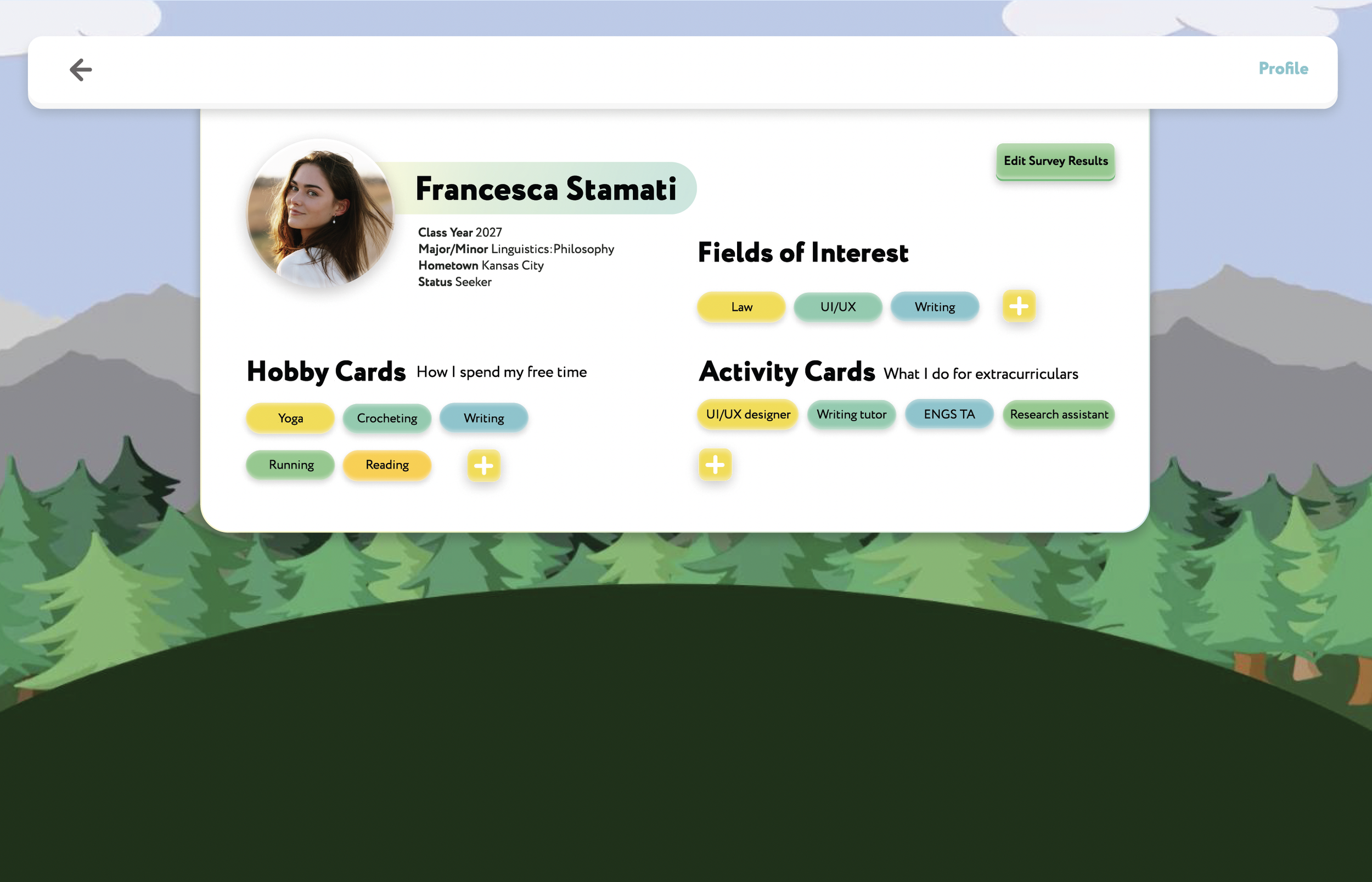
Students begin by identifying their values, interests, and current questions. The goal in this phase is not decision-making, but orientation—helping learners name where they are and what feels unresolved. This forms the baseline for all later mapping and dialogue work.
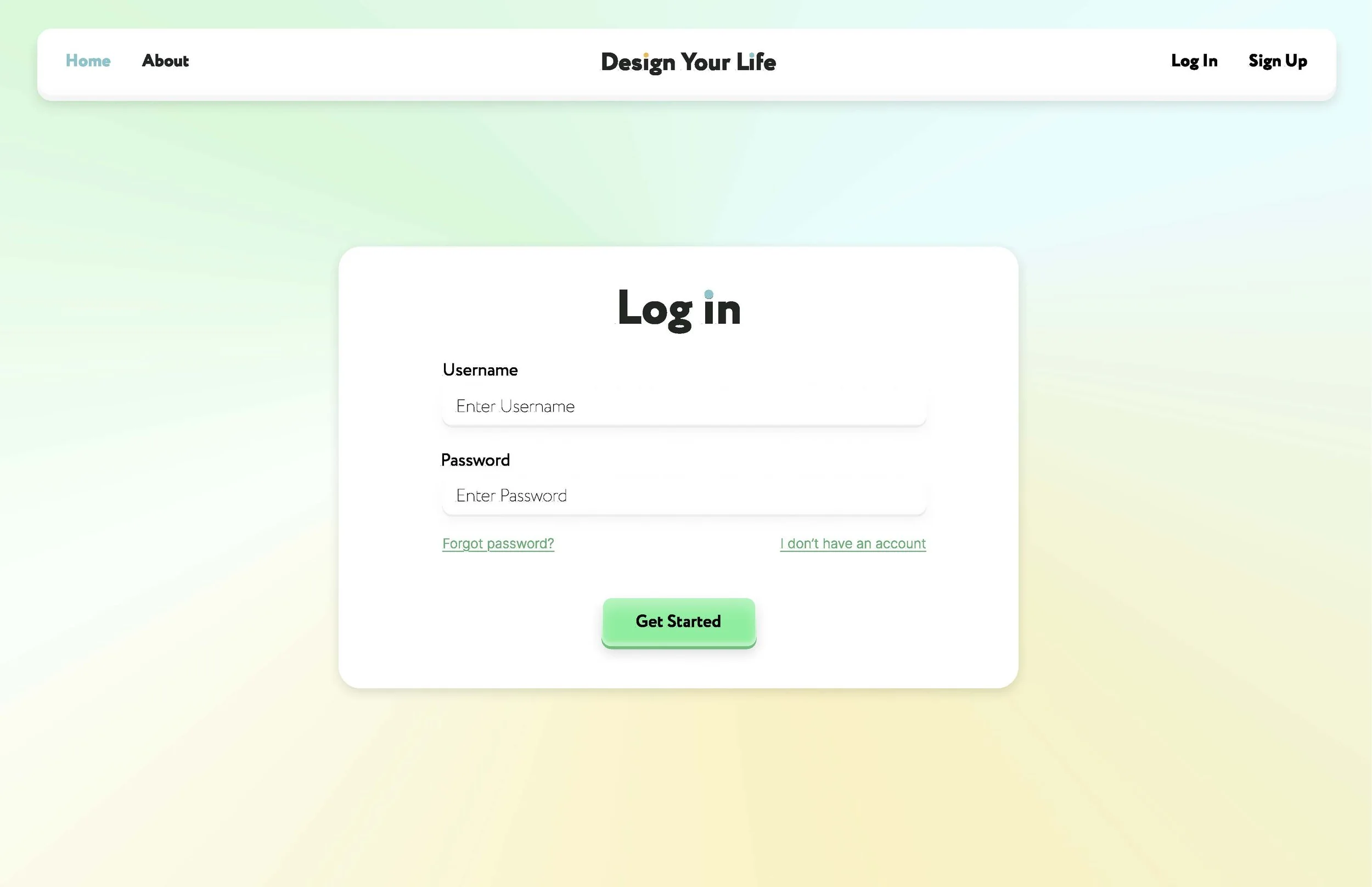
Phase 1: Reflective Onboarding
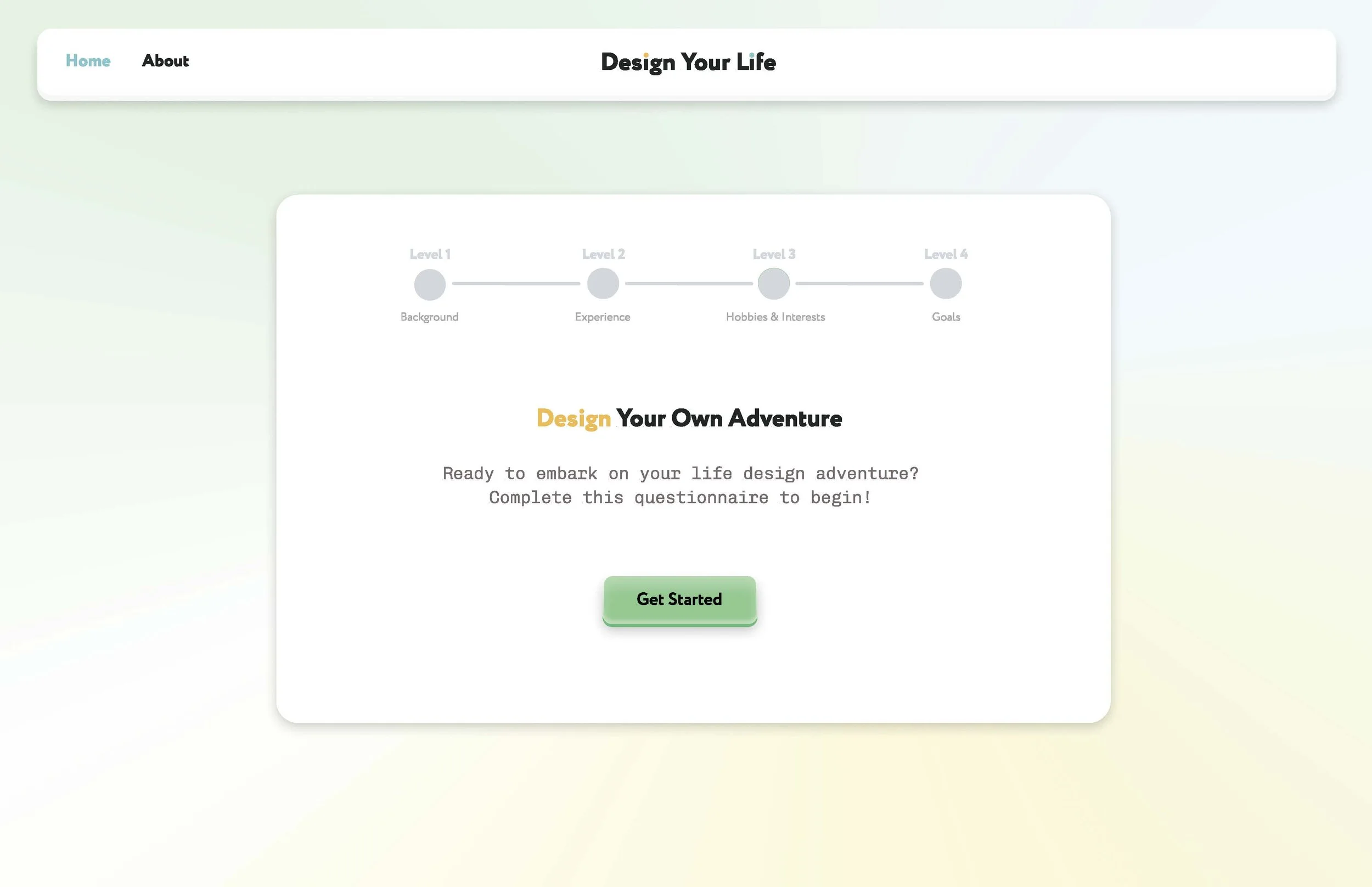
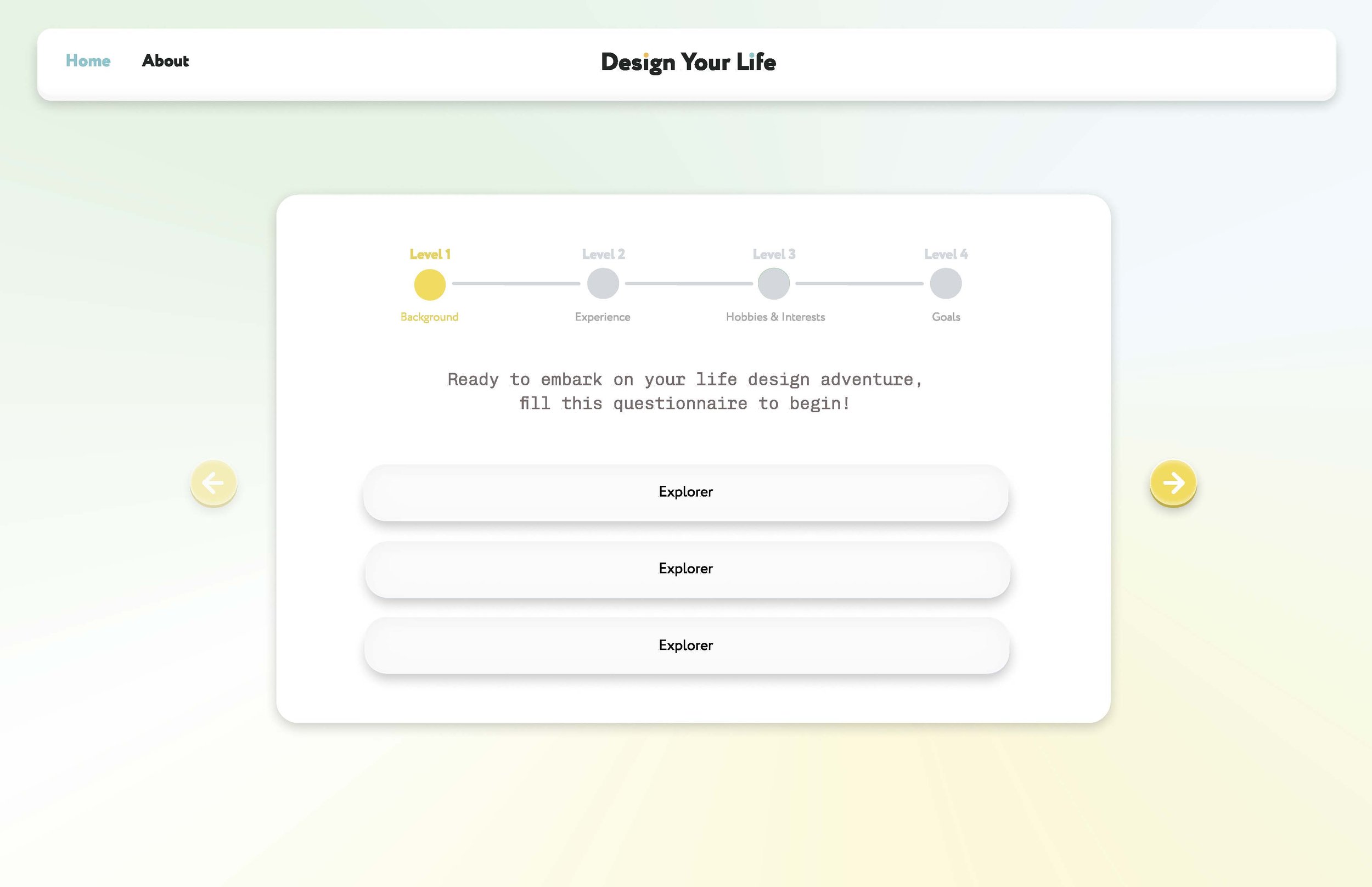
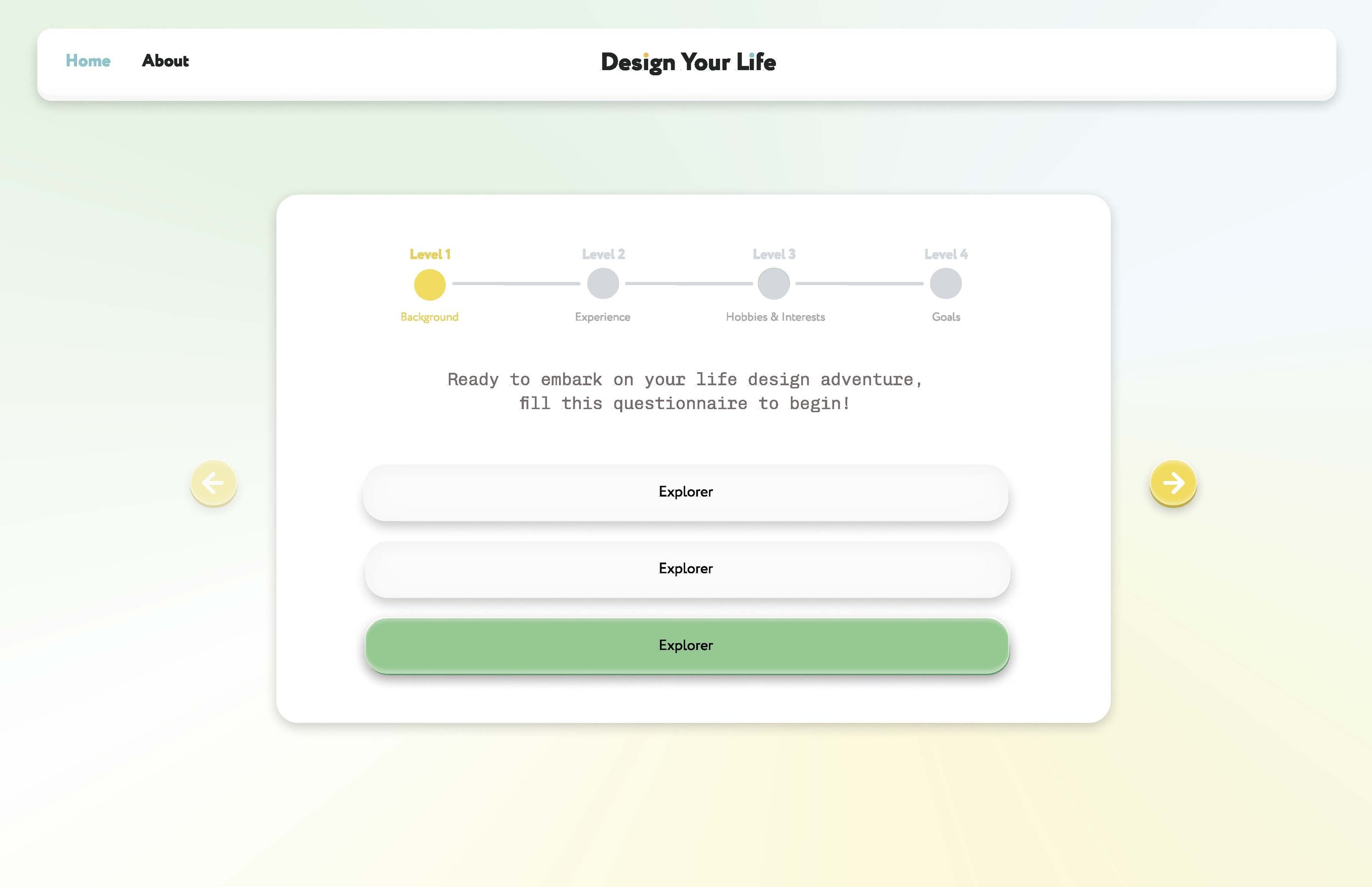
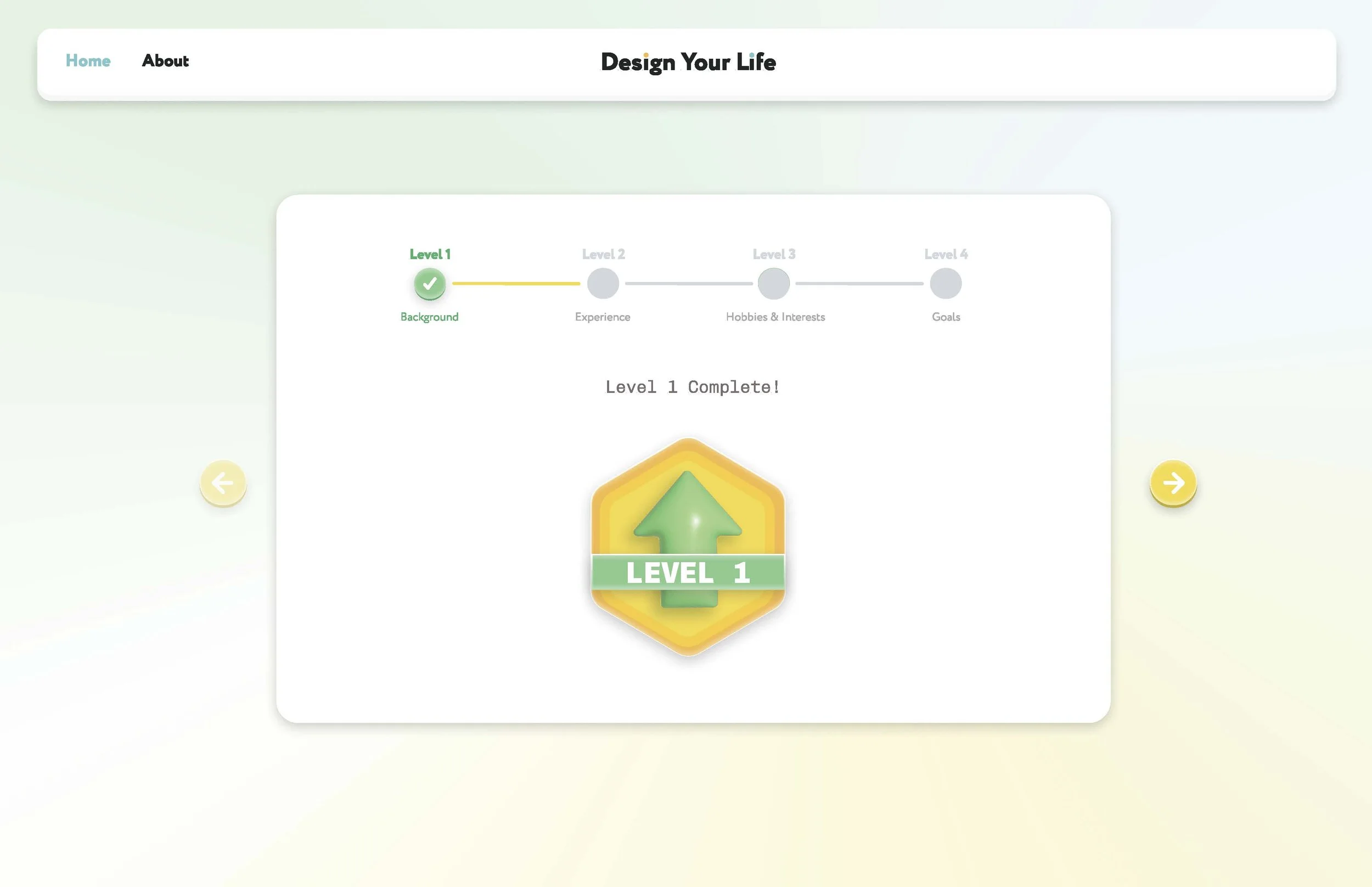
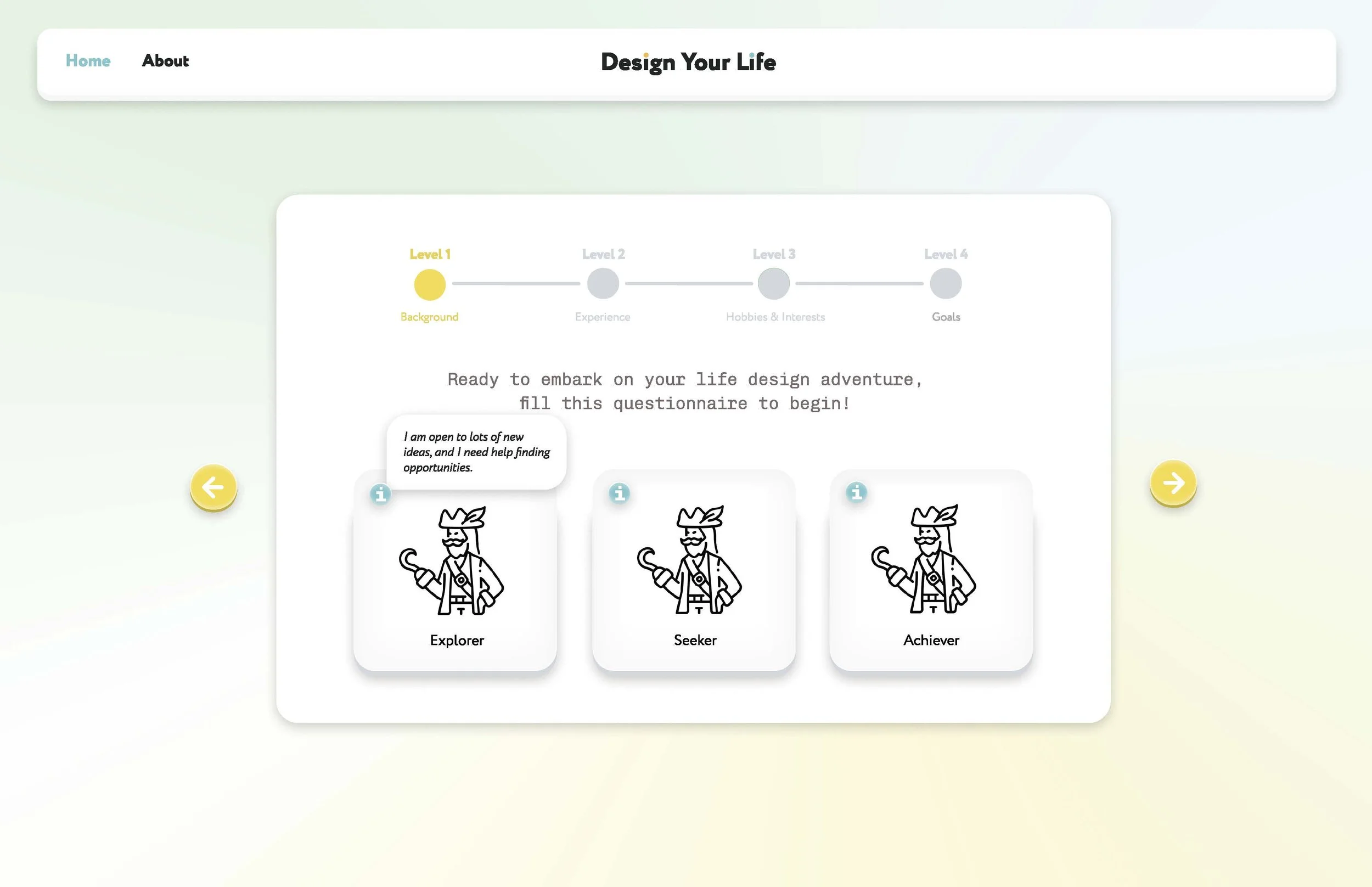
Students begin with a multi-step onboarding sequence that moves from concrete personal details toward early identity themes. This structured progression prompts them to reflect on:
background information
past experiences
hobbies and interests
short- and long-term goals
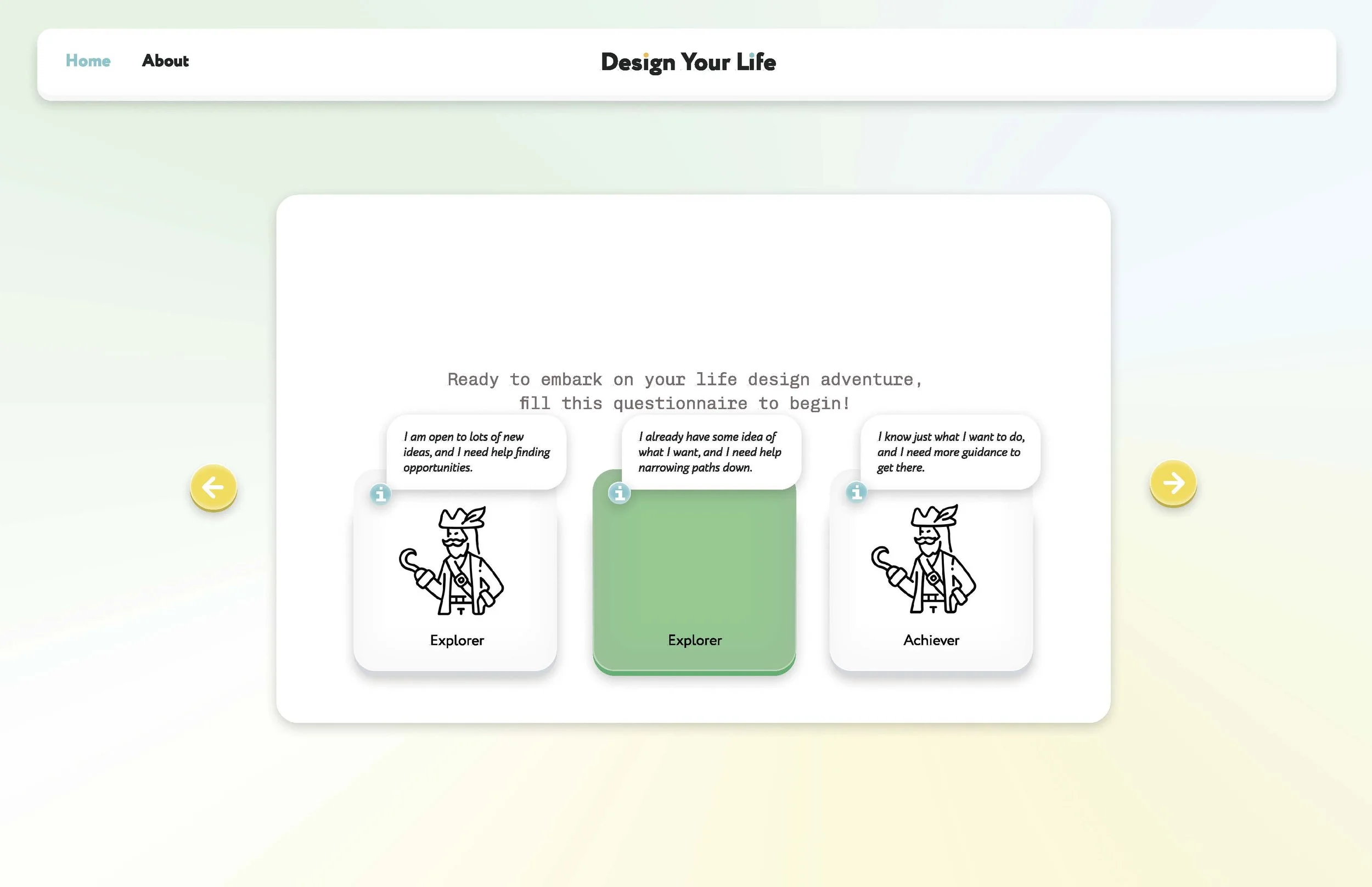
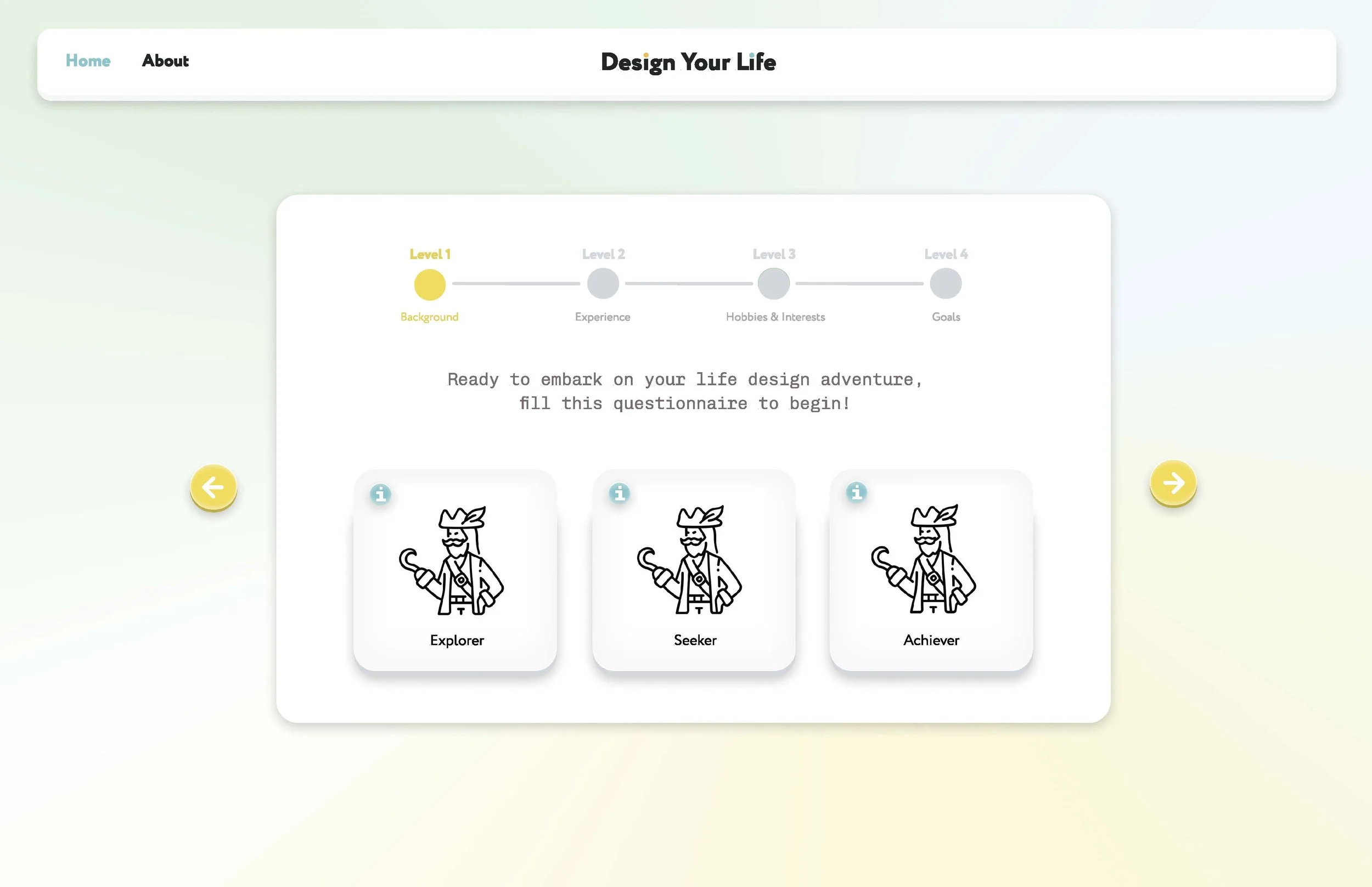
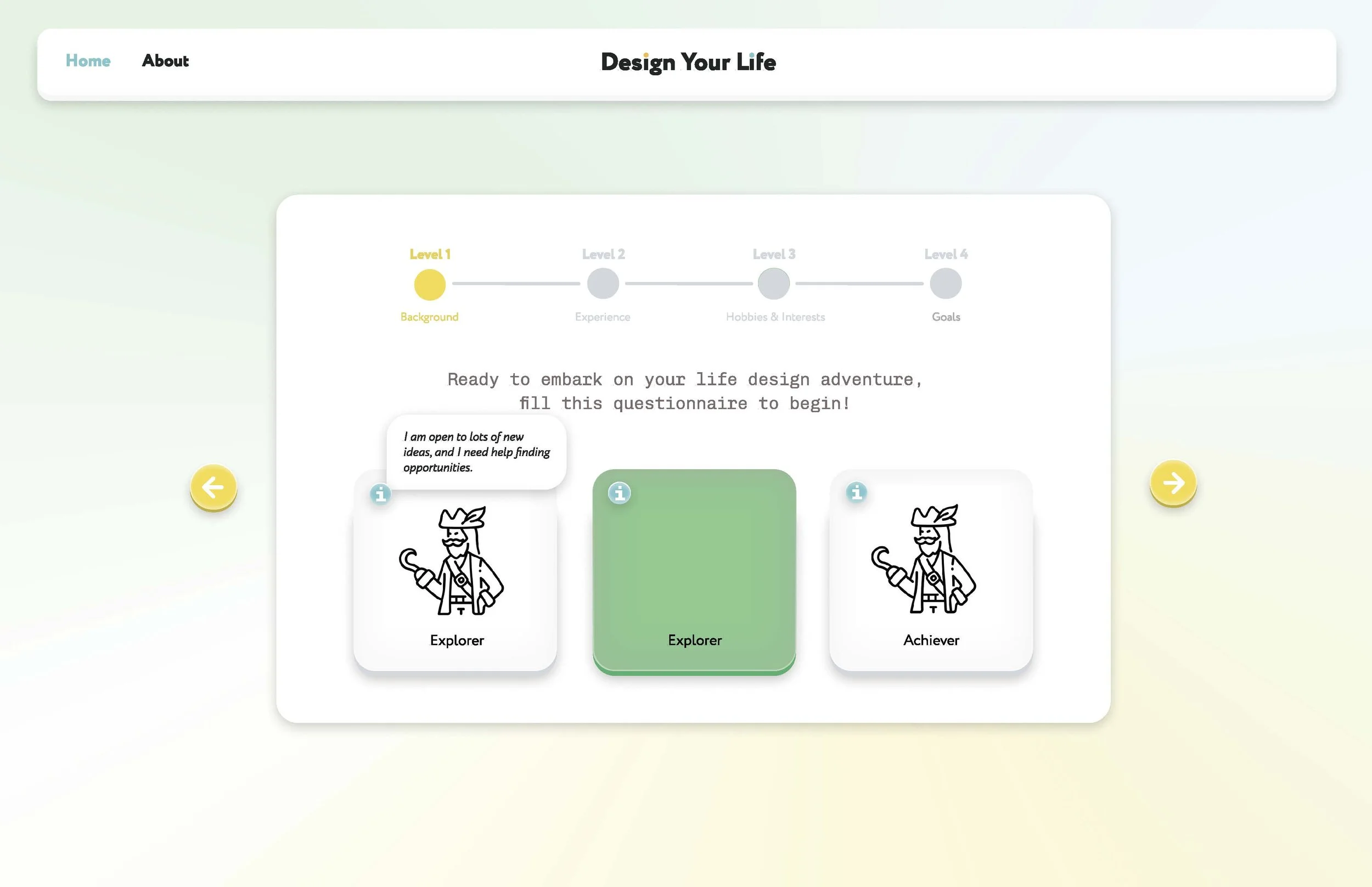
The onboarding also introduces three reflective archetypes—Explorer, Seeker, and Achiever—which act as gentle cognitive frames. These archetypes give students a language for how they approach reflection and help set the tone for deeper self-understanding inside the platform.
Phase 2: Spatial Exploration
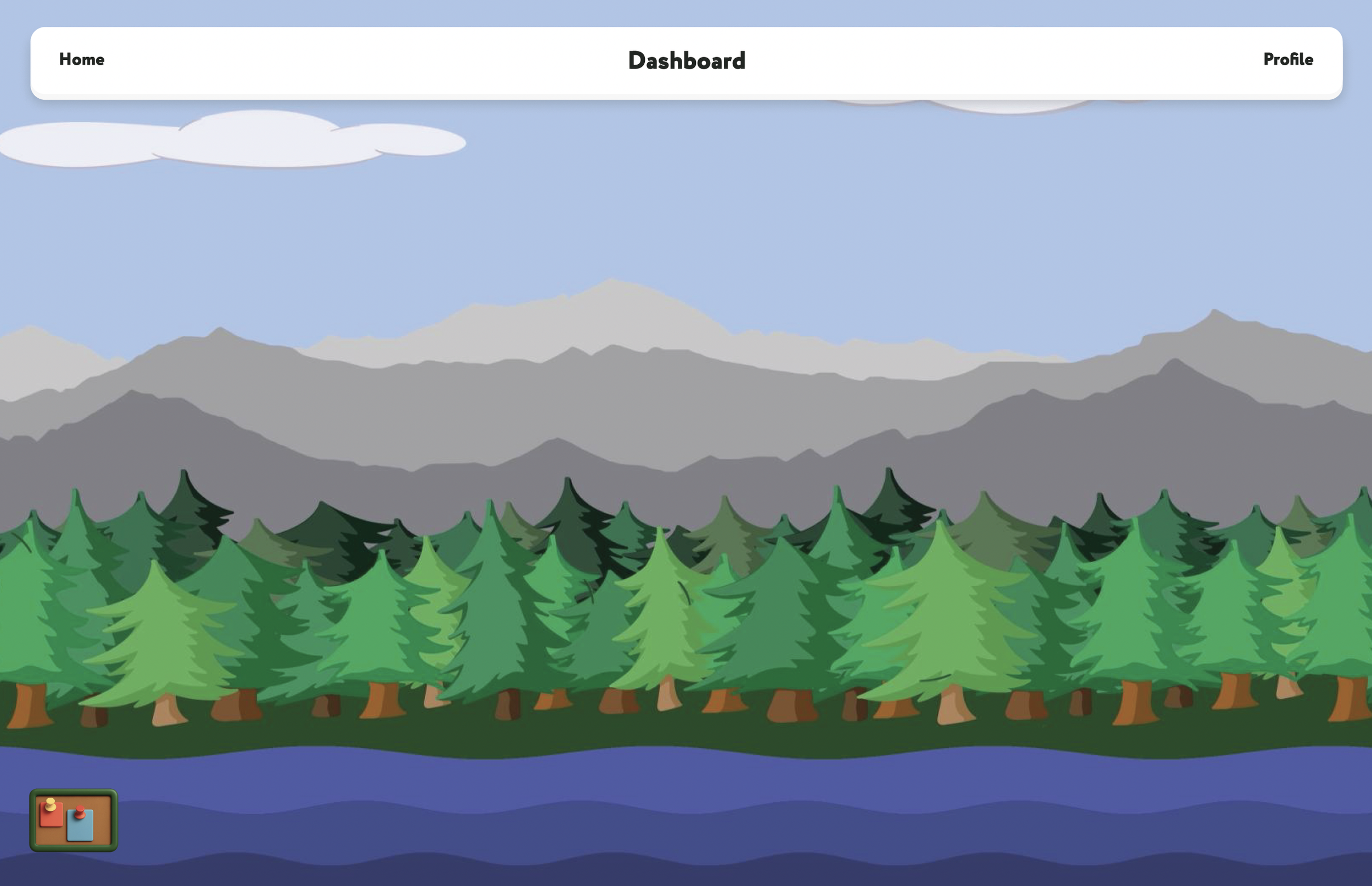
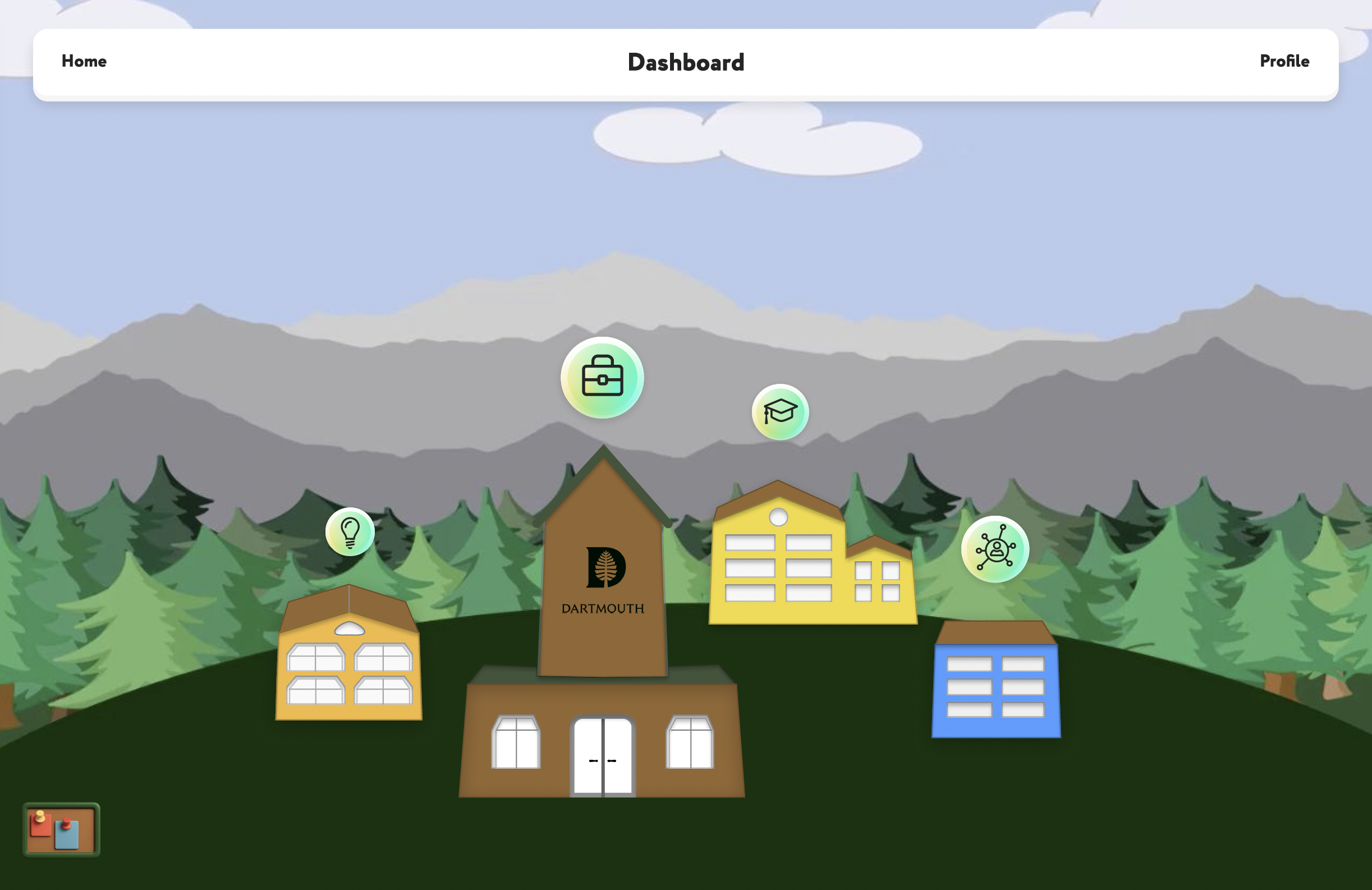
After onboarding, students enter DartWorld, a calm, low-poly 3D environment designed to support reflective pacing. The world offers:
a central hub for orientation
three interactive stations representing reflective domains
subtle environmental movement and animations
intentionally slowed navigation
The spatial setting creates cognitive distance and encourages students to step back from immediate concerns. Movement becomes a metaphor for exploration, helping students shift into a reflective mindset.
Phase 3: Journaling & Pinboard Externalization
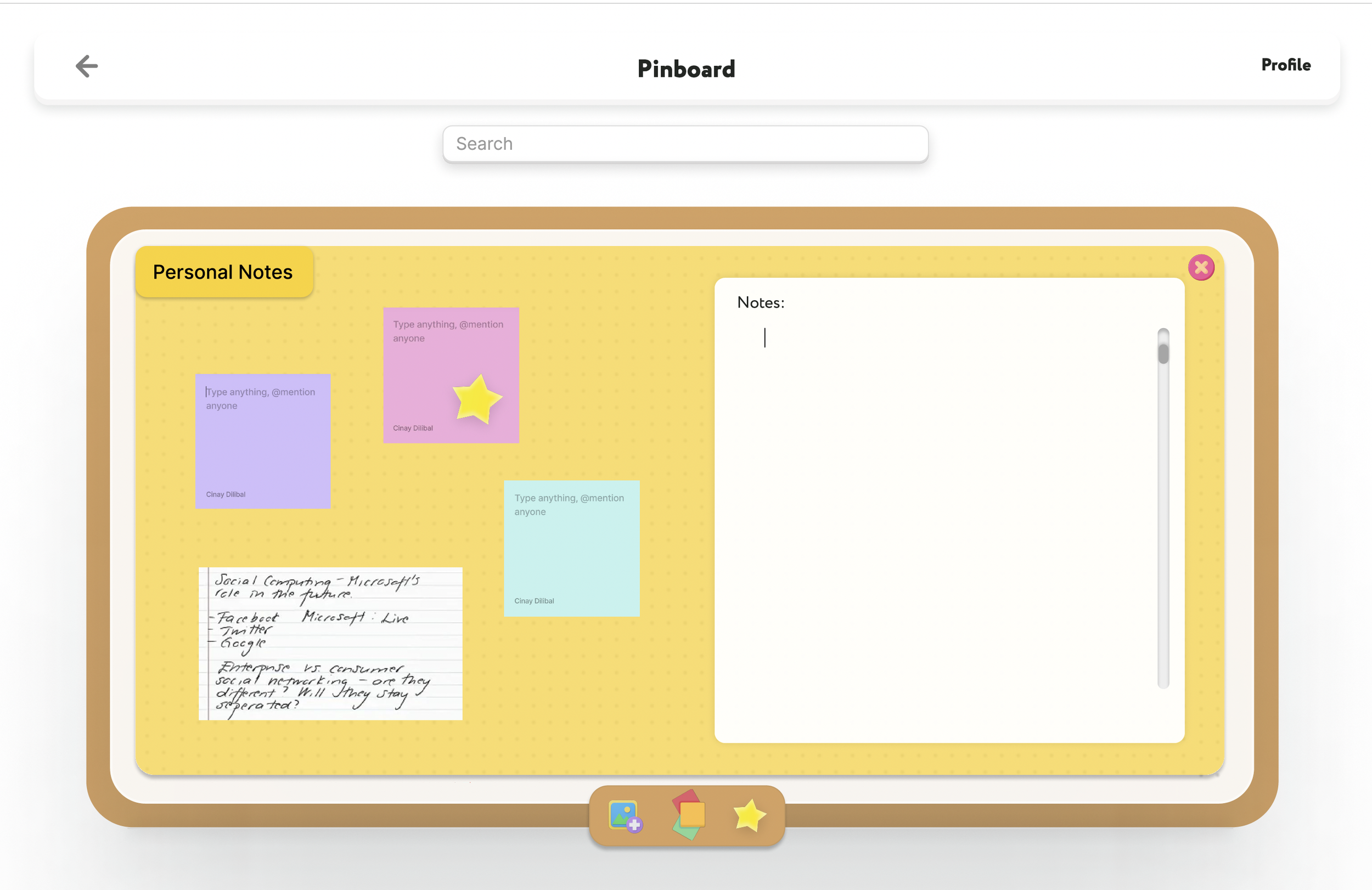
The Scrapbook/Pinboard is the core reflective tool within DartWorld. Students can:
write timestamped journal entries
autosave ongoing reflections
return to earlier notes
trace how their thinking evolves over time
Over repeated use, the pinboard becomes a visible memory system, transforming scattered thoughts into an organized reflective archive. It supports both moment-to-moment expression and longer-term meaning-making.
Phase 4: Pattern Recognition
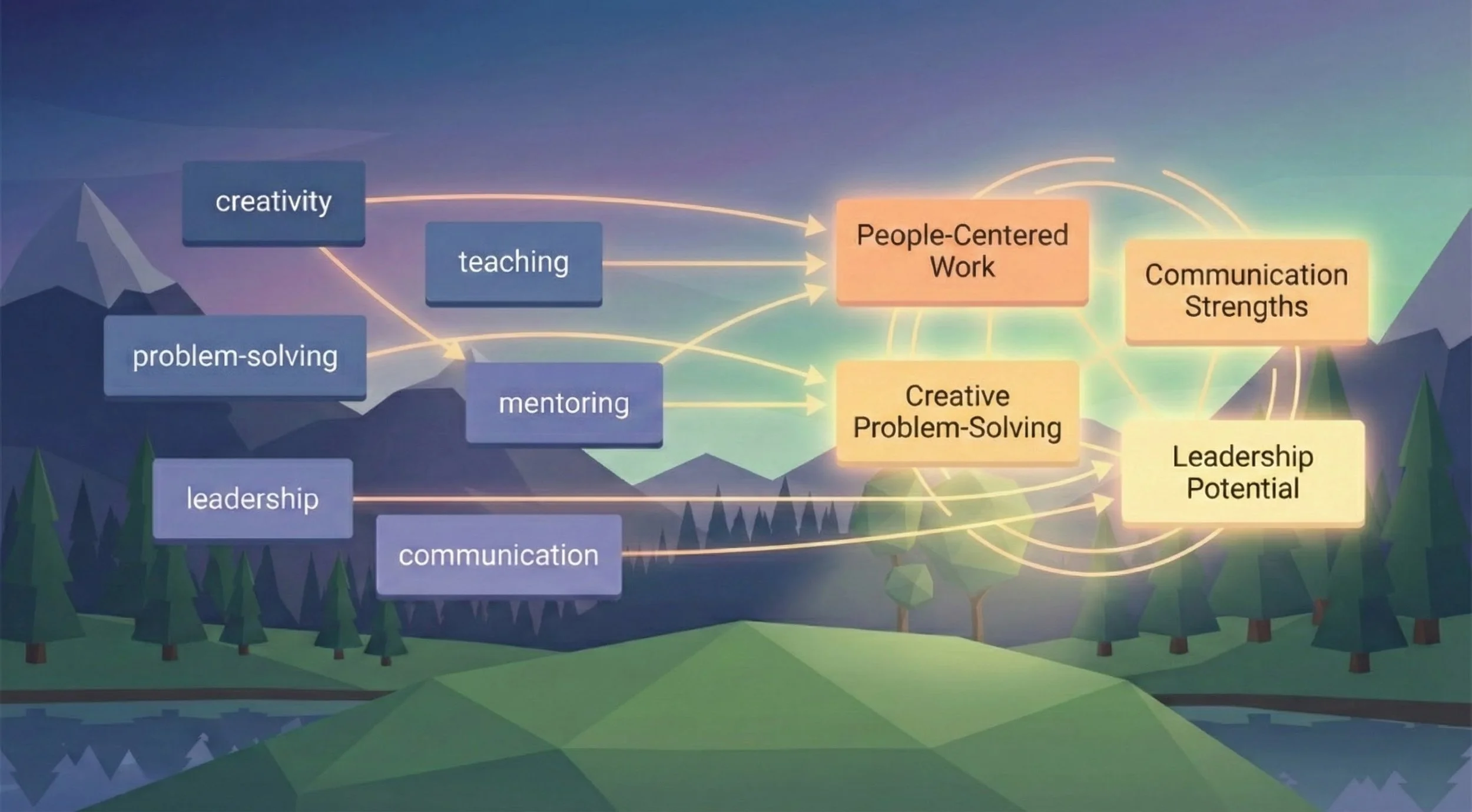
As their reflective archive grows, students begin to notice patterns such as:
recurring motivations
emotional anchors
contradictions or tensions
evolving interests or priorities
This phase marks the shift from isolated reflection to interpretive insight. Students start connecting experiences across time, revealing themes that are difficult to see in linear or unstructured environments.
Phase 5: Narrative Insight
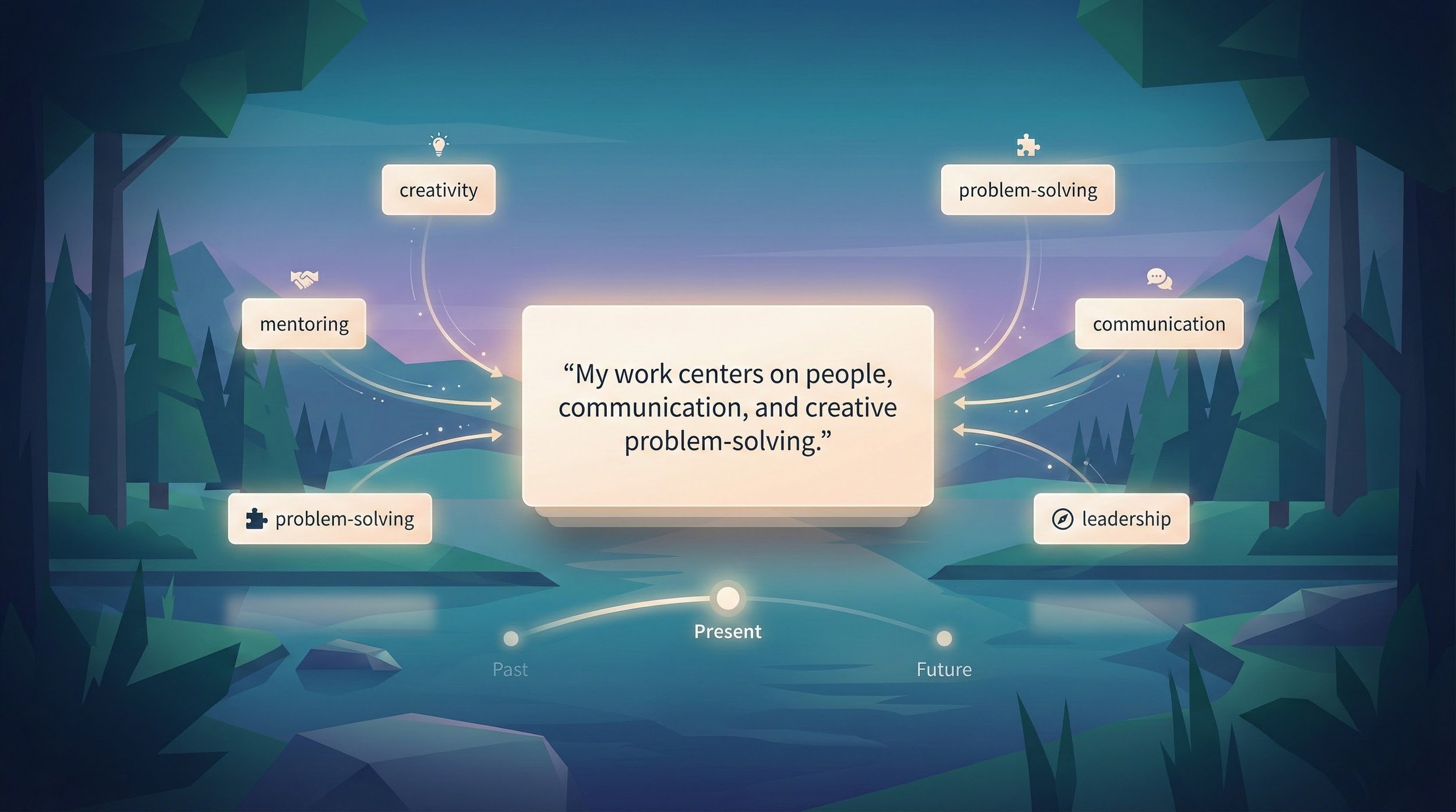
In the final phase, students revisit their reflections and interpret the patterns they’ve surfaced. Through this process, they clarify:
emerging identity themes
underlying motivations
narrative coherence
sense of direction
Insight becomes something students construct, not something handed to them. They leave with a clearer, more grounded understanding of how their past, present, and future connect—forming the foundation of a coherent personal narrative.
Dialogue as a Designed Interaction
Although DartWorld is digital, dialogue sits at the heart of the experience. Reflective prompts woven throughout the environment invite students to pause, interpret, and articulate what they see and feel:
CORE REFLECTIVE QUESTIONS
- What patterns do you notice across your reflections?
- What’s drawing your attention right now?
- What questions keep returning?
- How has your thinking shifted over time?
These prompts function as a form of guided internal dialogue, offering language, structure, and emotional safety. They help students move beyond description toward interpretation—supporting more intentional meaning-making and clearer self-understanding.
“Walking around made reflection feel less intimidating. It helped me see things more clearly.”
What Students Do in DartWorld
Students engage in a blend of physical, cognitive, and narrative activities that help them slow down, externalize their thinking, and build a clearer sense of identity. These activities include:
Design Principles
DartWorld is built on five foundational principles:
Spatial Cognition
People think differently when they inhabit a world rather than scroll a screen.
Cognitive Distancing
A calm, low-pressure environment helps students step outside immediate stress.
Externalization
Reflection becomes visible, trackable, and easier to interpret.
Narrative Accumulation
Meaning emerges over time, not from isolated prompts.
Psychological Safety
A predictable, non-evaluative system lowers vulnerability and deepens insight.
98
Students in the pilot group.
2.3 → 4.2
Increase on a 5-point scale.
90+
Journal entries created.
70+
Distinct identity themes surfaced.
Data Summary & Key Insights
Across a pilot group of 98 students, early use of DartWorld produced clear, measurable gains in reflective clarity and engagement:
Together, these findings demonstrate how the combination of environment, reflection, and narrative scaffolding can meaningfully deepen insight and self-understanding.
Closing Reflection
DartWorld reflects a belief that environments shape thought. When designed with structure, care, and narrative scaffolding, digital spaces can help people understand themselves more truthfully—and articulate their evolving identities with greater clarity and confidence.
This project represents the kind of reflective, meaning-making technology I hope to continue developing: tools that slow us down, help us see ourselves more fully, and make room for insight to emerge.