Career Design Lab: Dialogic Sensemaking & Decision-Making System
A hybrid human–AI framework for reflective identity construction, narrative coherence, and intentional career decision-making
Fuonding Program Manager | Career Design Lab at Dartmouth Center for Career Design
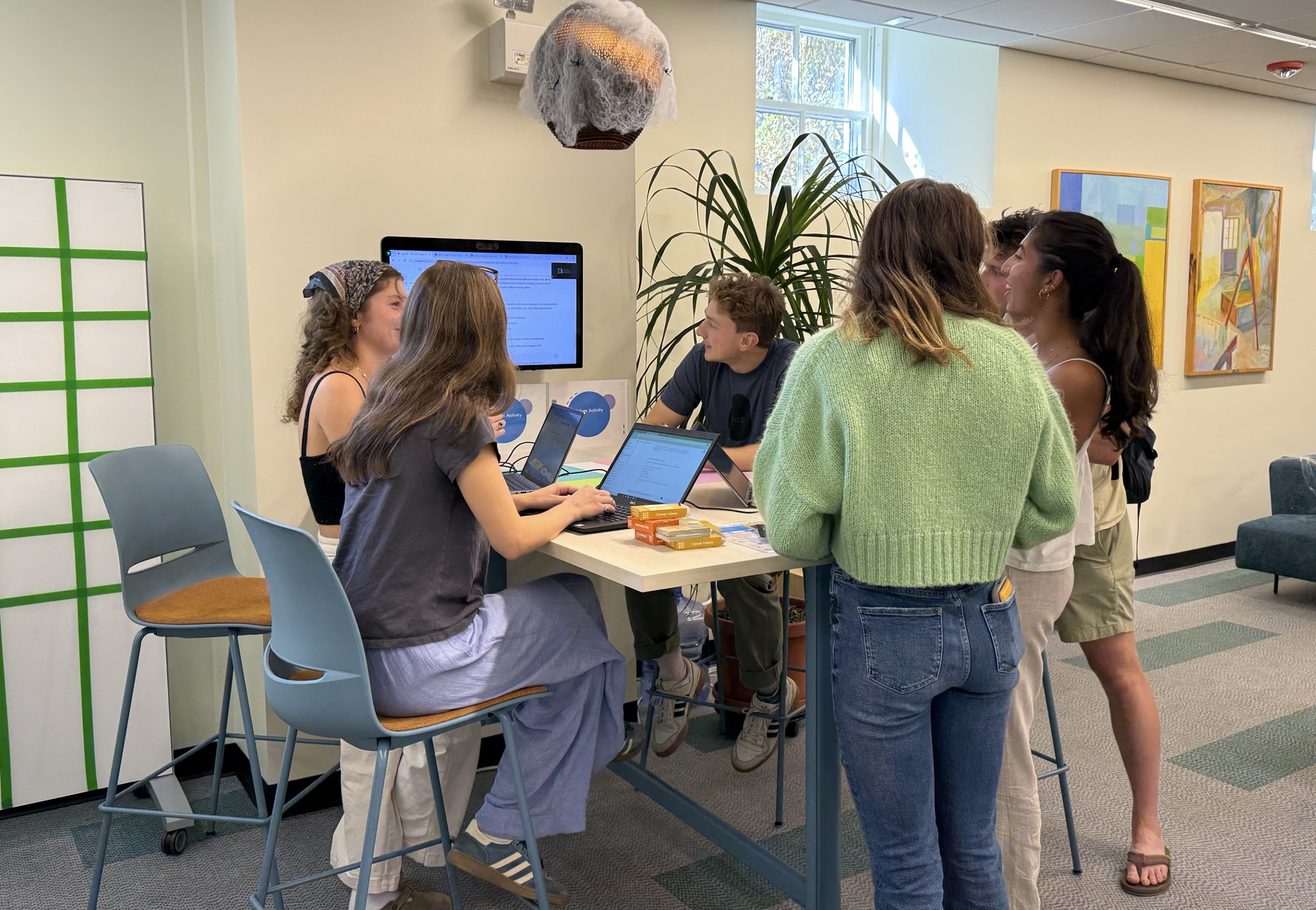
Overview
The Career Design Lab (CDL) is a prototype-driven system for helping students understand who they are becoming and make intentional decisions about their lives. Built as a counter-model to traditional task-oriented career services, the CDL uses structured dialogue, spatial tools, narrative mapping, and reflective frameworks to support identity development and meaning-making. Its newest prototype, the Launch Studio, unifies years of experimental tools into a coherent, guided journey where students discover values and strengths, explore possibilities, and translate insights into actionable next steps.
Case Study: Designing a Meaning-Making System for Student Development
Problem
Most career centers operate through transactional services—résumé editing, interview prep, and employer pipelines. These services are helpful but rarely developmental. Students facing complex identity and life decisions are offered tasks, not systems that help them reflect, integrate, or make sense of their experiences. The existing CDL tools were effective individually but felt fragmented, lacked a shared conceptual map, and offered no unified artifact for holding a student’s identity development over time.
Approach
I approached this as a systems-design problem grounded in reflection, dialogue, and cognitive offloading. Across multiple semesters, I prototyped tactile tools (values cards, strengths decks, energy boards), AI-assisted reflection sequences, and structured decision-making frameworks. Through observation and iteration, I identified patterns in how students made sense of themselves—and used these insights to design the Launch Studio: a 120-minute guided pathway integrating reflective grounding, possibility mapping, and intentional decision-making.
Prototype / Outcome
The Launch Studio organizes CDL’s tools into a three-phase journey:
Discover — tactile labs to surface values, strengths, and energy patterns.
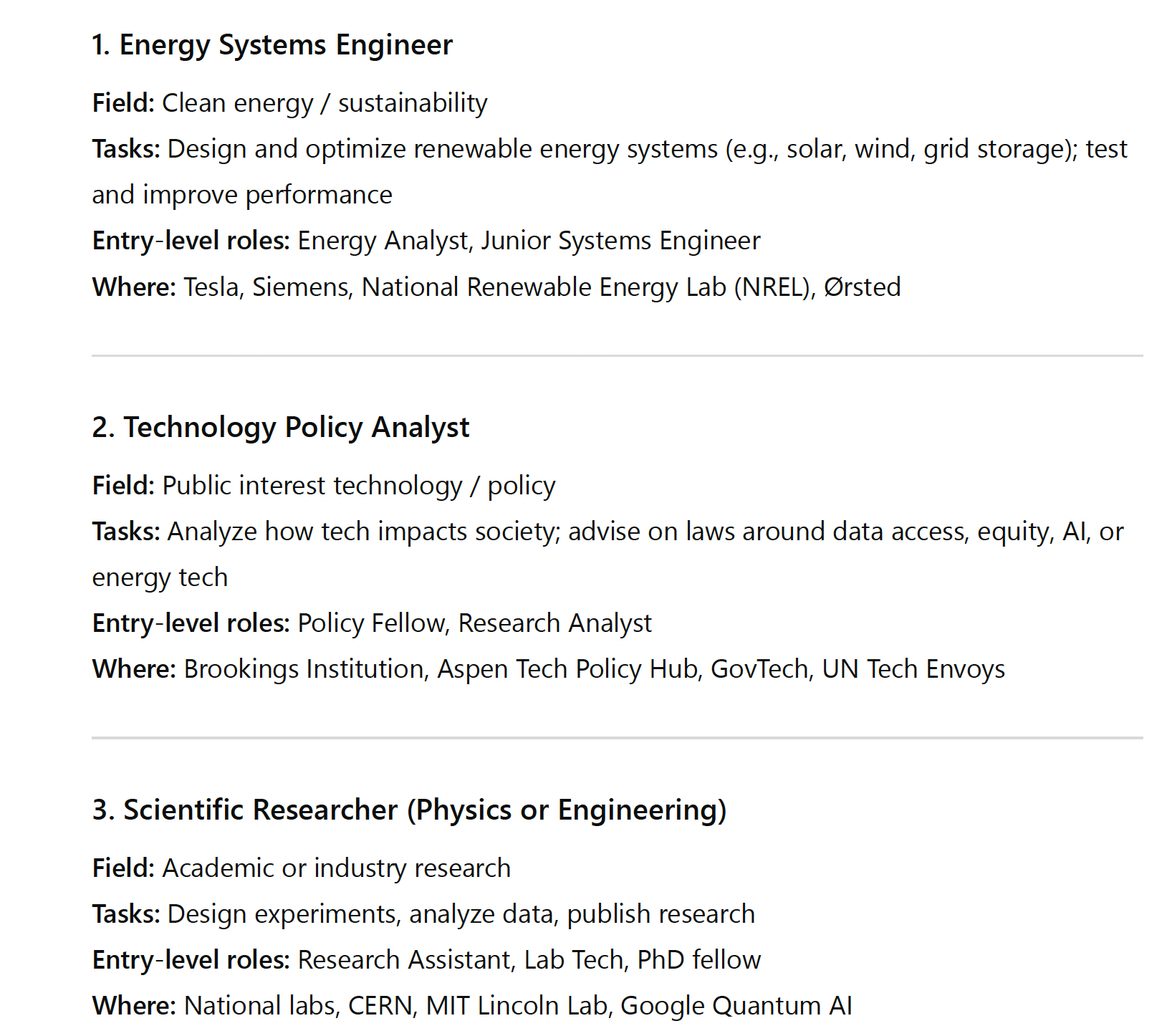
Explore — AI Exploration Generator to map possibilities and identify emerging themes.
Decide & Act — matrices, mind maps, and structured reflection to shape next steps.
The system provides students with clarity, coherence, and a personalized plan—transforming isolated exercises into a single, meaningful narrative of identity and direction.
Impact
The Launch Studio is now the clearest expression of CDL’s purpose: helping students externalize internal experience, recognize patterns, and act with intention. Students report greater clarity, reduced anxiety, and a stronger sense of agency. The system continues to evolve each semester, guided by student behavior, facilitator observation, and iterative design cycles.
What This Is — and What It Isn’t
The Career Design Lab is not a résumé-editing service, a transactional coaching stop, a last-minute checkpoint before graduation, or a simple pipeline connecting students to recruiters. Those functions exist elsewhere on campus, and they were never the purpose of this work.
The CDL is something different.
It is a dialogic, design-driven system—a space where students reflect on their experiences, explore emerging identities, construct coherent narratives, and make intentional decisions about their futures. It offers the structure, tools, and facilitation necessary for students to understand who they are becoming and to act from that understanding with clarity and agency.
Not résumé editing.
Not transactional coaching.
Not a last-minute checkpoint.
Not a pipeline to recruiters.
A dialogic system.
A design-driven approach.
A space for reflection and exploration.
A structure for narrative and intentional decisions.
My Role: Founding Program Manager & System Prototyper
I built the Career Design Lab from the ground up—not as a service unit but as a living system. My role blends system design, identity research, reflective facilitation, and the development of spatial and computational tools.
Each semester functions as a design cycle: observing how students interact with the system, synthesizing patterns, refining structures, and re-testing them with the next cohort. Every tool within the Lab—tactile, dialogic, and AI-assisted—has been created, tested, and iterated through this ongoing process.
The CDL System Today
The Career Design Lab functions as a reflective, tactile–cognitive framework for student meaning-making. It follows a four-phase structure—Reflect → Explore → Decide → Act—that guides students from understanding their experiences to taking intentional steps toward their future.
This system integrates structured dialogue, spatial tools, narrative mapping, and decision-making frameworks. It offers both a practical pathway for students and a conceptual scaffold for exploring how identity, possibility, and choice unfold within the career development process.
Exploration Lab
Values cards
Strengths decks
Skills grids
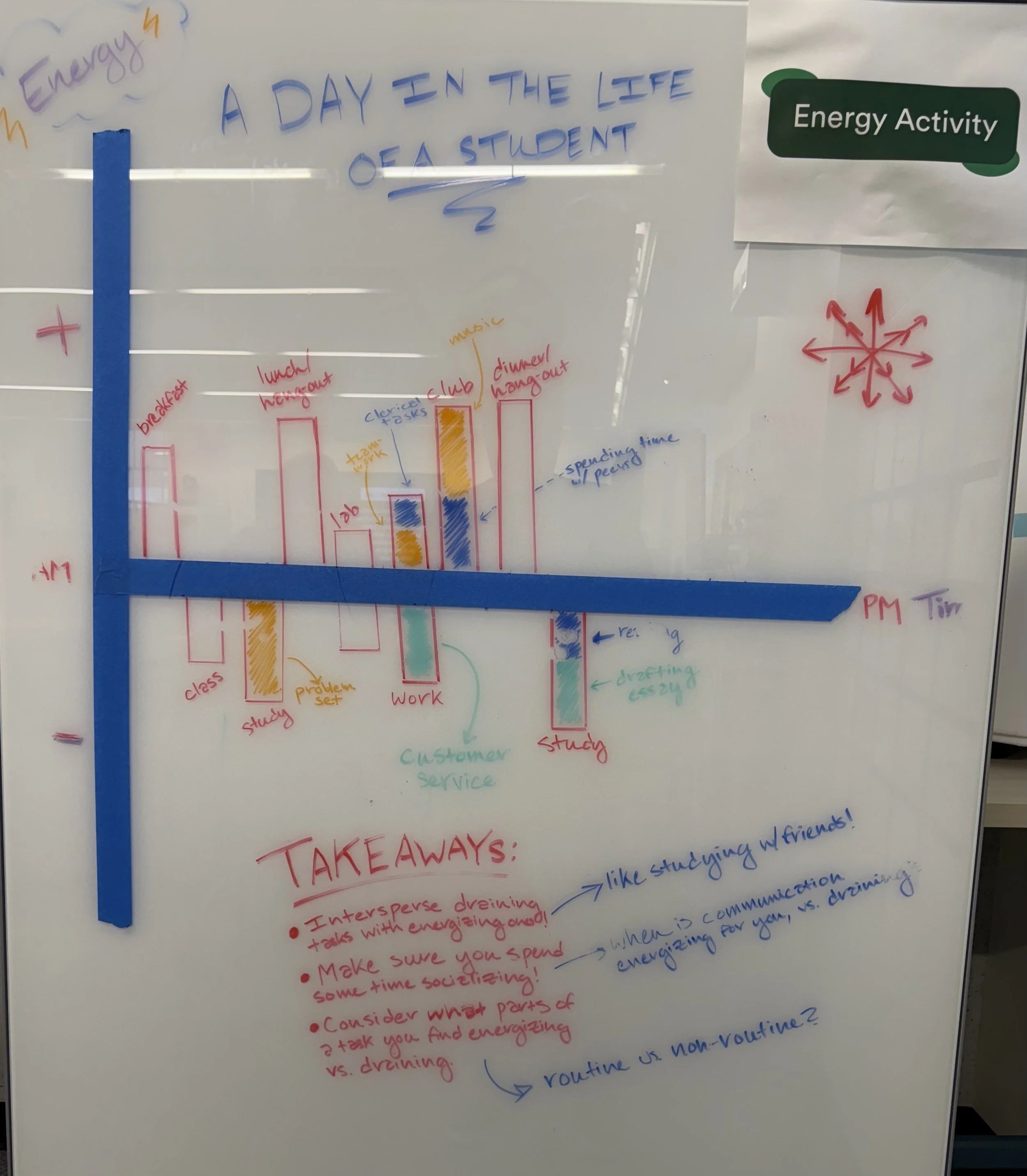
Energy mapping boards
Decision Lab
Decision matrix
Mind mapping
Pathway comparison
Next-step sketching
1. Tactile Labs: Physical Sensemaking Interfaces
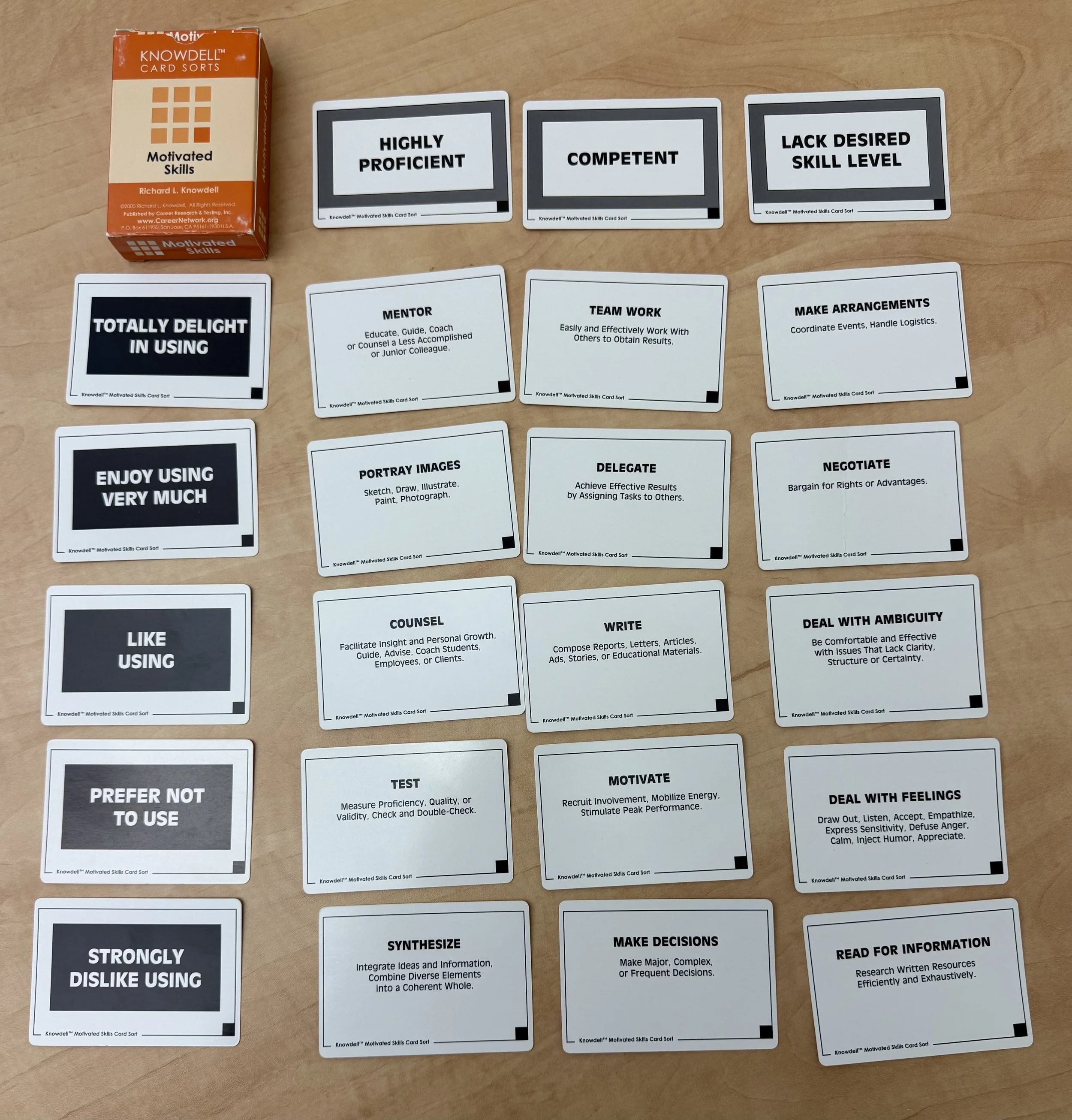
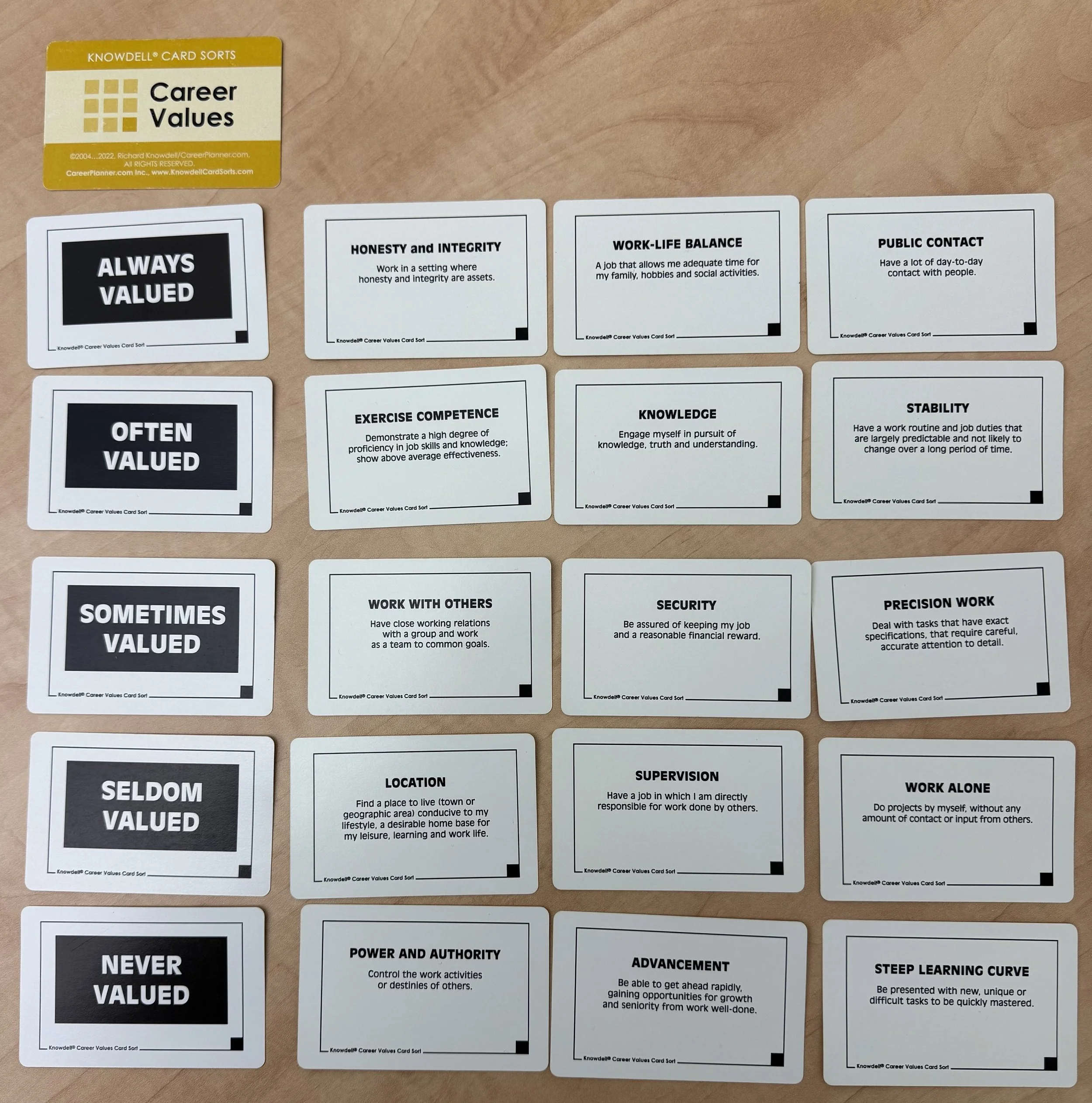
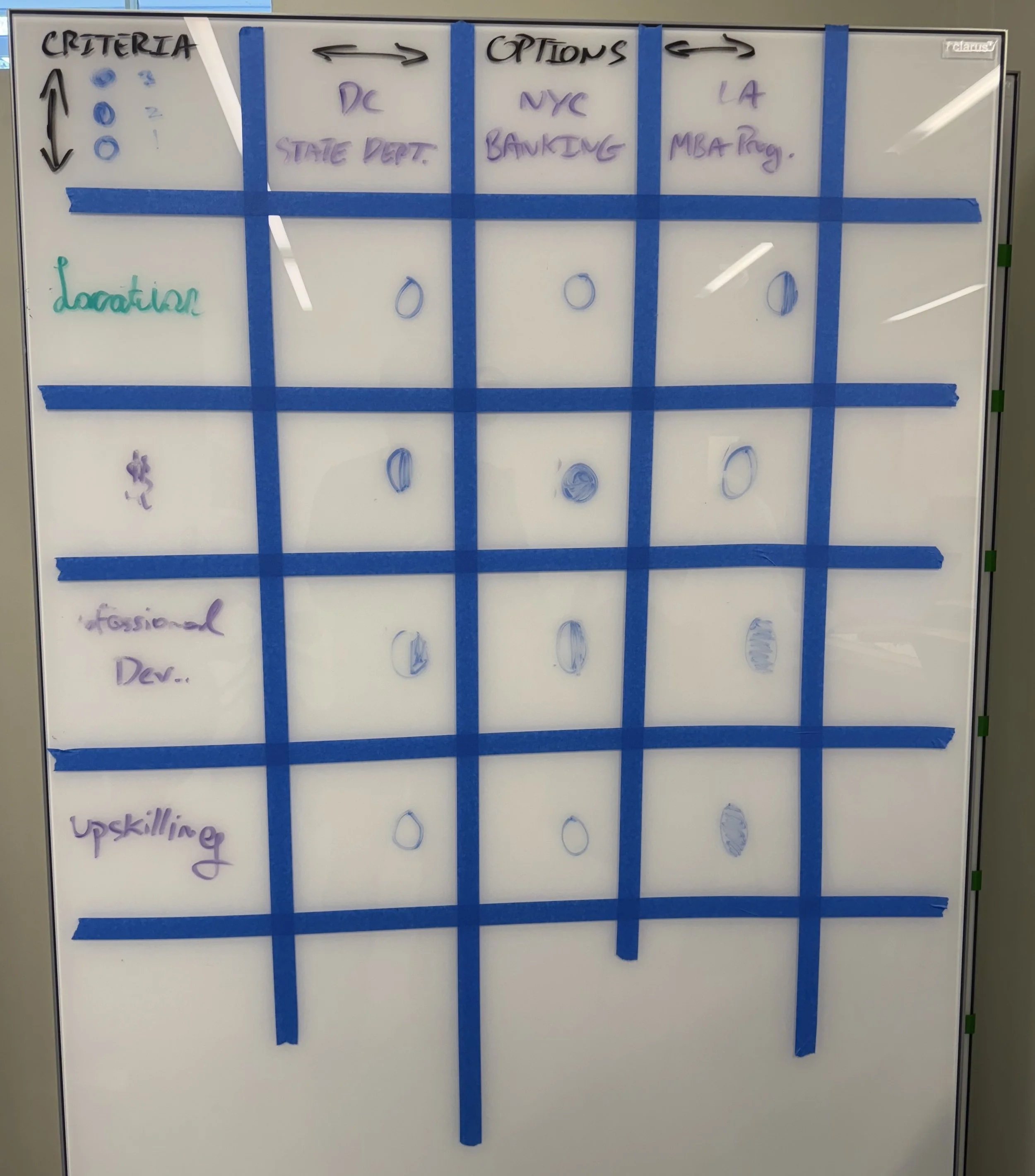
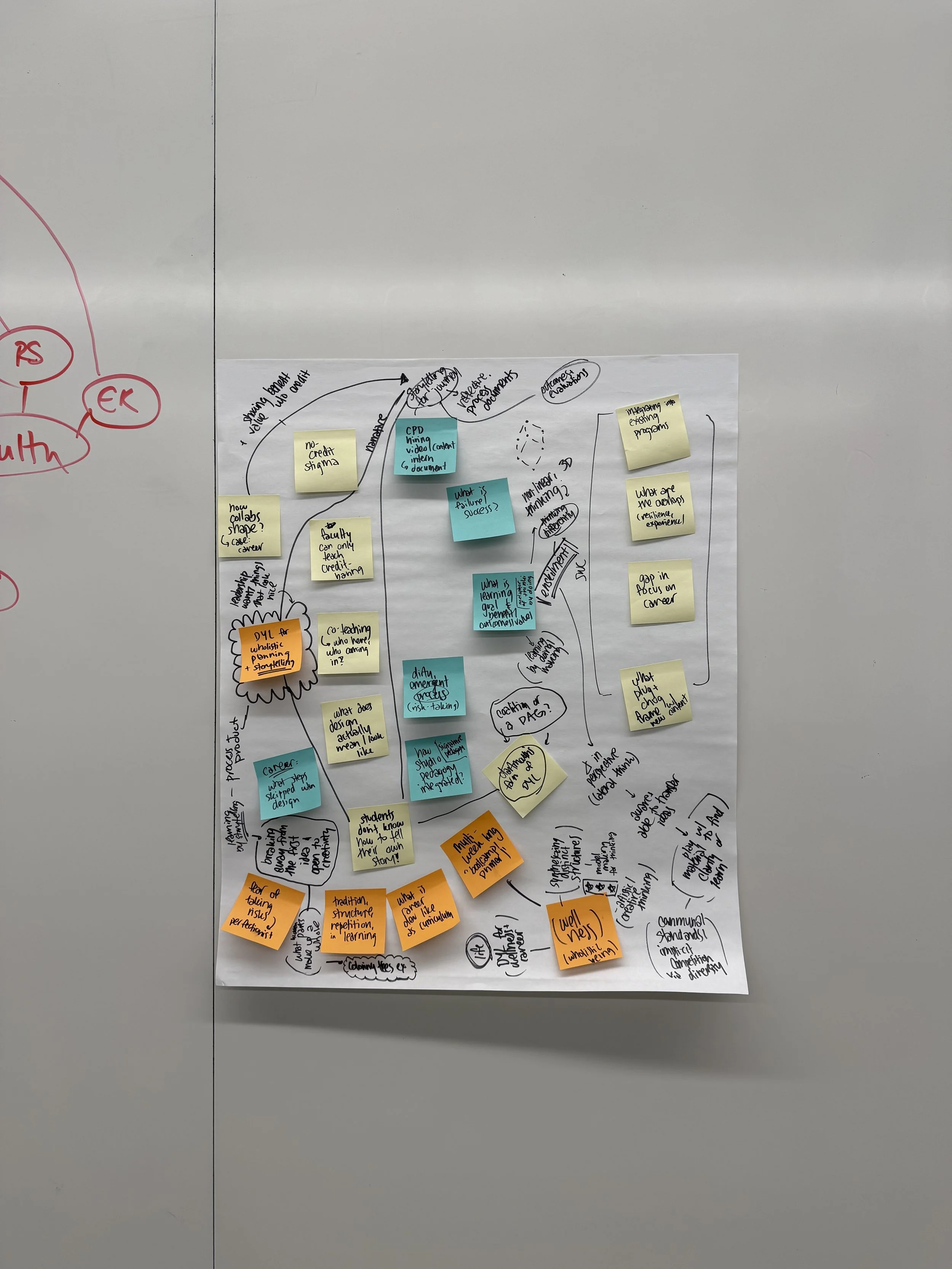
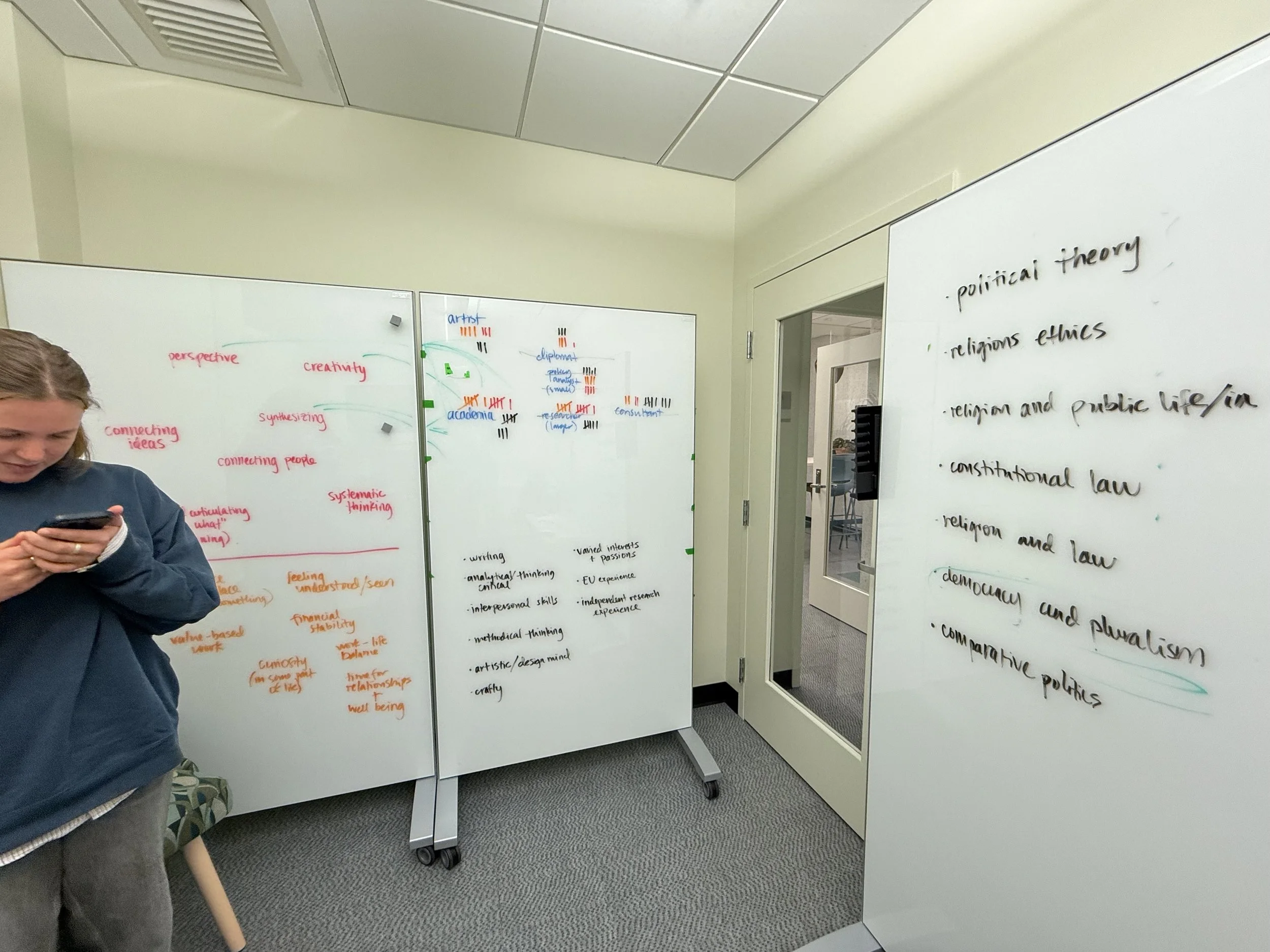
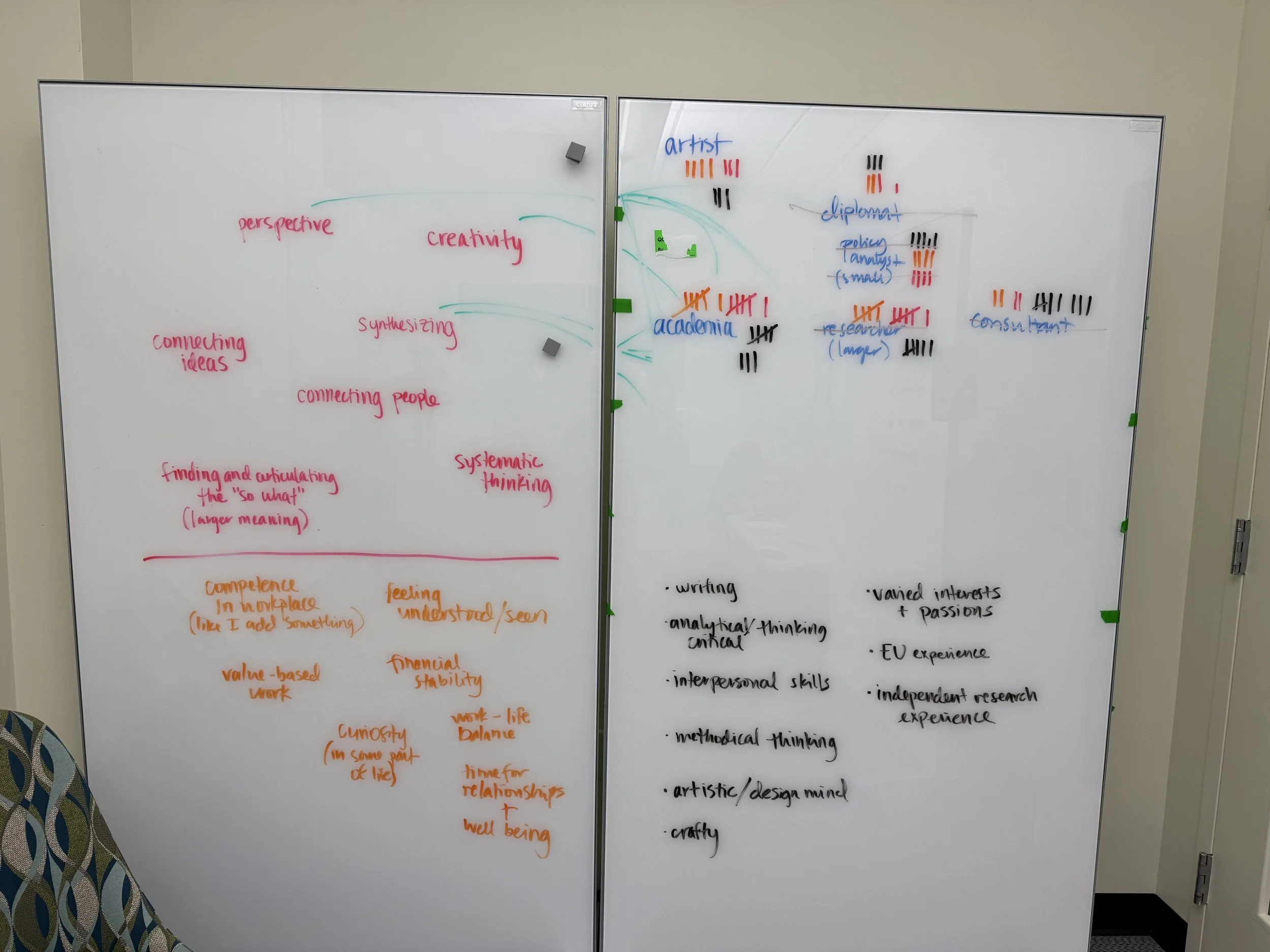
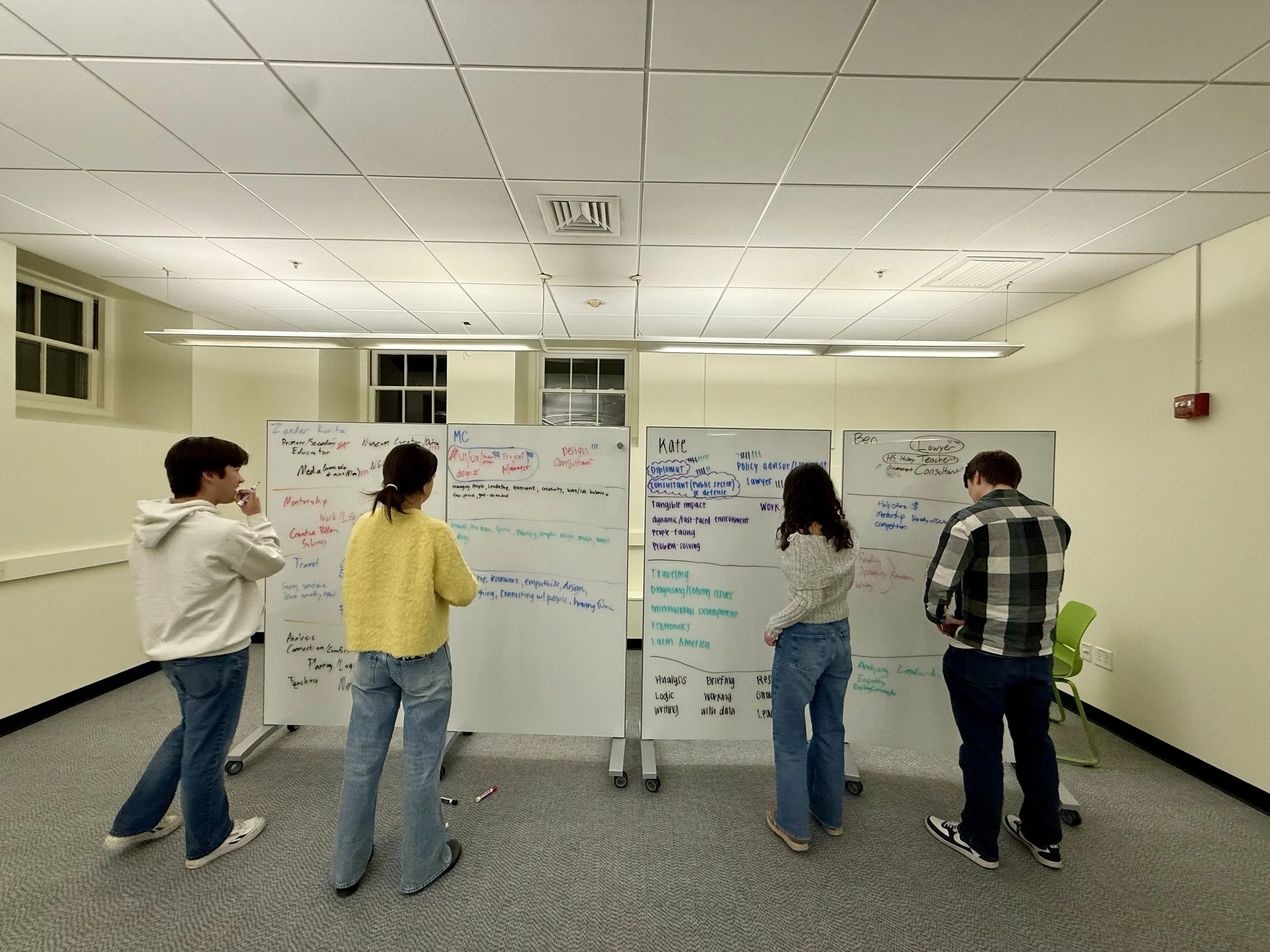
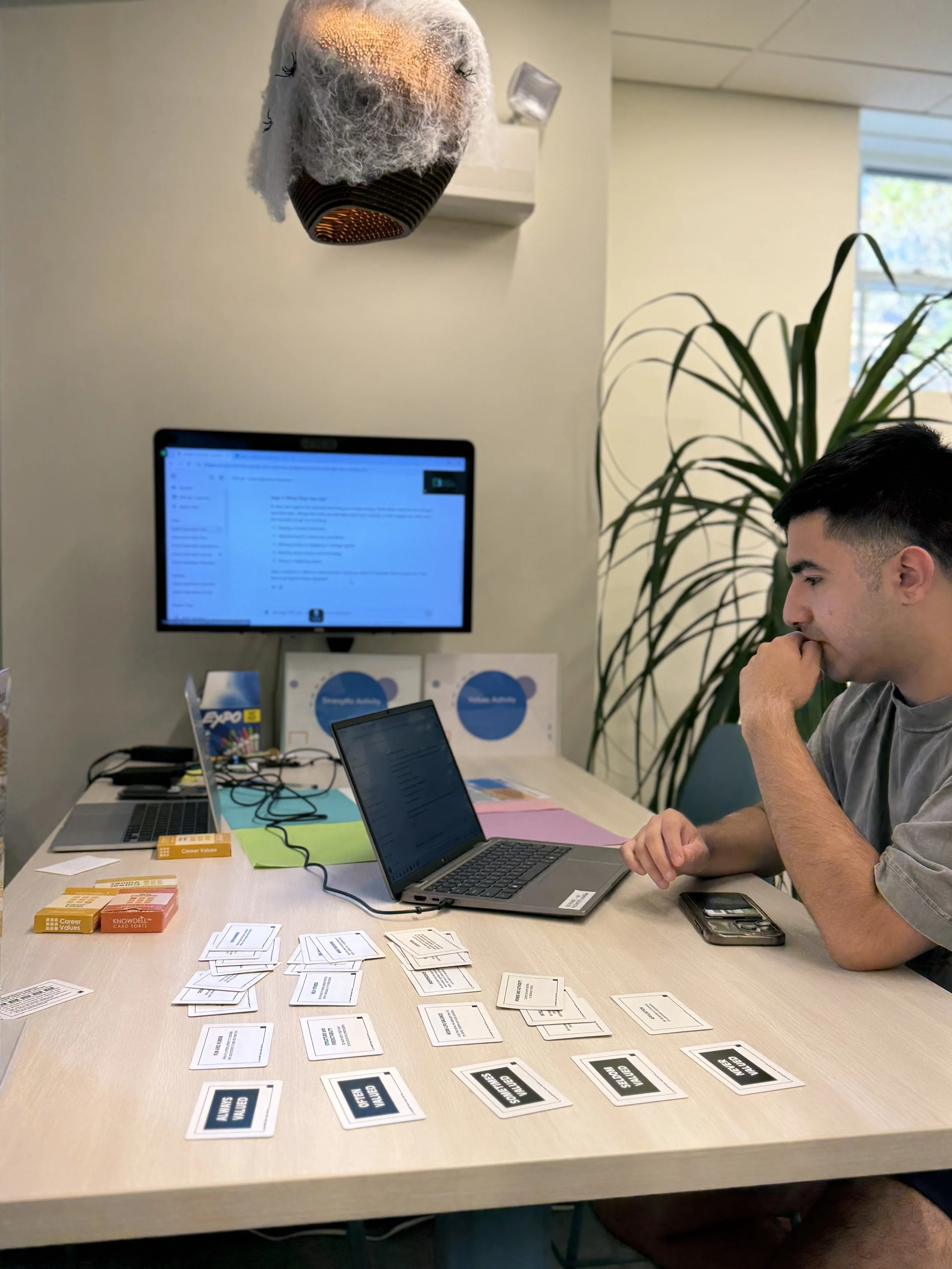
To help students access and articulate identity, I designed a suite of hands-on, spatial tools that function as physical sensemaking interfaces. In the Exploration Lab, students work with values cards, strengths decks, skills grids, and energy mapping boards to surface what matters to them, what they’re good at, and what gives them energy. In the Decision Lab, they shift to structures like decision matrices and mind maps, using visual comparison and diagramming to clarify options, weigh trade-offs, and sketch possible futures.
Together, these tactile tools create a visual language for identity and choice. They allow students to see what they feel—externalizing intuitions and questions in ways that make previously unspoken insights visible, coherent, and shareable in dialogue.

2. AI Exploration Generator: Structured Reflection Through Guided Prompts
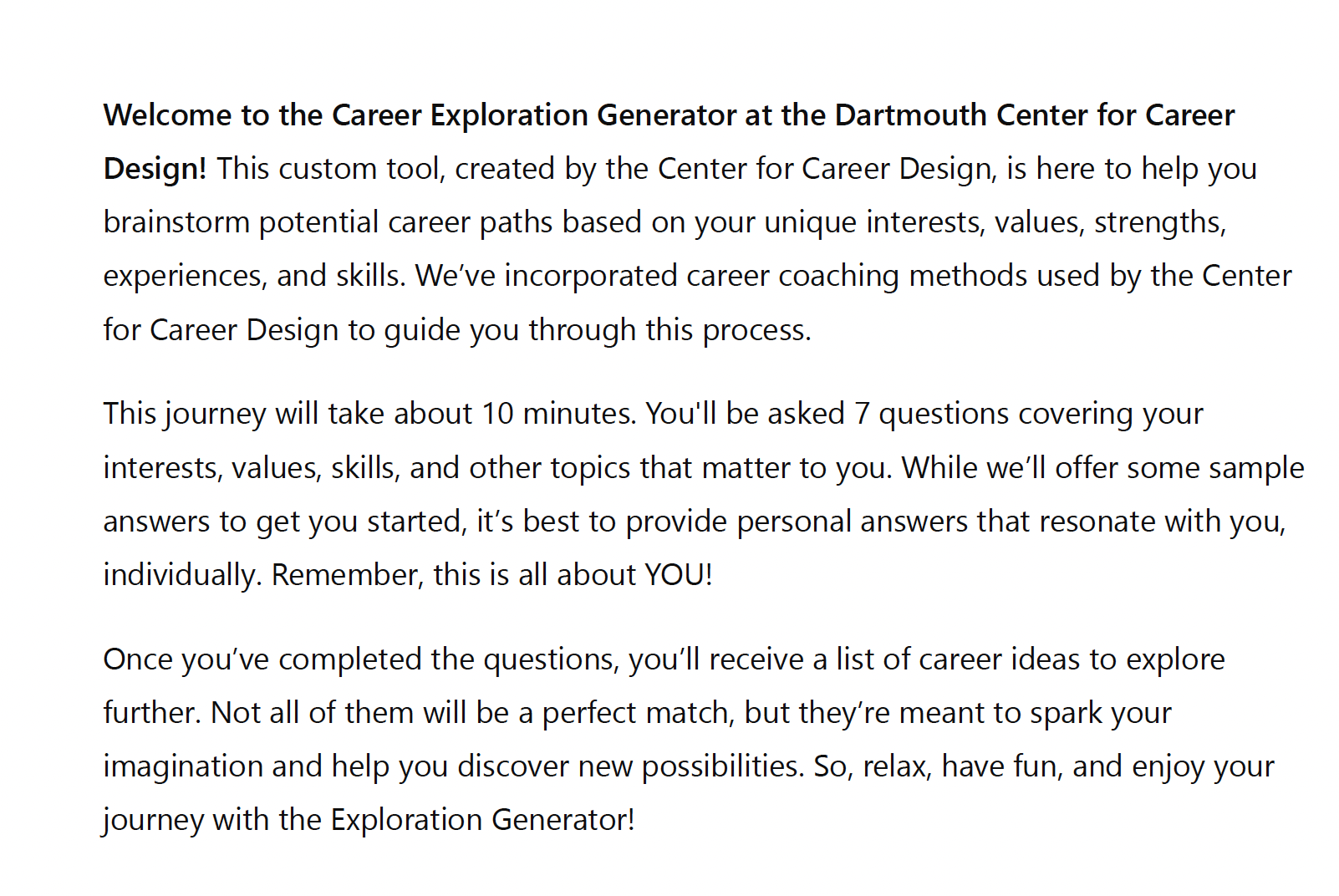
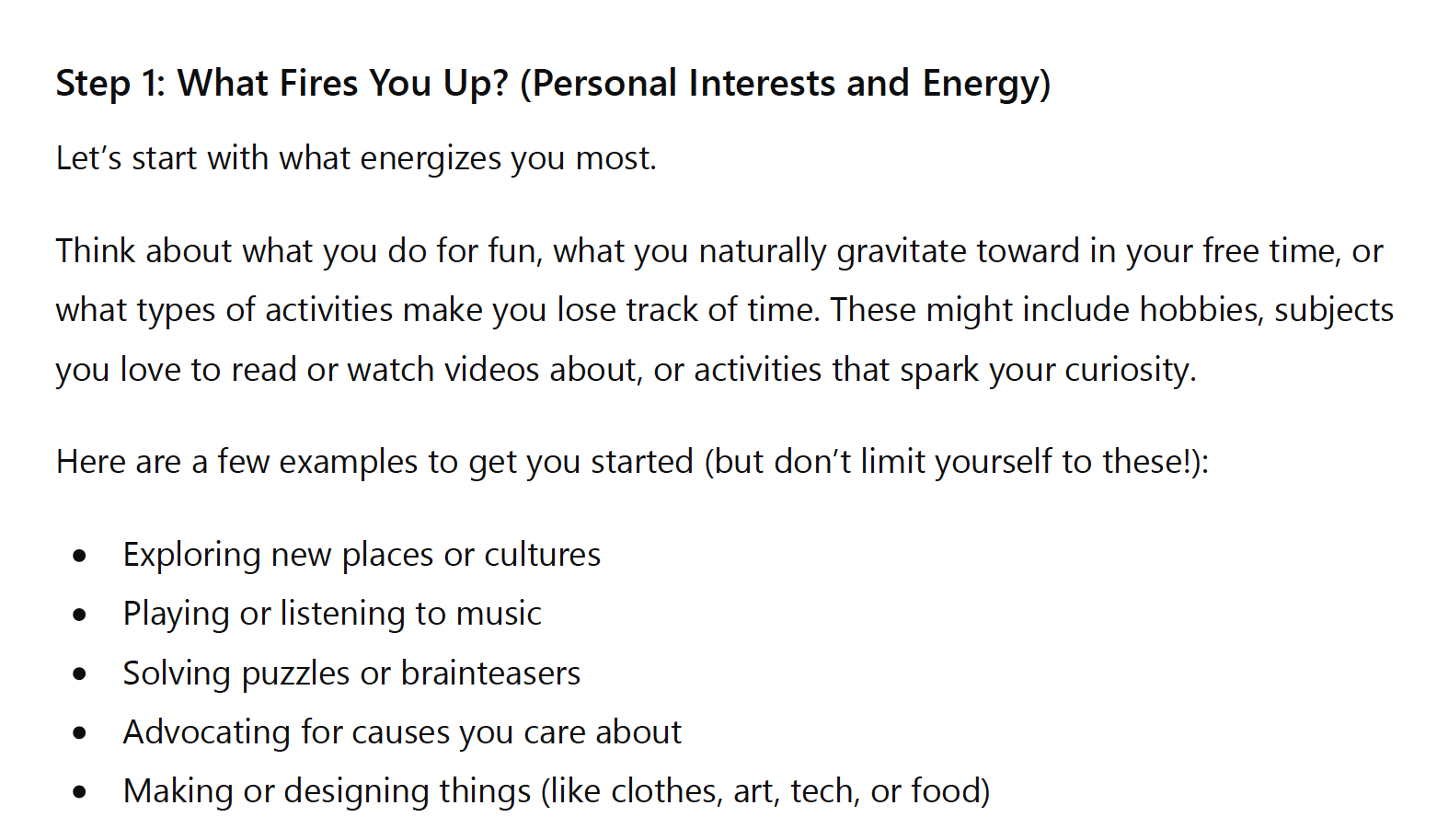
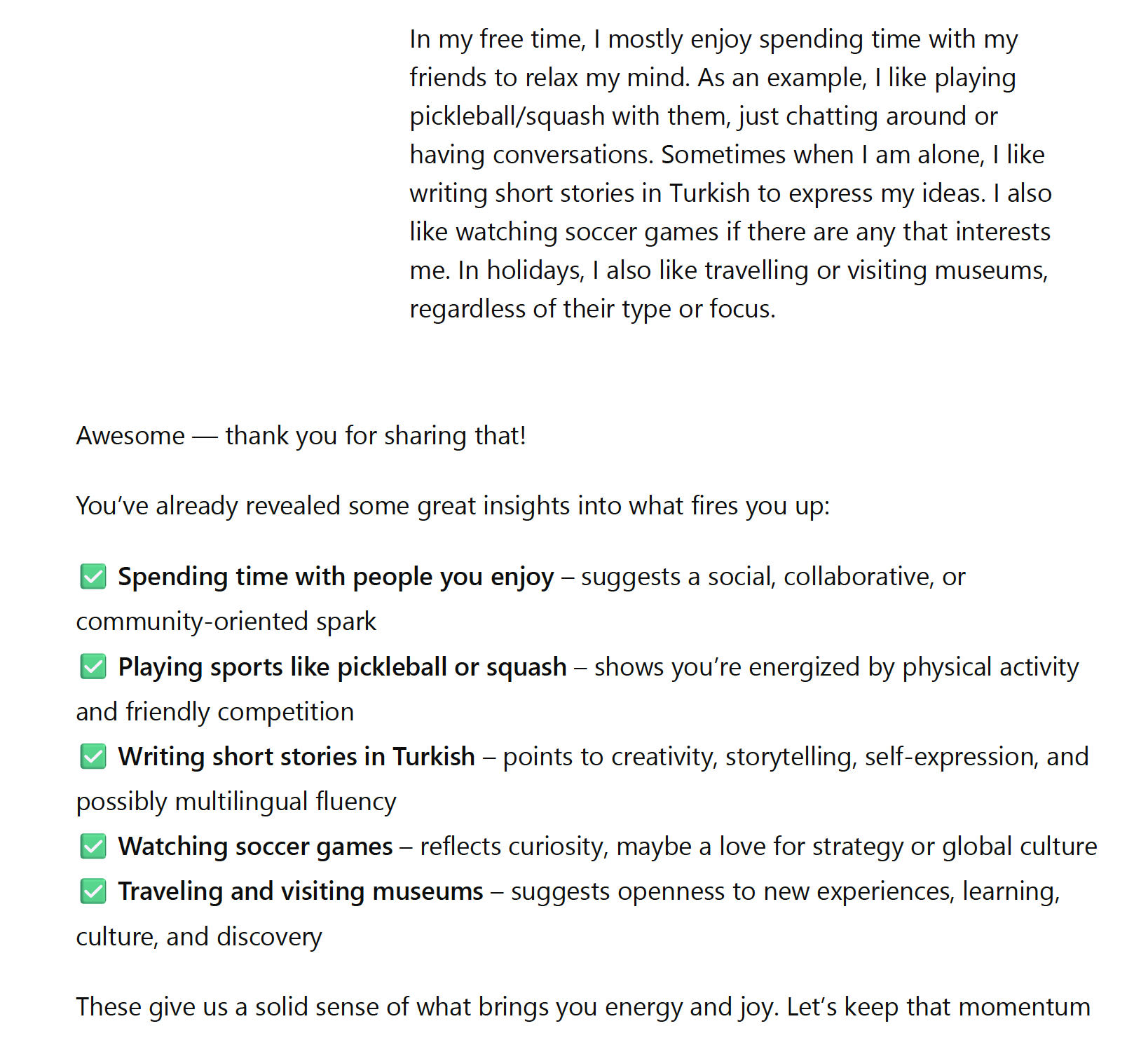
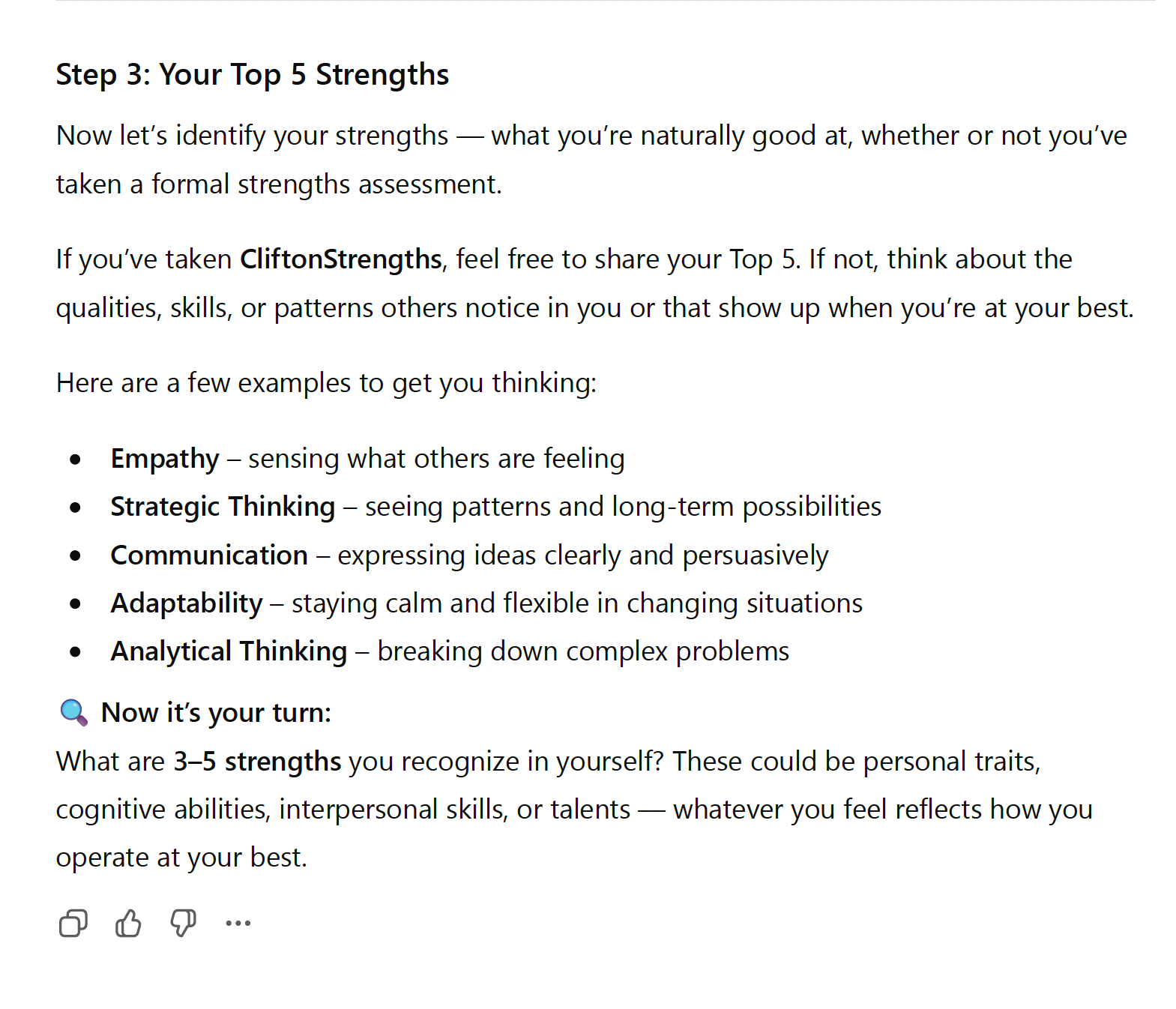
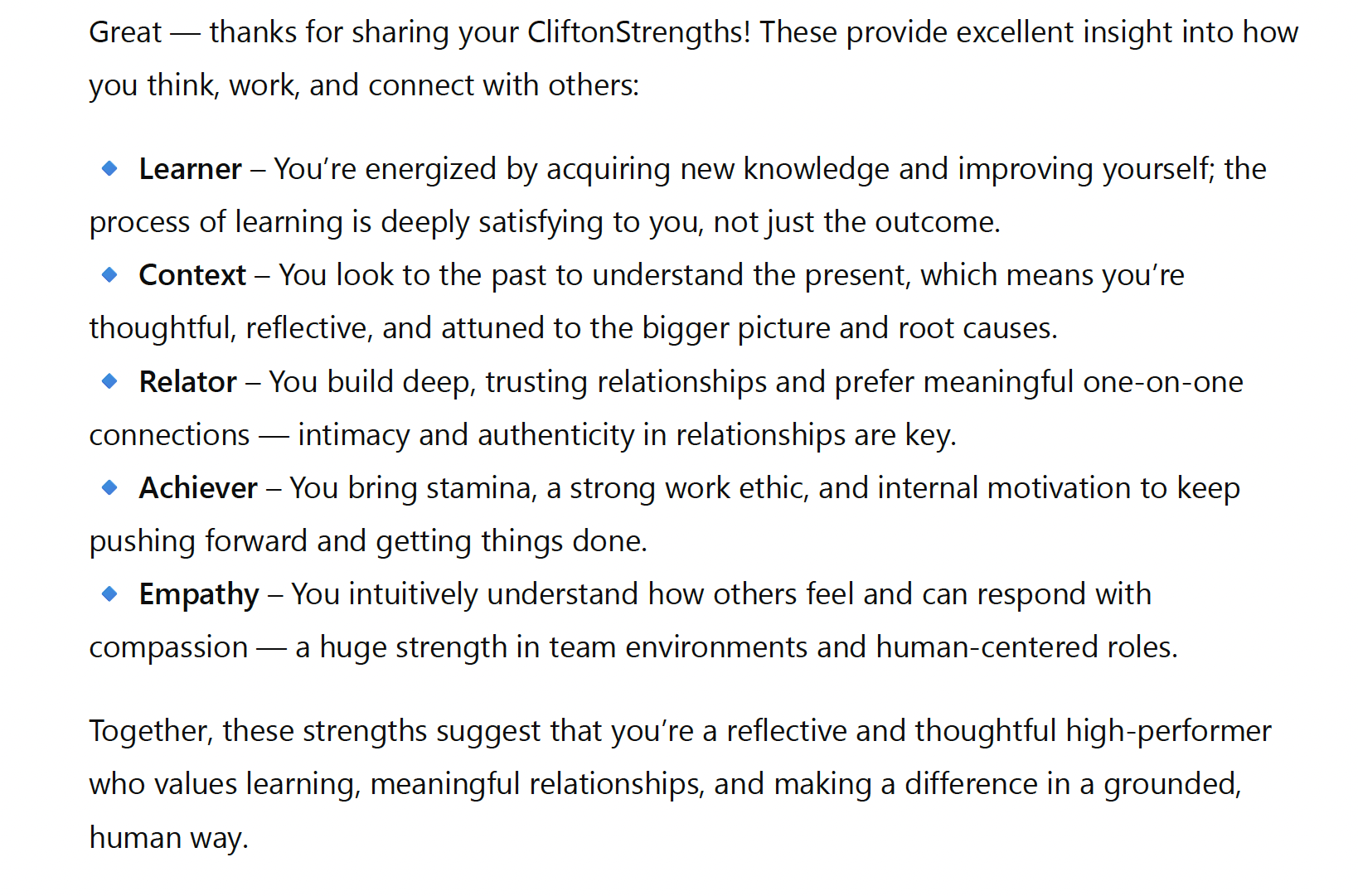
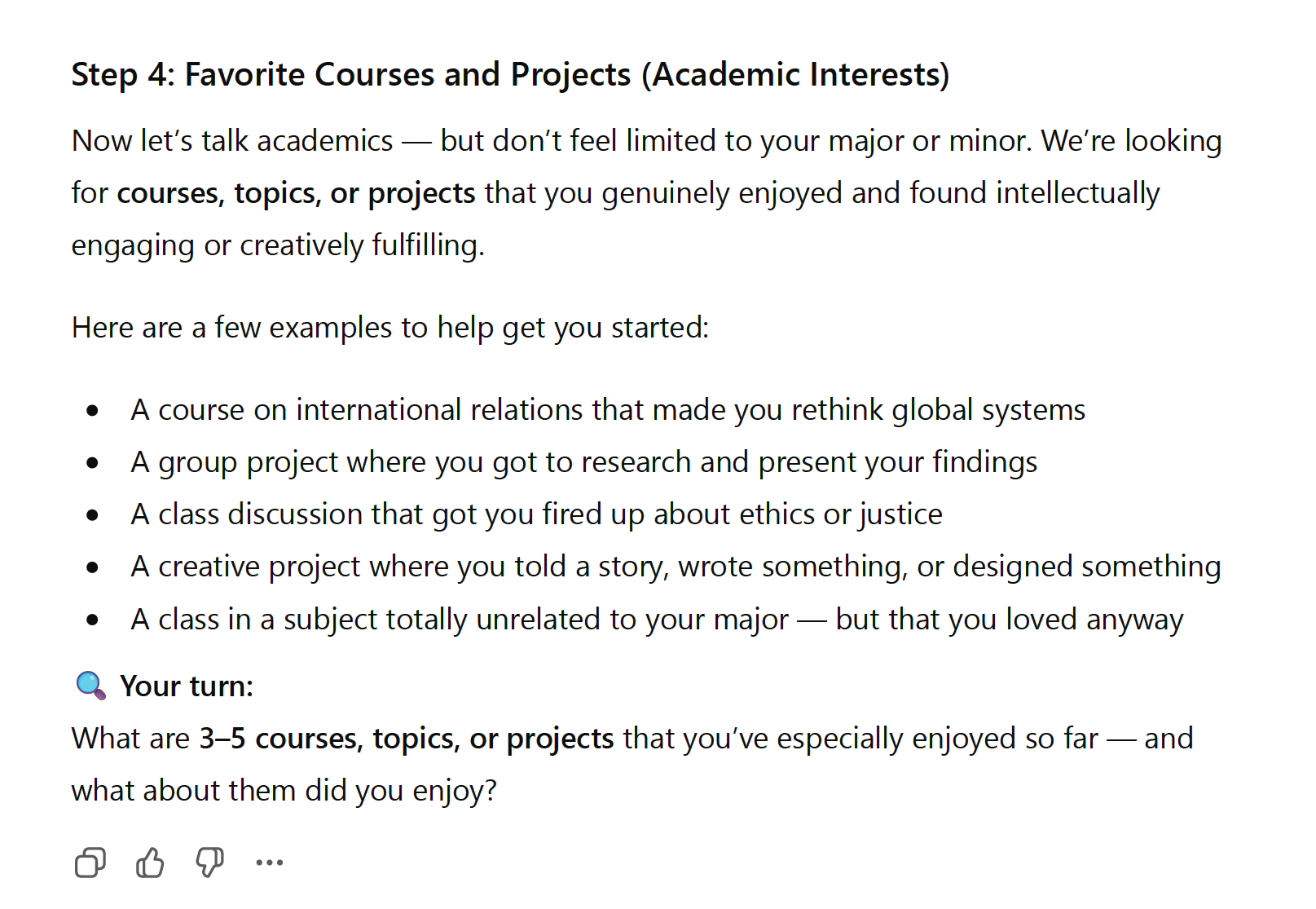
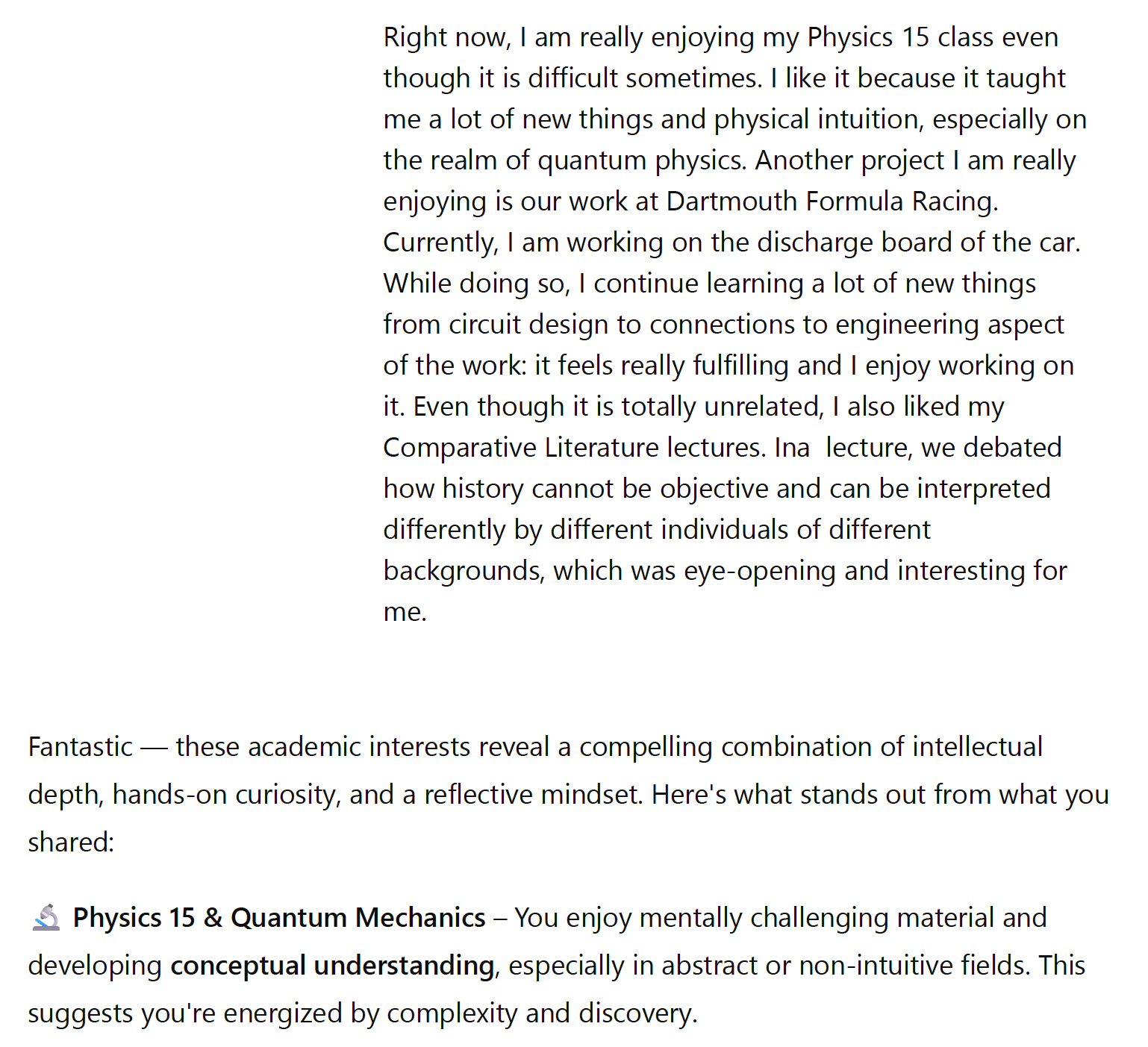
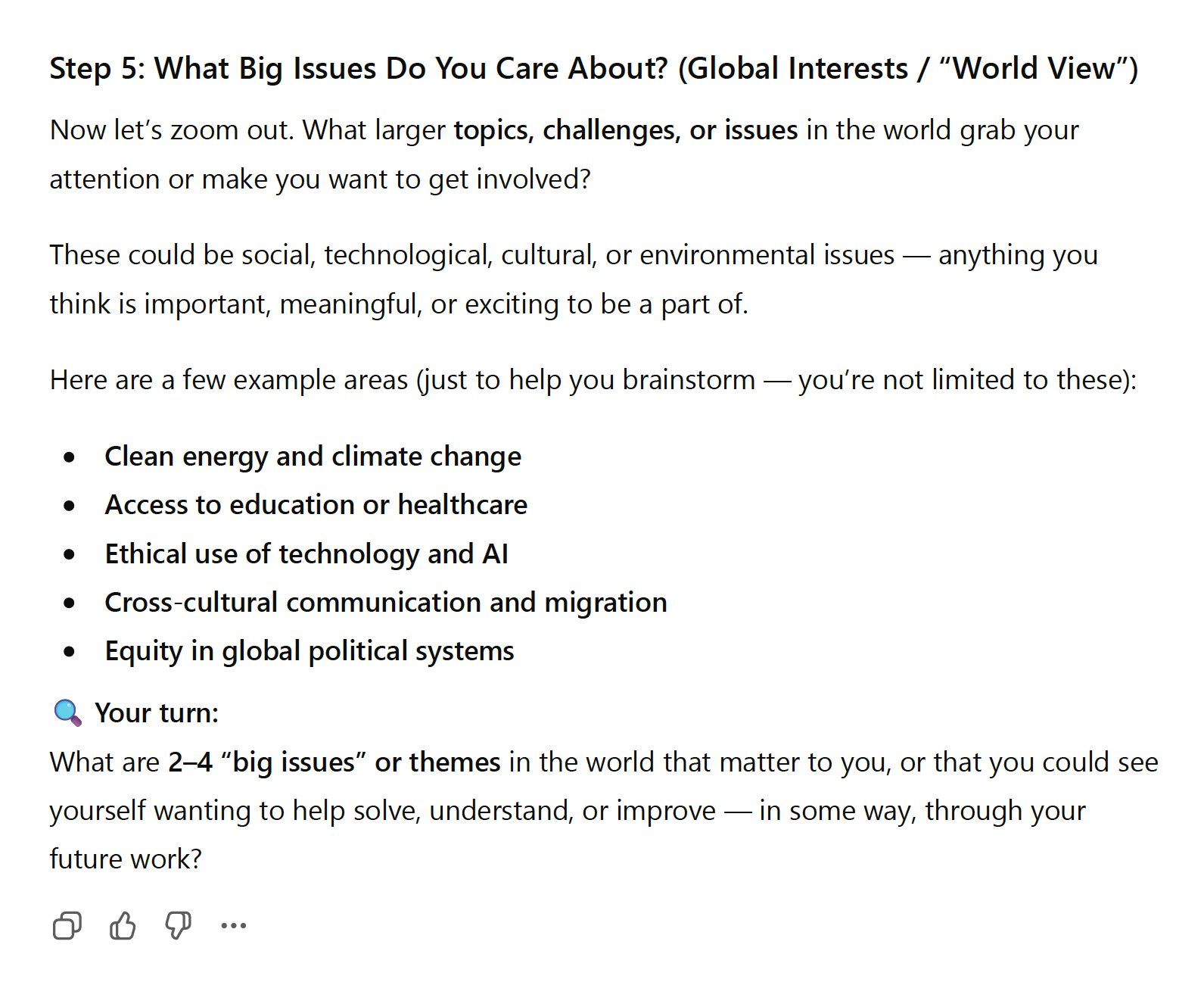
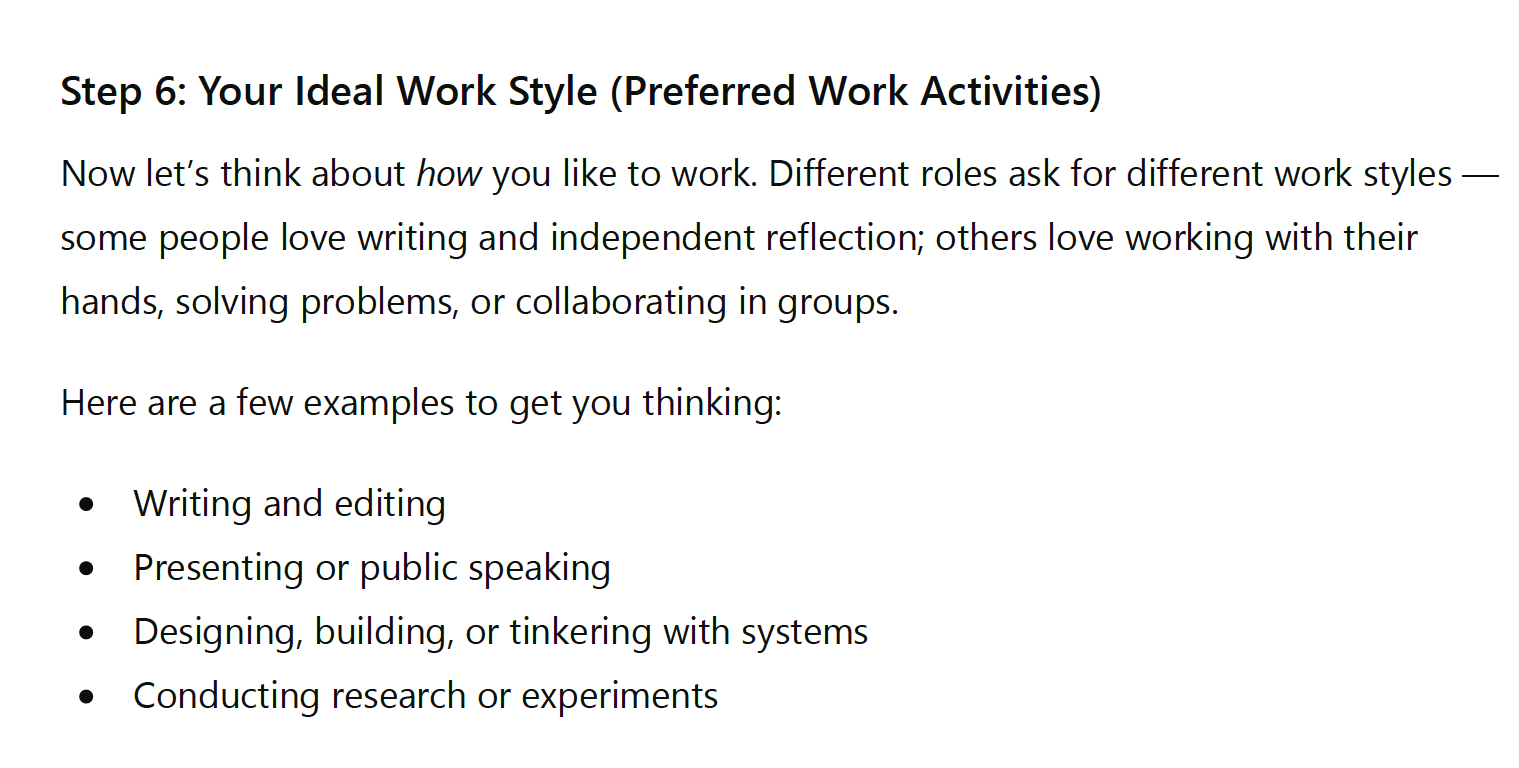
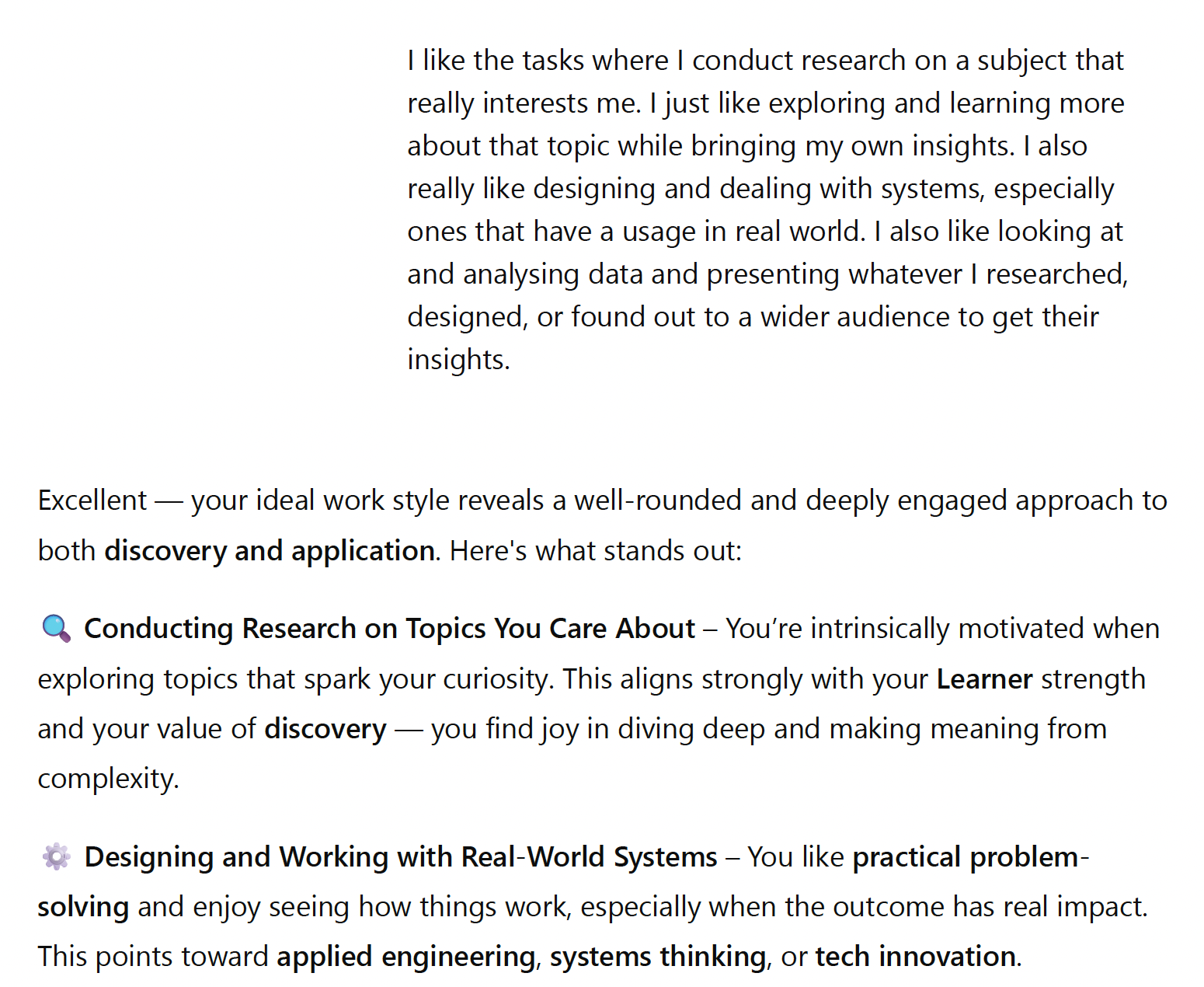
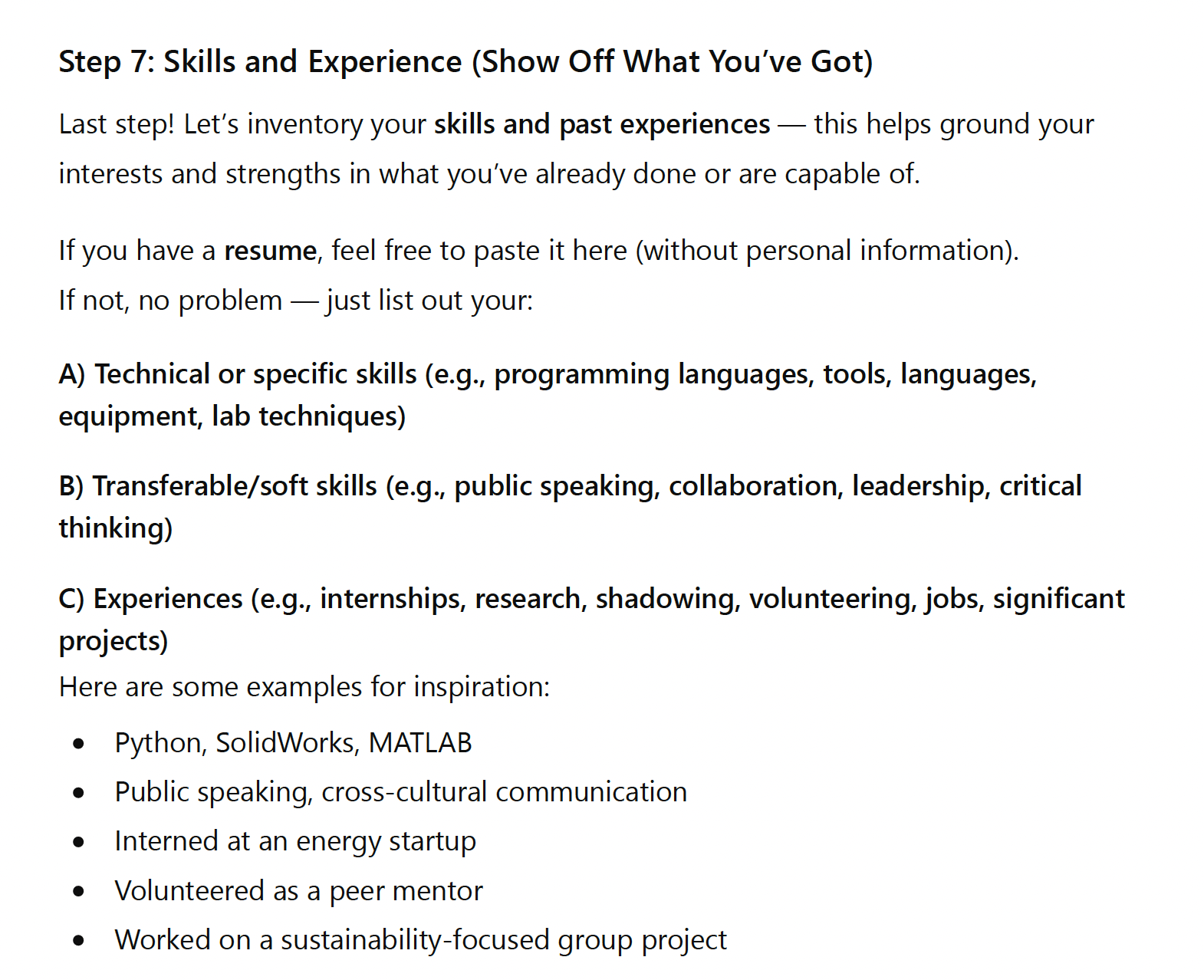
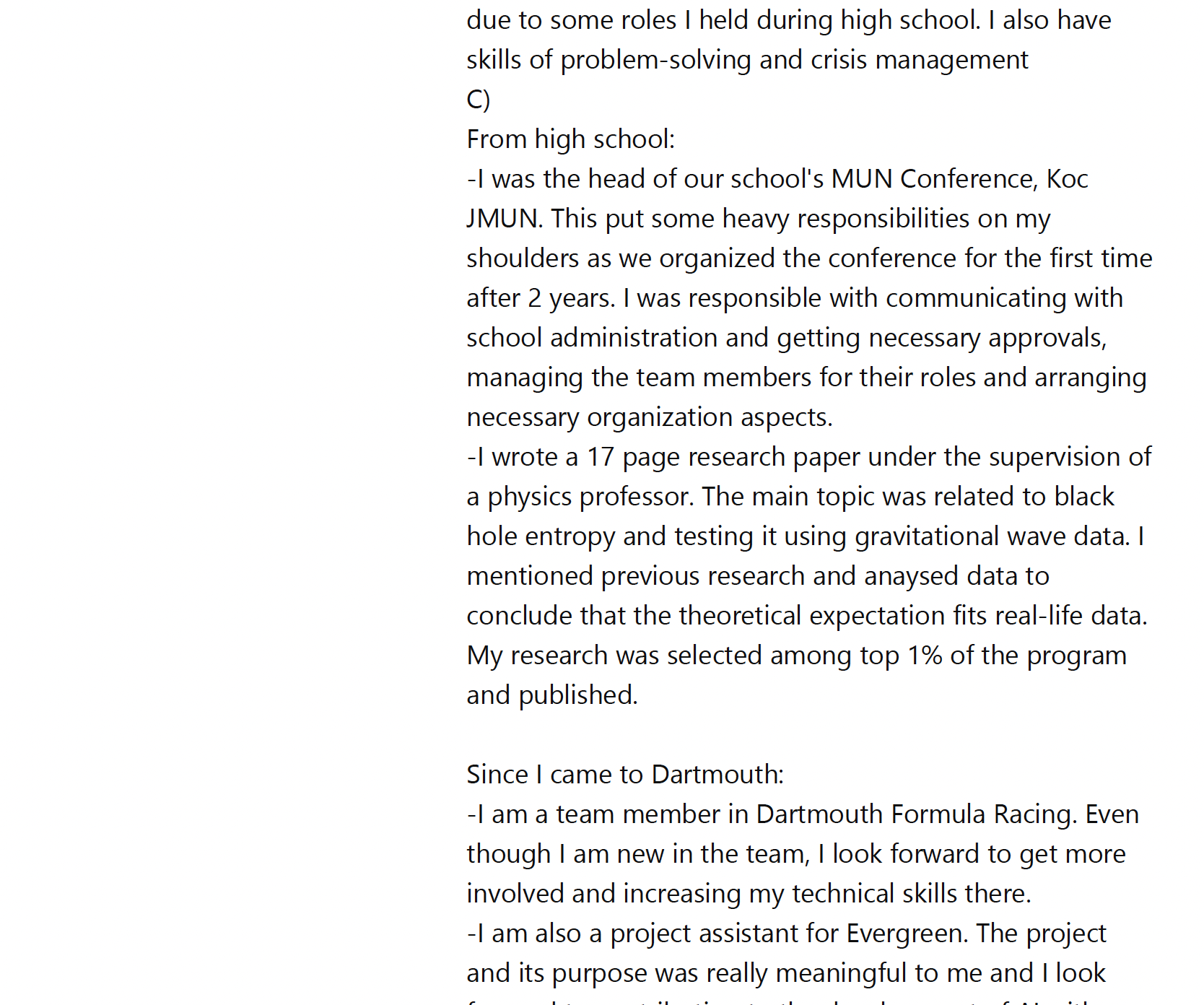
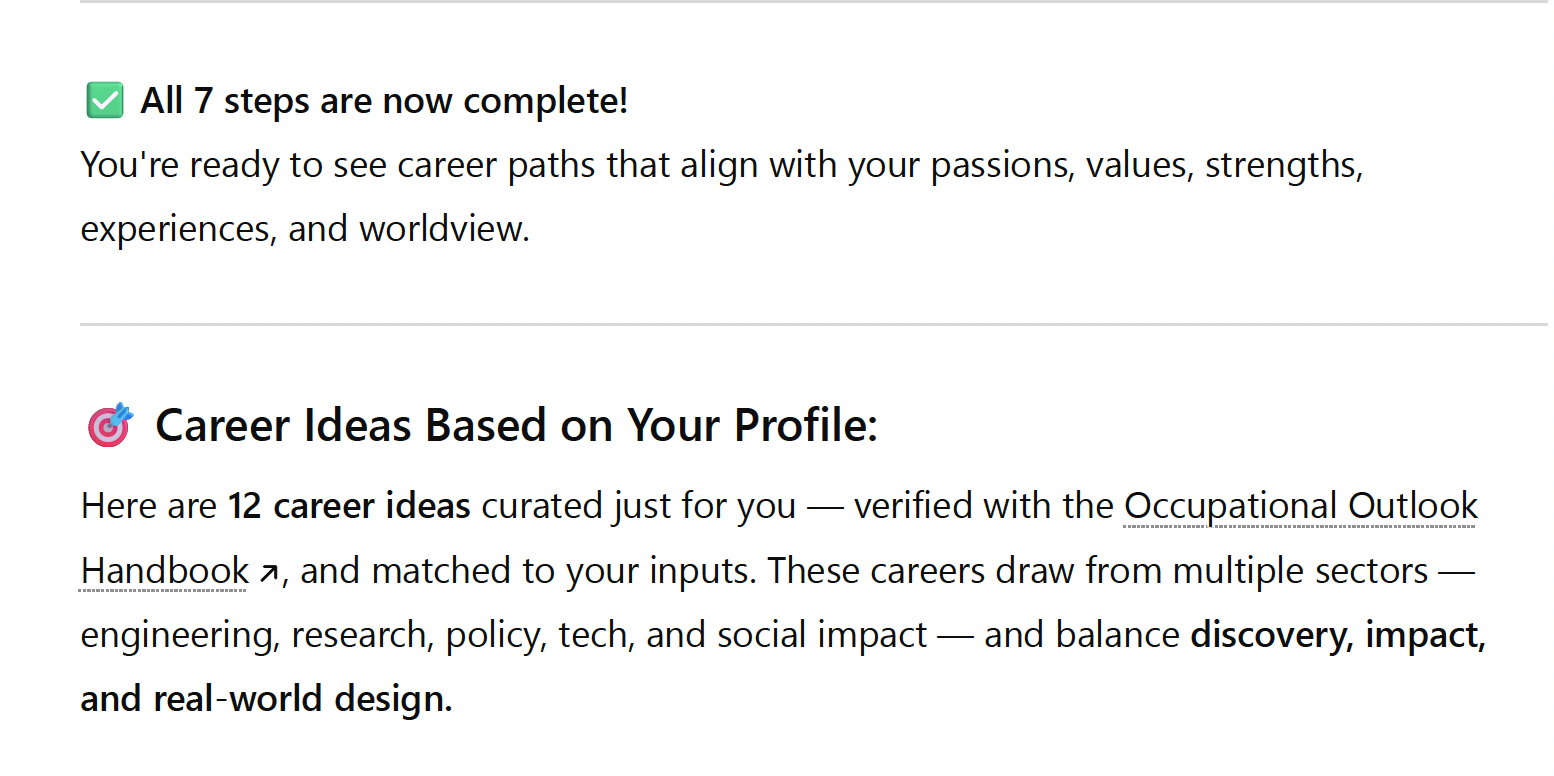
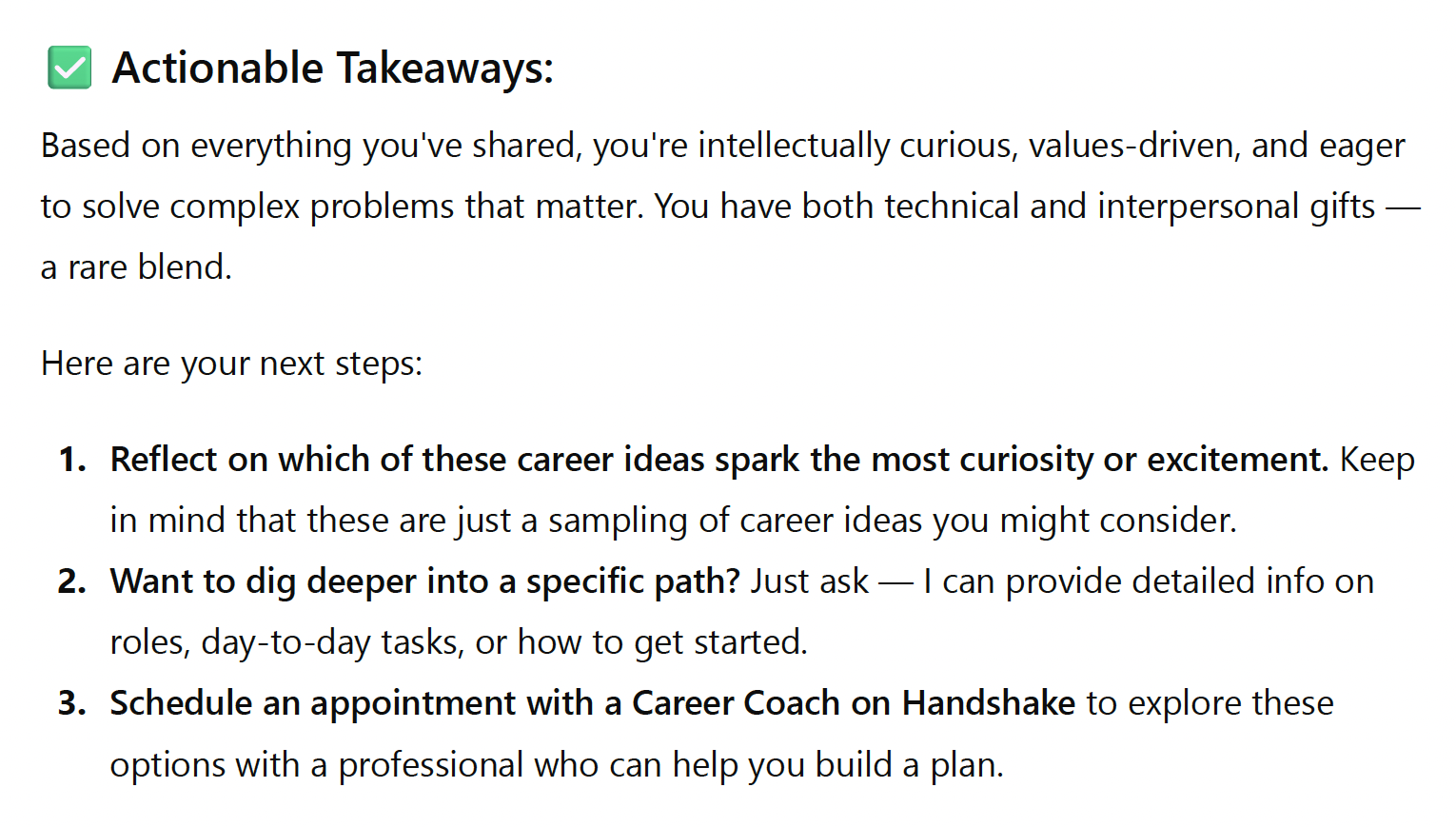
Built on an OpenAI ChatGPT–based platform, the AI Exploration Generator guides students through a seven-part reflective sequence. Students explore energy, values, strengths, academic curiosities, worldview themes, preferred work styles, and meaningful experiences.
The system synthesizes their responses into a set of possible pathways—not as predictions, but as illuminations students can interpret through dialogue. AI amplifies patterns; students make meaning.
Seven Guided Prompts
1. What energizes you?
2. What do you value most?
3. What strengths feel most natural to you?
4. What academic topics or projects have engaged you the most?
5. What big issues or questions in the world matter to you?
6. How do you prefer to work?
7. What skills and experiences do you bring?
Issues We Encountered in the Current CDL Model
As the system evolved through repeated prototyping, several structural challenges became clear. Students appreciated the individual tools, yet experienced them as isolated activities rather than parts of a coherent whole. Engagement was uneven; without a clearly defined journey, many drifted in and out without integrating their insights. The conceptual architecture of the Lab was also difficult for others to see—faculty and students alike struggled to understand how the pieces connected and what the overall logic of the system was. And because there was no unified artifact, students had no single place to hold the arc of their identity development or trace their progress over time.
These issues revealed the need for a new prototype—one that would bring clarity, structure, and cohesion to the entire experience.
The New Prototype: The Launch Studio
The Launch Studio is a unified, 120-minute structured experience designed to bring coherence and intention to the Career Design Lab. Built through iterative prototyping, it transforms a series of individual tools into a clear, connected pathway that supports reflection, exploration, and forward movement.
Rather than engaging with activities in isolation, students enter a guided, beginning-to-end sequence that helps them understand themselves, recognize emerging patterns in their experiences, and translate those insights into meaningful direction. The Launch Studio integrates tactile sensemaking tools, structured reflection prompts, and facilitated decision-making into one cohesive journey.
The result is a system that provides students with clarity, coherence, and agency—an experience that moves them from curiosity to insight to action with a personalized plan for what comes next.
The New Prototype and the Ongoing Prototype
The Launch Studio represents the newest and most coherent prototype within the Career Design Lab. It unifies years of experimental tools into a single, intentional journey—the clearest expression so far of what the Lab is designed to do: help students make meaning, see patterns, and act with intention.
But it is not a final model. The Launch Studio is a working prototype that will continue to evolve as students reveal what the system needs next. Each semester becomes a new design cycle: testing structure, refining flow, strengthening tools, and rebuilding what needs to change.
The Launch Studio provides a new foundation.
The ongoing prototyping ensures that foundation never stands still.
As the Lab grows, so will this system—expanding its language, deepening its methods, and creating clearer pathways for students to understand themselves and design their next steps.
This work remains both a new prototype and an ongoing prototype, shaped continuously by student experience and guided by a commitment to thoughtful design.
How I Design for This Prototype
My design philosophy follows a simple principle:
make the internal visible, make the complex coherent, and make the next step actionable.
To build and evolve The Launch Studio, I work with a recurring set of design moves—each one shaping how students make sense of who they are and where they are headed. These moves guide both the structure of the system and the ongoing prototyping that refines it each semester.
Closing
The Launch Studio is a snapshot of the system as it exists now—coherent, structured, and grounded in dialogue and reflection. But the system is still in motion. Each term opens a new cycle of testing, adapting, and rebuilding.
My work continues in that motion:
Prototyping tools, revising structures, and shaping pathways that help students see themselves more clearly. The design will keep evolving. The system will keep evolving. And so will the students who move through it.