Narrative by Design: Identity Mapping Studio
A spatial and reflective system for making meaning from lived experience
Creator & Lead Instructor | Career Design Lab at Dartmouth Center for Career Design
Overview
Narrative by Design is an identity-mapping studio developed through my work with Dartmouth students to help them make sense of fragmented experiences, motivations, and values. The system combines tactile sorting, visual clustering, and structured reflective dialogue, allowing students to externalize their histories and reorganize them into coherent identity maps. By treating identity as a representational system rather than an internal blur, this process helps learners see patterns, surface tensions, and construct grounded narratives. The goal is to give students clarity and language to describe who they are becoming — not just what they’ve done.
Case Study: Narrative by Design – Structured Identity Mapping for Reflection & Communication
Problem
Many students have diverse experiences but struggle to articulate coherence: their résumé feels like a list, not a story. They often can’t answer questions like “Why did I do these things?” or “What connects all these interests and actions?” This makes it difficult to communicate identity or intention credibly in portfolios, applications, or interviews.
Approach
I created an Identity Mapping Studio grounded in design cognition, narrative psychology, and reflective pedagogy. The method uses a five-phase structured process:
Fragmentation — break experience into discrete, movable units (memories, roles, achievements).
Categorization — sort units into interpretive lenses (values, strengths, interests, skills).
Pattern Discovery — visually cluster and reorganize items to reveal themes, contradictions, recurrent ideas.
Dialogue & Interpretation — through structured reflective conversation, interpret what these patterns might mean.
Narrative Construction — distill the insights into a coherent statement: first a paragraph, then a sentence, and finally a one-word essence that captures identity orientation.
This approach combines hands-on, material interaction (tiles, clustering) with cognitive offloading and reflective meaning-making, intended to lower cognitive load and encourage insight.
Prototype / Outcome
The studio produces identity maps, clustered tiles, thematic groupings, narrative statements, and distilled conceptual words. These artifacts give students visible, manipulable representations of their identity — making internal, fuzzy experience tangible and communicable.
Impact (as described/observed)
Students reportedly shift from “fragmented résumé” to “coherent identity.” They gain clearer understanding of their values, strengths, and underlying motivations. The process helps them articulate personal narratives more confidently — useful for portfolios, applications, interviews, or self-reflection. Through externalization and structured reflection, they emerge with a grounded sense of self that feels meaningful and communicable.
Why This Work Matters
Students often struggle to articulate who they are—not because they lack experience, but because they lack a framework for interpreting it. In advising sessions, they frequently express uncertainty:
““I don’t really know what connects all of these things. They feel random.”
“My résumé describes what I did, but not who I am.”
“I thought ‘walk me through your résumé’ meant literally read it back to them.”
“If I can’t explain why I’ve done so many different things, will they think I don’t know what I’m doing?””
Identity as a Representational System
Identity in this project is understood not as a fixed trait, but as a representational system—a set of experiences, values, strengths, and interests that gain coherence when they are made visible, rearranged, and interpreted. Instead of holding identity internally as a mixture of memories, achievements, and impressions, students externalize these elements into discrete, movable components.
When arranged spatially, these components form identity maps: visual artifacts that mediate reflection, reveal underlying patterns, surface contradictions, and support clearer communication. By shifting identity from something felt but unarticulated to something visible and structured, students are better able to understand their motivations, recognize recurring themes, and construct narratives grounded in clarity and self-awareness.
1. Internal Experience (Unstructured)
- Memories
- Roles
- Emotions
- Achievements
- Motivations
- Unclear strengths
- Implicit values
2. External Components (Movable)
- Experience tiles
- Value labels
- Strength indicators
- Interest clusters
- Skills and actions
- Notes and reflections
3. Identity Map (Representational System)
- Patterns become visible
- Connections emerge
- Contradictions surface
- Themes repeat
- Meaning becomes communicable
Process Overview
The Identity Mapping Studio follows a structured five-phase cycle designed to help students externalize experience, surface patterns, and articulate coherent identity narratives.
Phase 1: Fragmentation
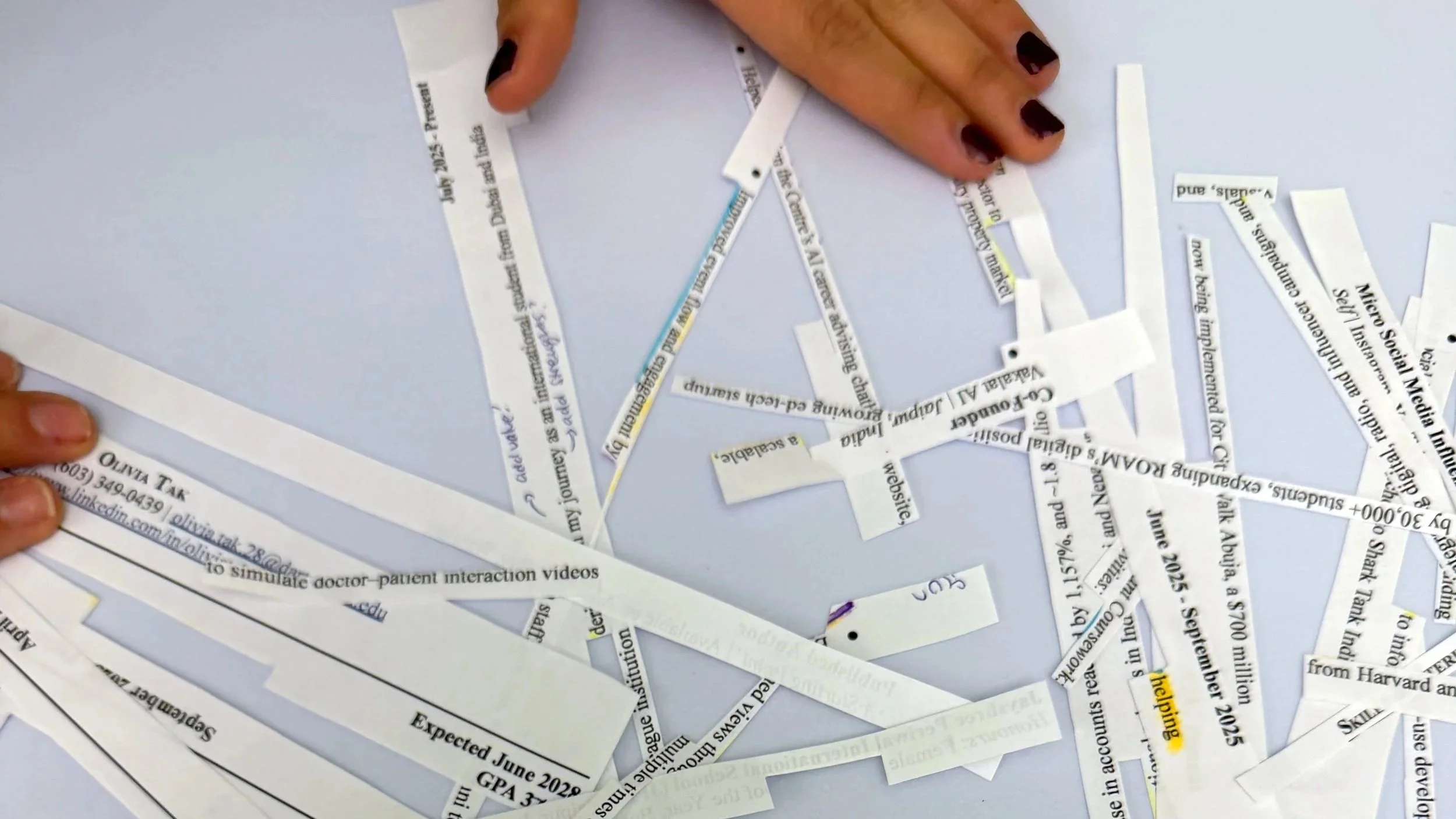
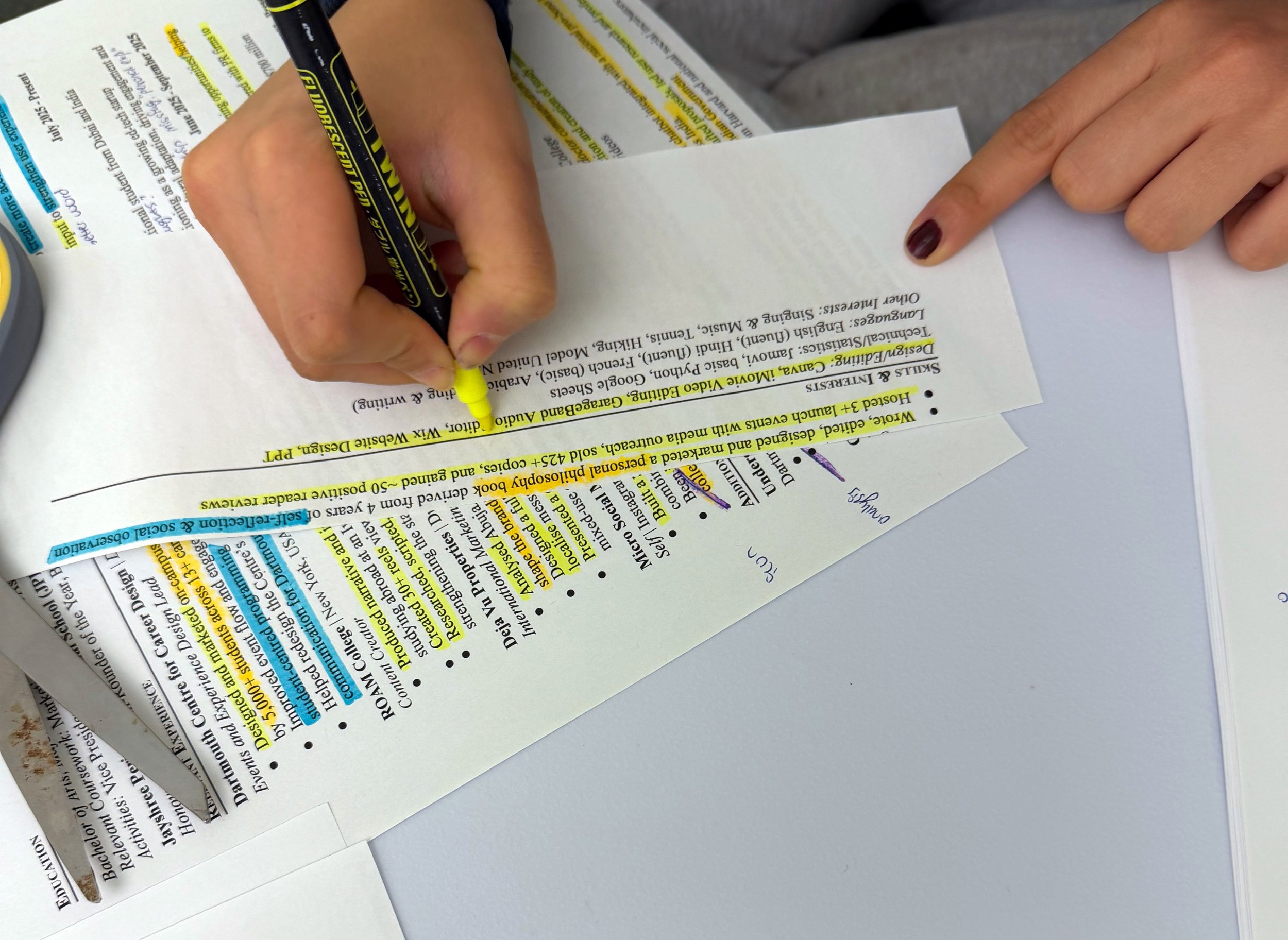
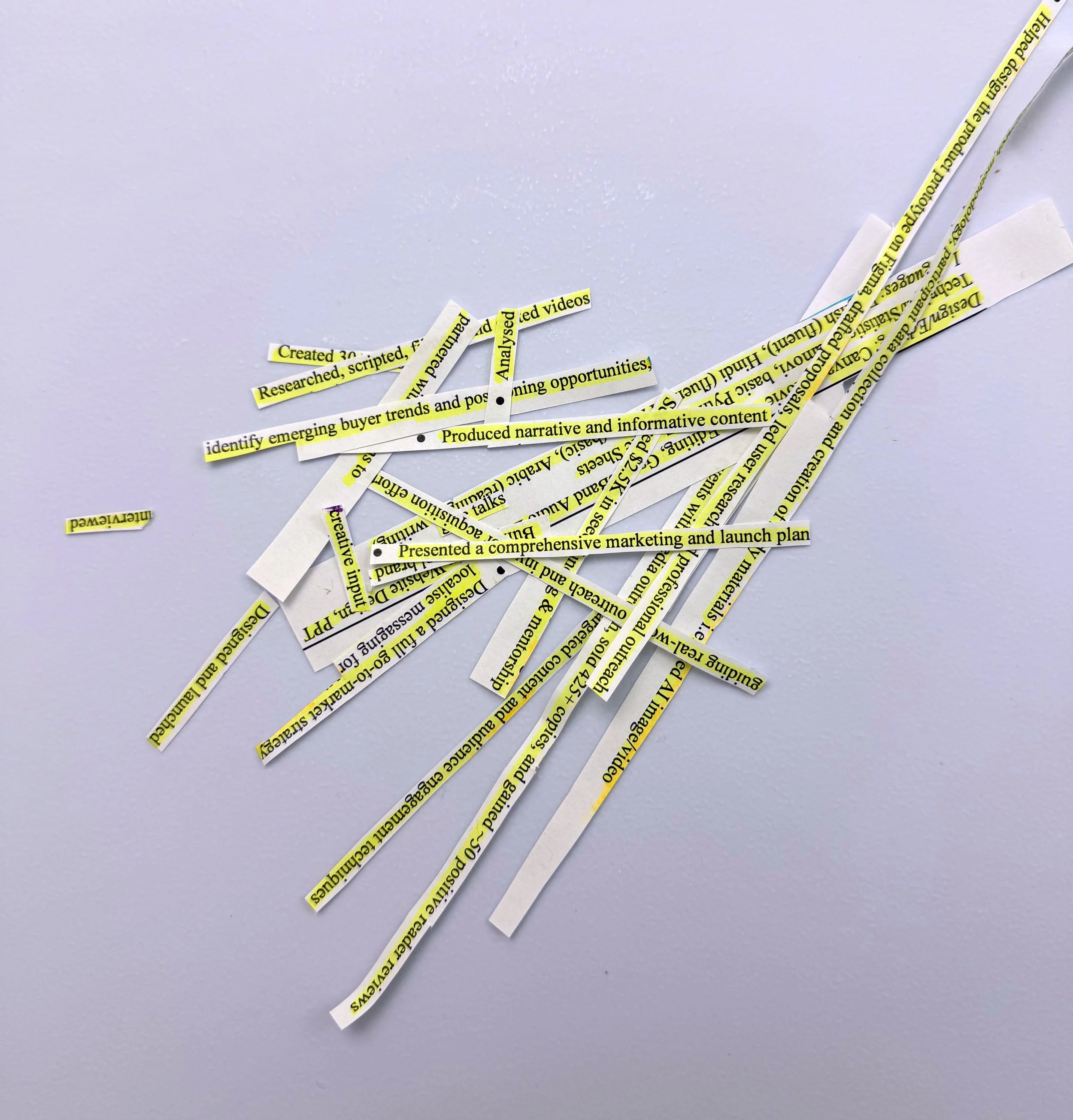
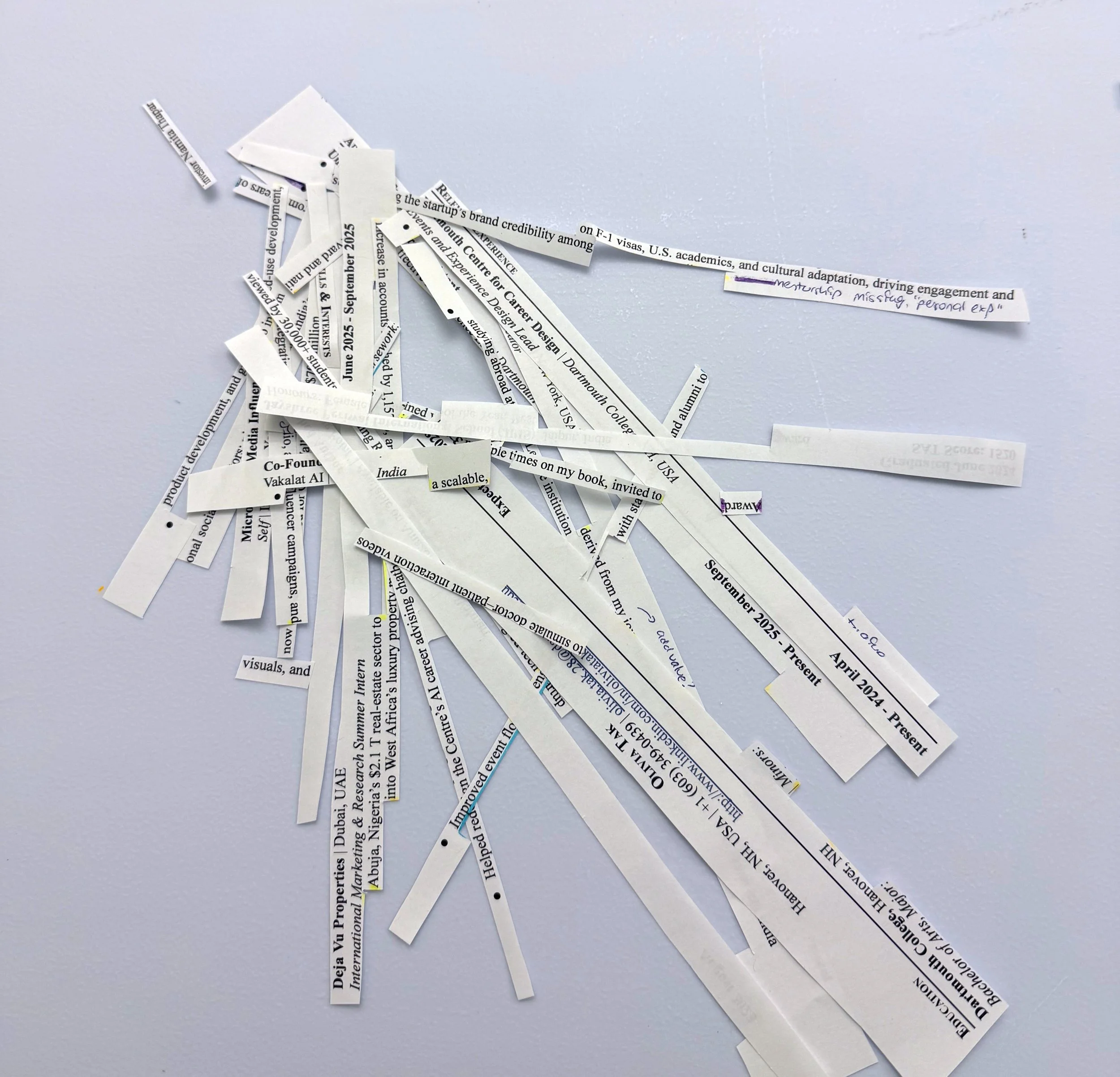
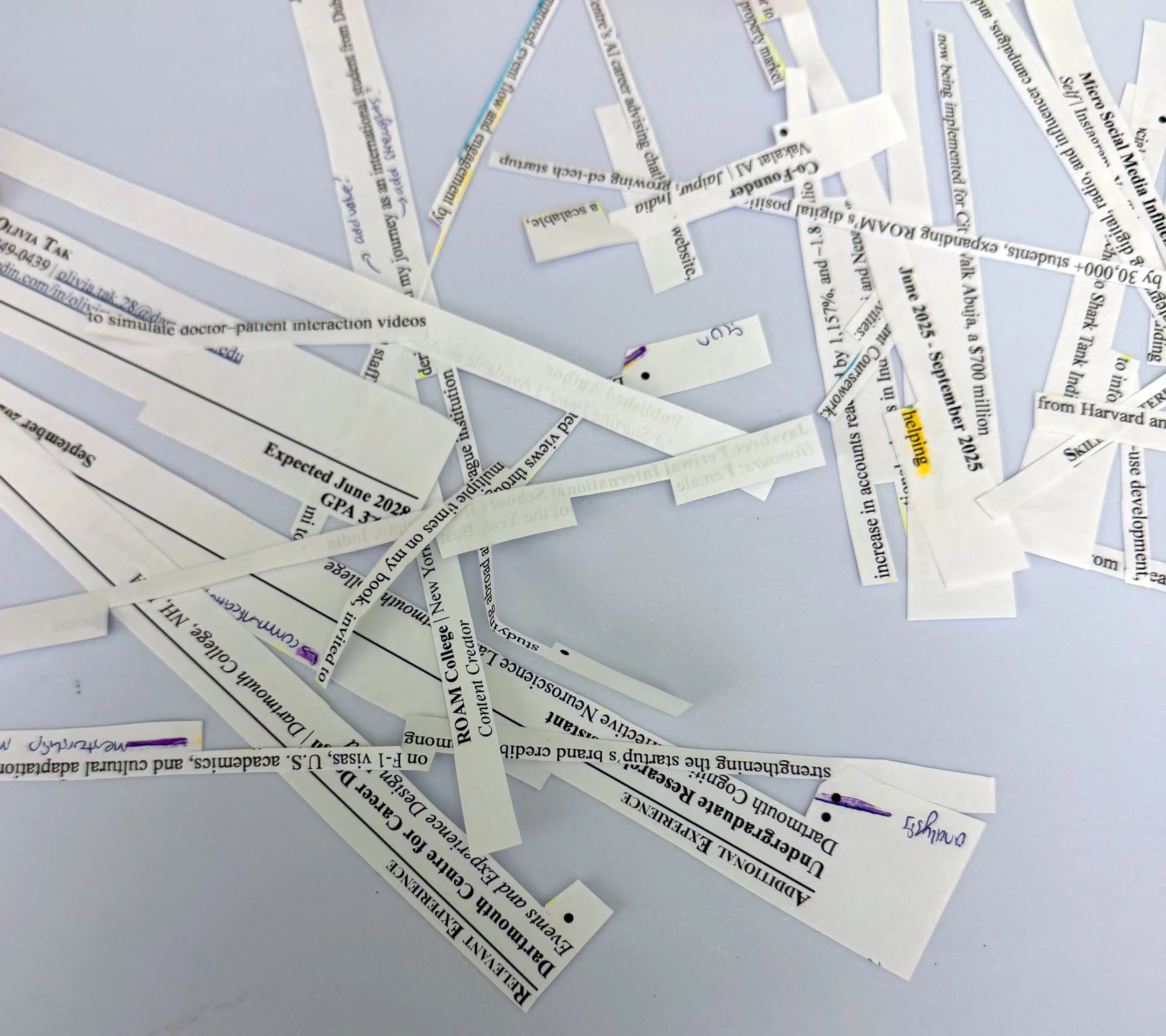
Students deconstruct their résumé into small, movable pieces. This externalization shifts identity from something held internally to something visible and manipulable, reducing cognitive load and revealing details that often go unnoticed.
Phase 2: Categorization
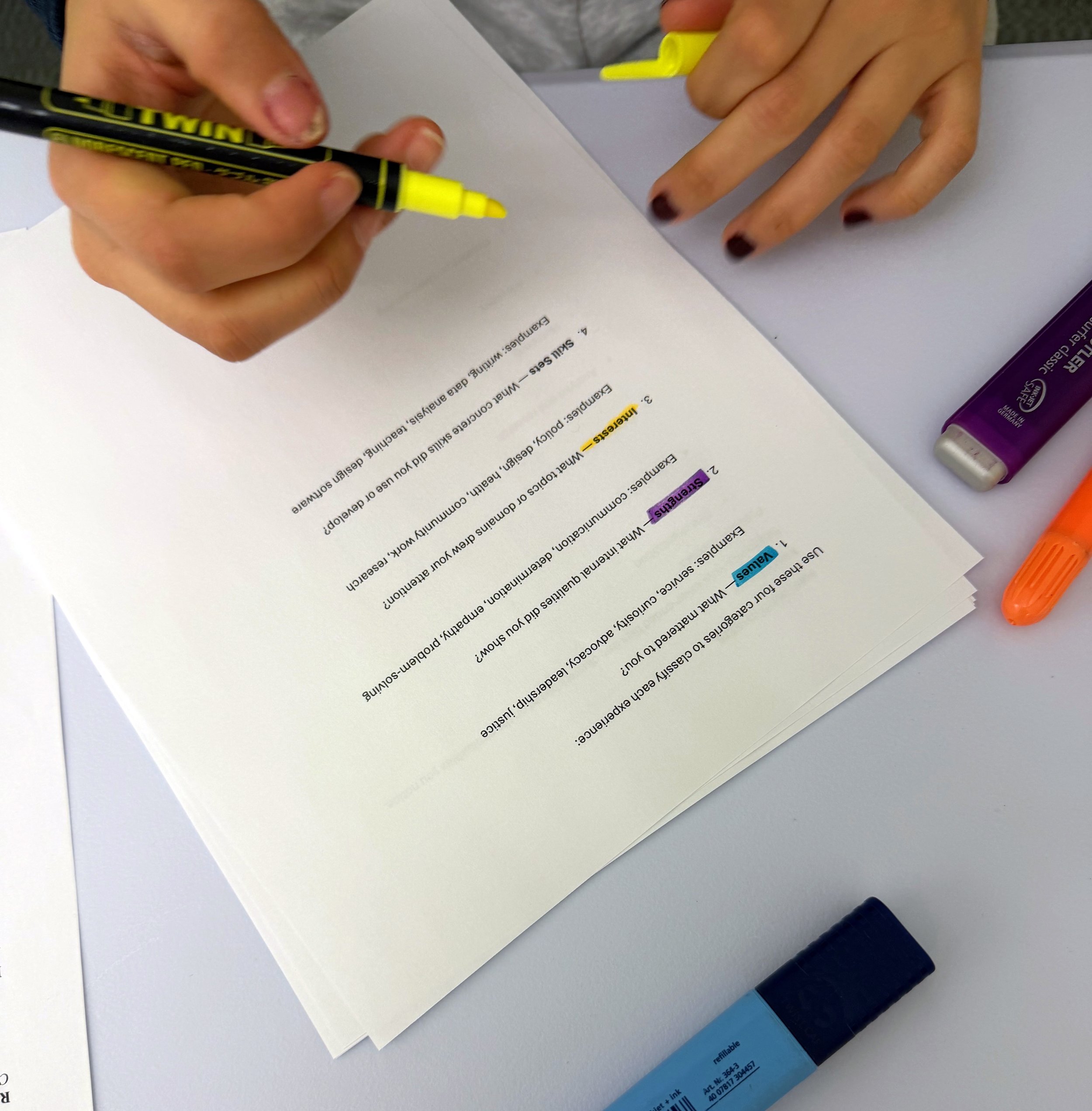
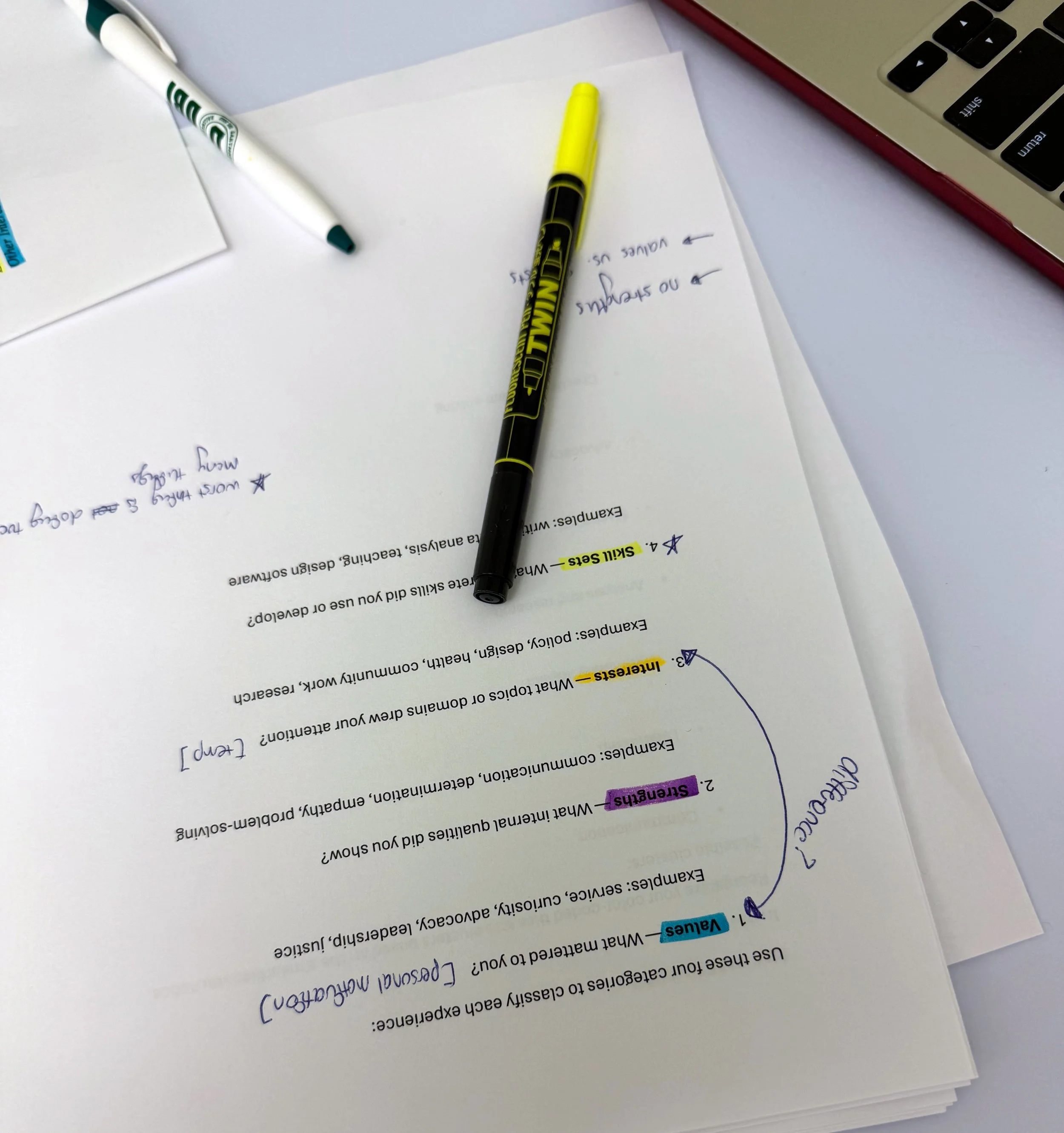
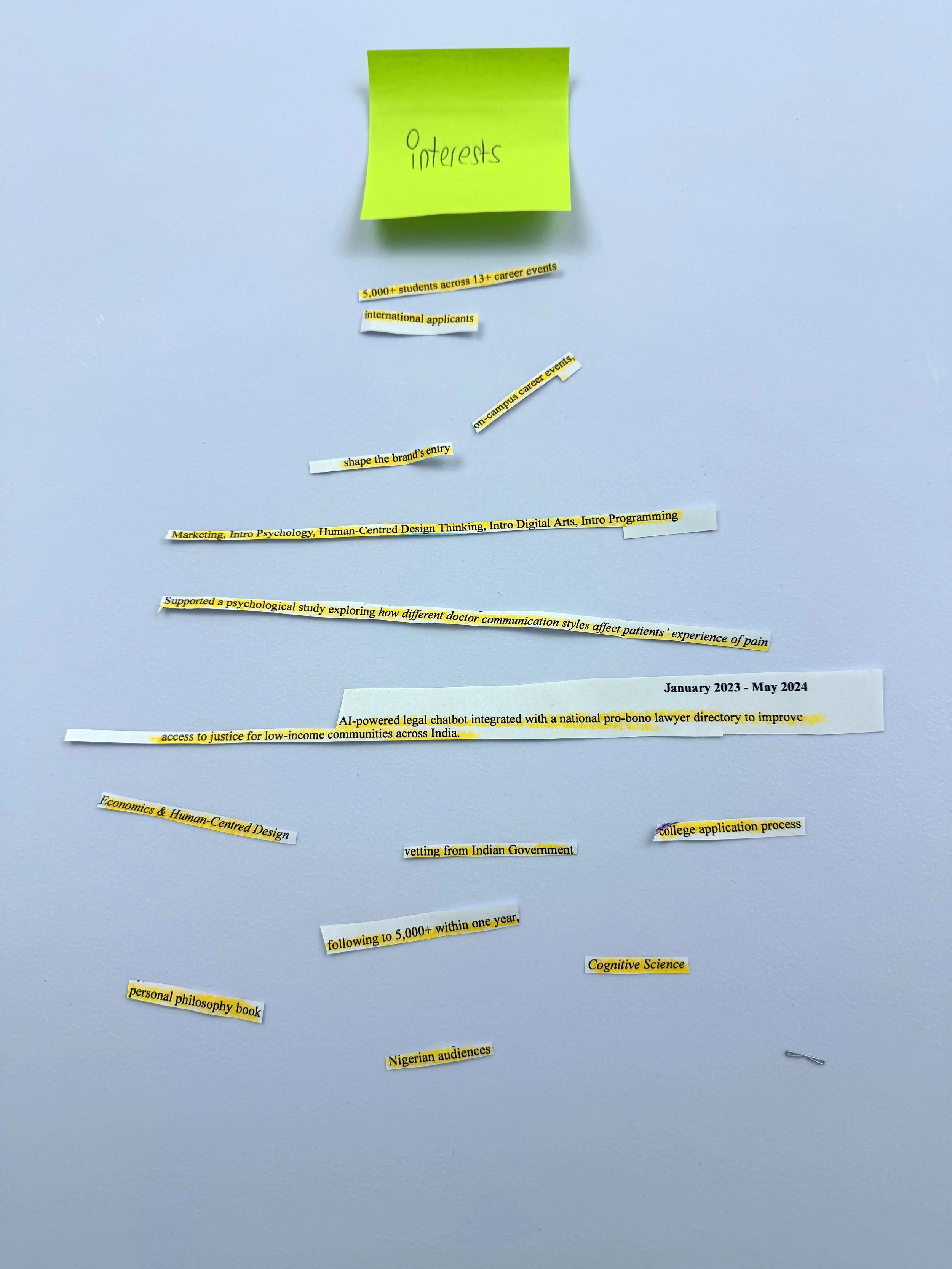
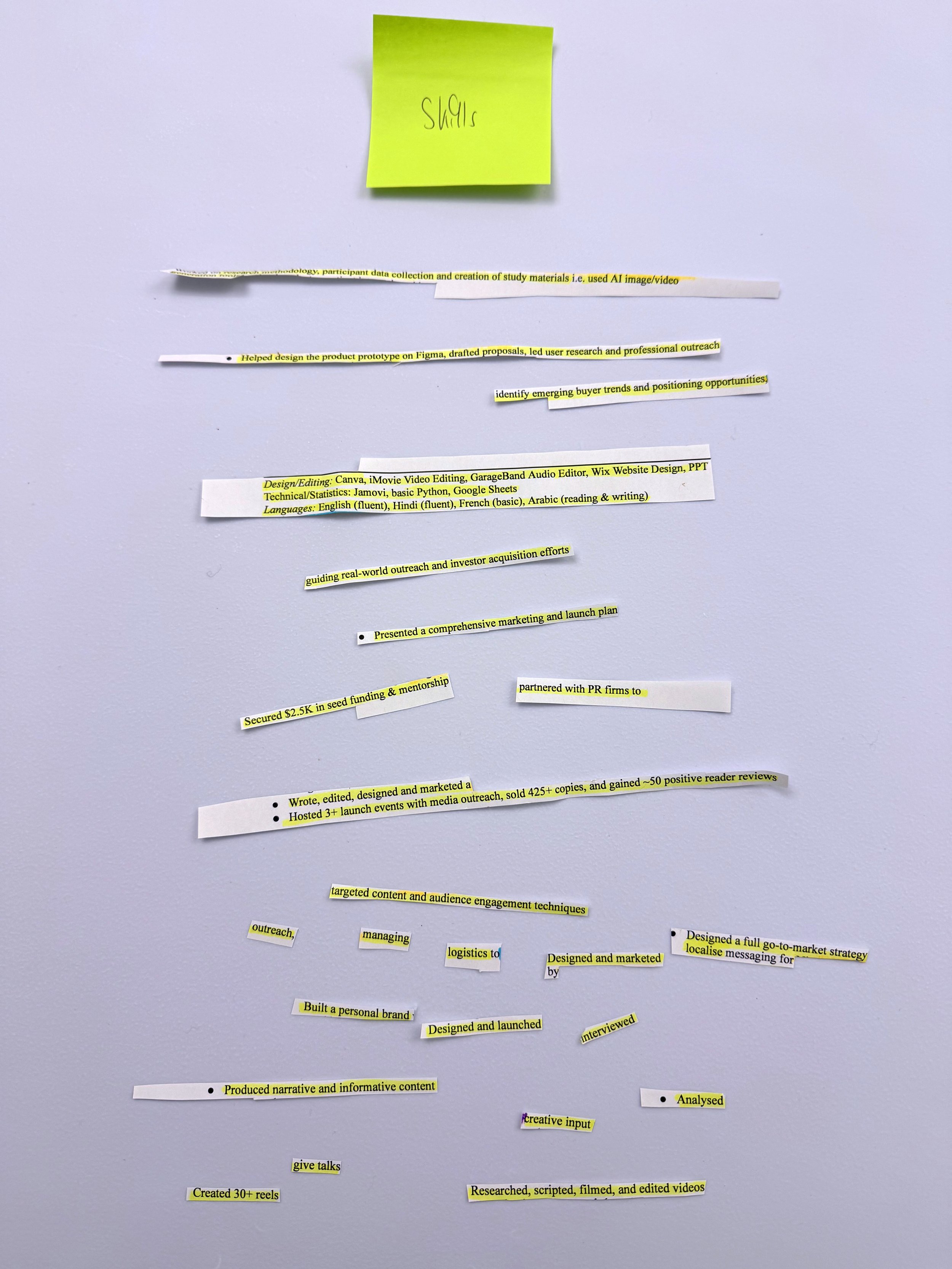
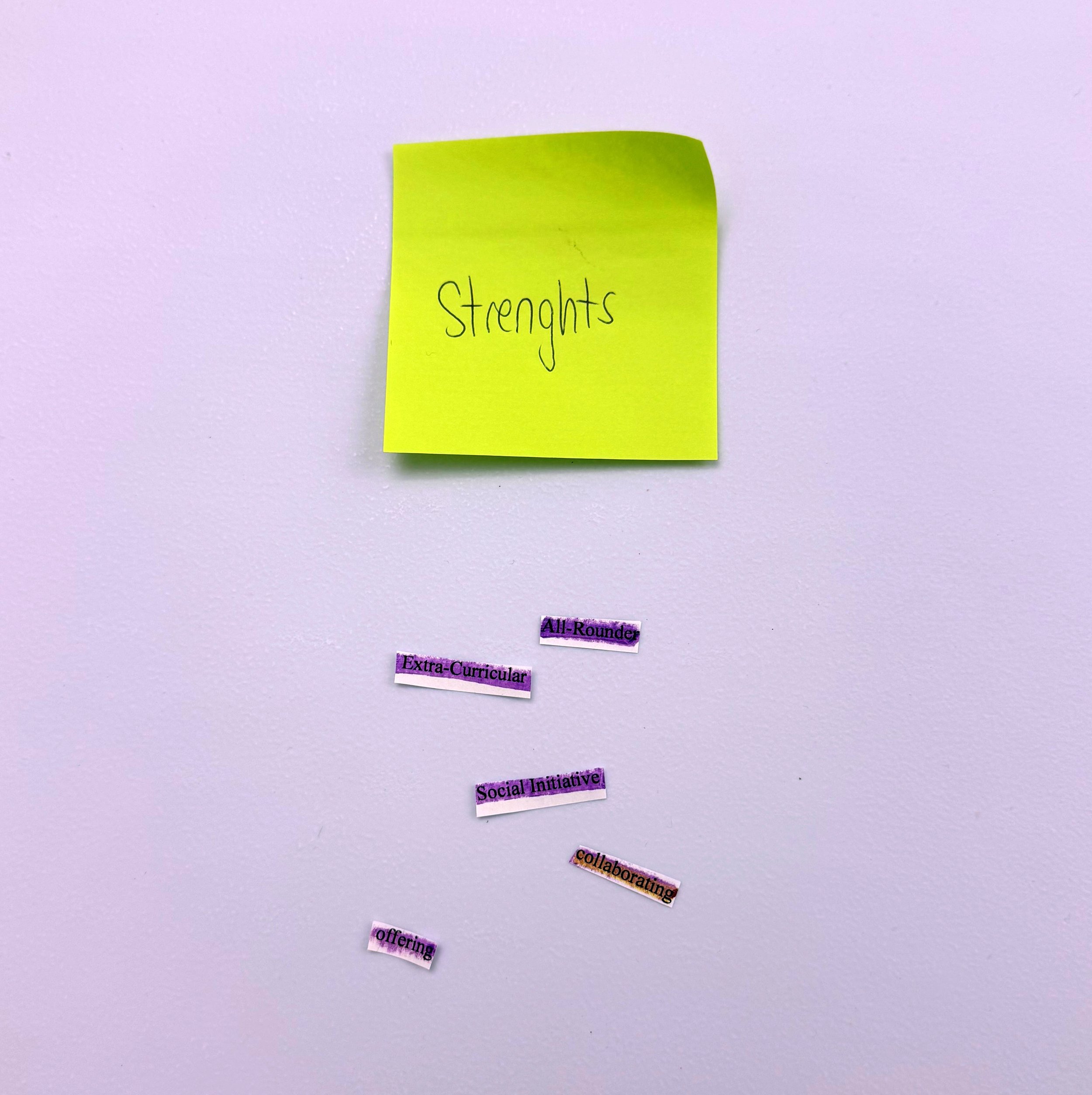
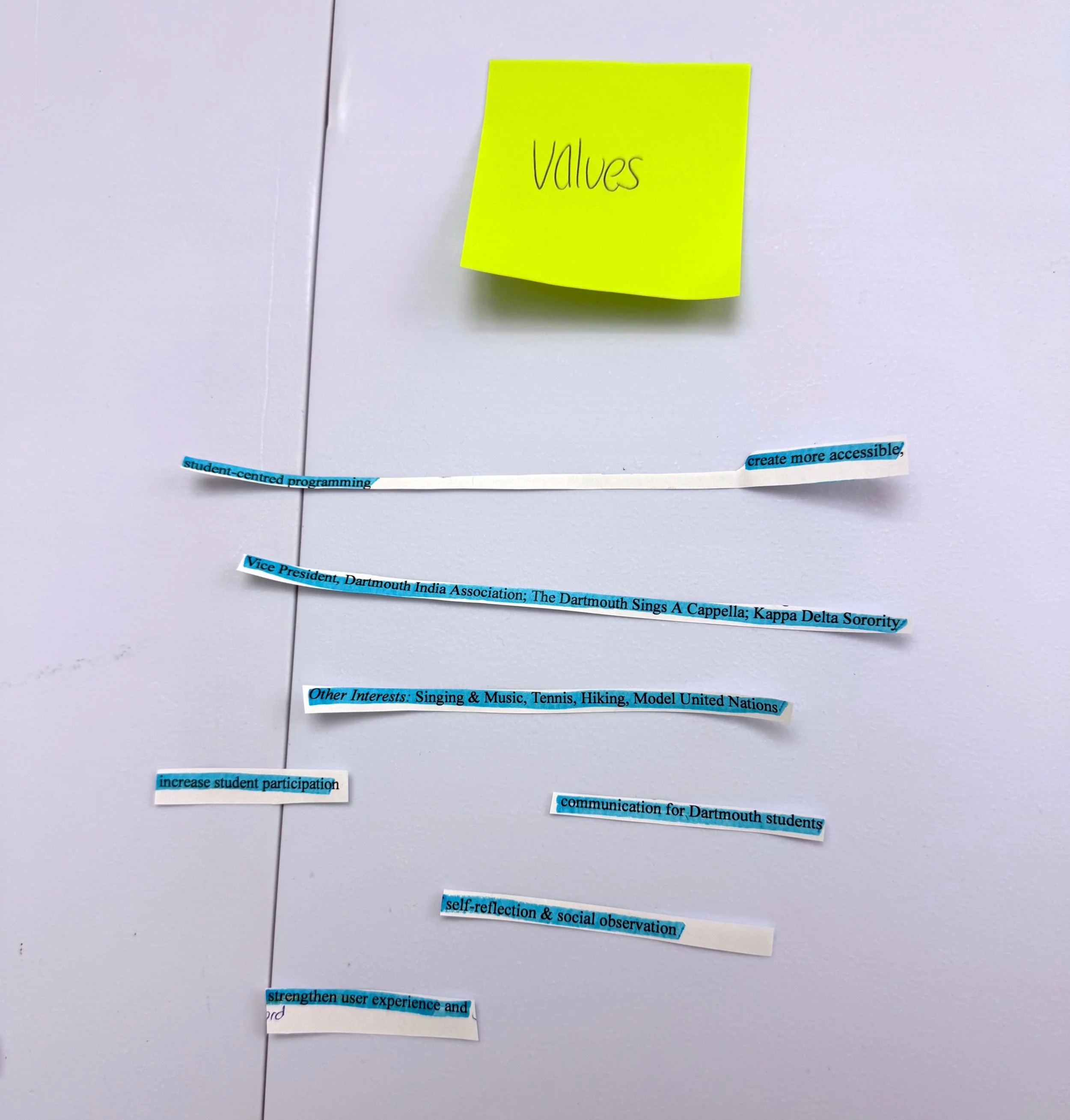
Each piece is sorted into one of four interpretive lenses: Values, Strengths, Interests, and Skills.
This step exposes early identity blind spots.
One student observed:
“I realized there are almost no strengths here… everything is skills.”
Phase 3: Pattern Discovery
Students cluster and reorganize tiles to reveal themes, tensions, and through-lines that are not evident when experiences remain in linear résumé format. Visual grouping makes patterns intelligible and contradictions explicit.
Phase 4: Dialogue and Interpretation
Structured, reflective dialogue supports deeper meaning-making. Students explore why patterns matter, how specific experiences shaped them, and what motivations underpin their decisions. This interpretive step transforms arrangement into insight.
Phase 5: Narrative Construction
Students distill their identity narrative through a sequence of compression exercises—first a paragraph, then a single sentence, and finally one conceptual word that captures the essence of their emerging identity. This final articulation becomes the anchor for future storytelling in interviews, applications, and personal reflection.
Fragmentation
Breaking experience into smaller pieces.
Categorization
Sorting pieces into meaningful groups.
Pattern Discovery
Seeing themes and connections.
Dialogue
Interpreting patterns through reflection.
Narrative
Compressing insight into a coherent story.
Before: Linear Résumé
Experiences listed in sequence Hard to see connections Overwhelming and fragmented Focus on tasks, not meaningAfter: Identity Map
Experiences grouped by themes Patterns and connections visible Meaning becomes clear Coherent identity emergesDialogue as a Designed Interaction
Dialogue in the Identity Mapping Studio is not incidental; it is deliberately designed as part of the system. Rather than casual conversation, students move through a sequence of reflective prompts that help them interpret what they see on the page or table:
Core Reflective Questions
Why does this experience matter to you? What patterns do you notice across these tiles or roles? What tension or contradiction appears here? What connects your choices across time?These questions invite students to move beyond description into interpretation. The structure of the dialogue supports clarity, builds trust, and allows students to name motivations and themes that often remain unspoken. In doing so, it enables more accurate self-representation and helps students rehearse how they might talk about their identity in real-world contexts such as interviews, applications, and conversations with mentors.
What Students Do in the Studio
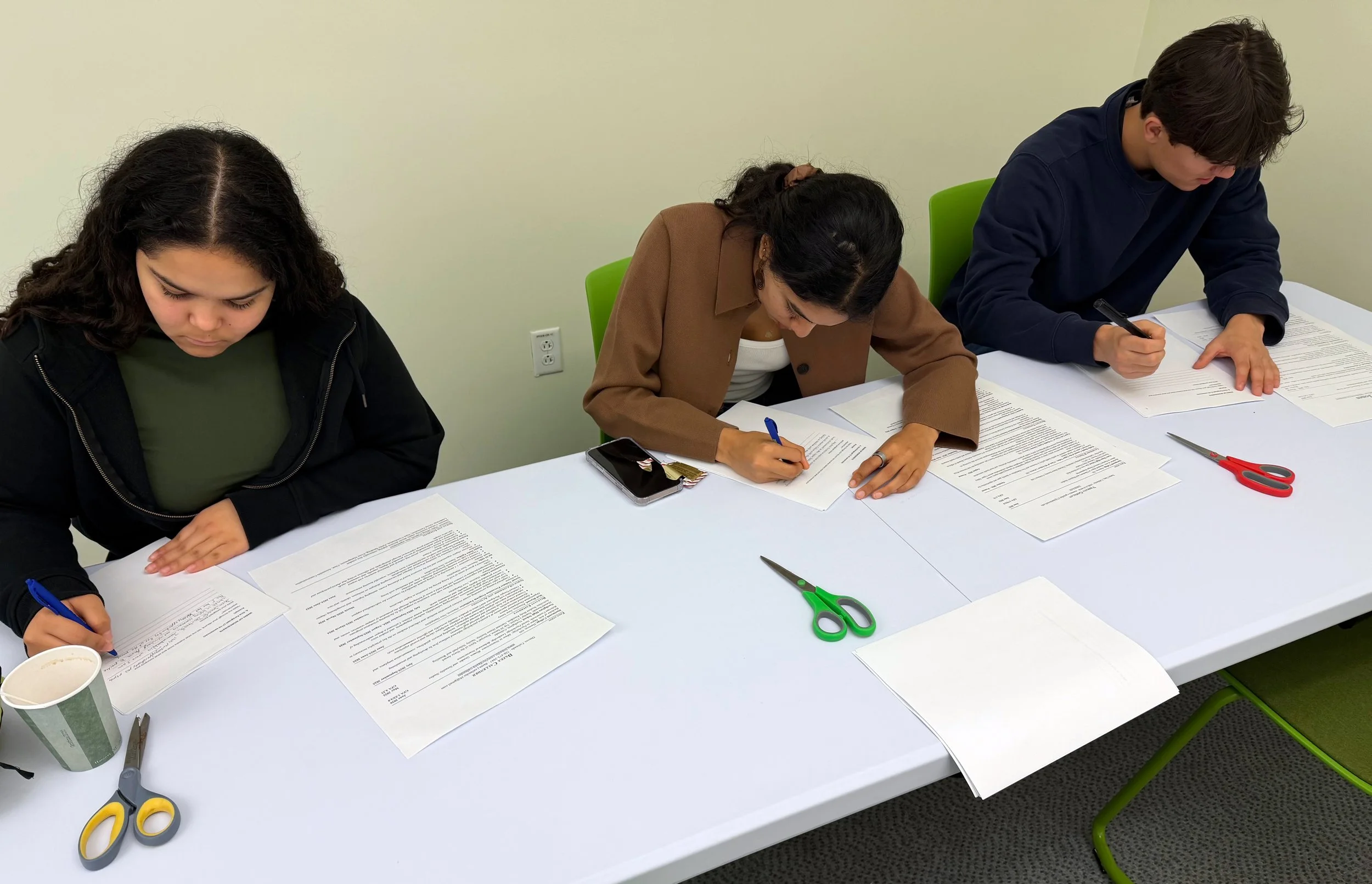
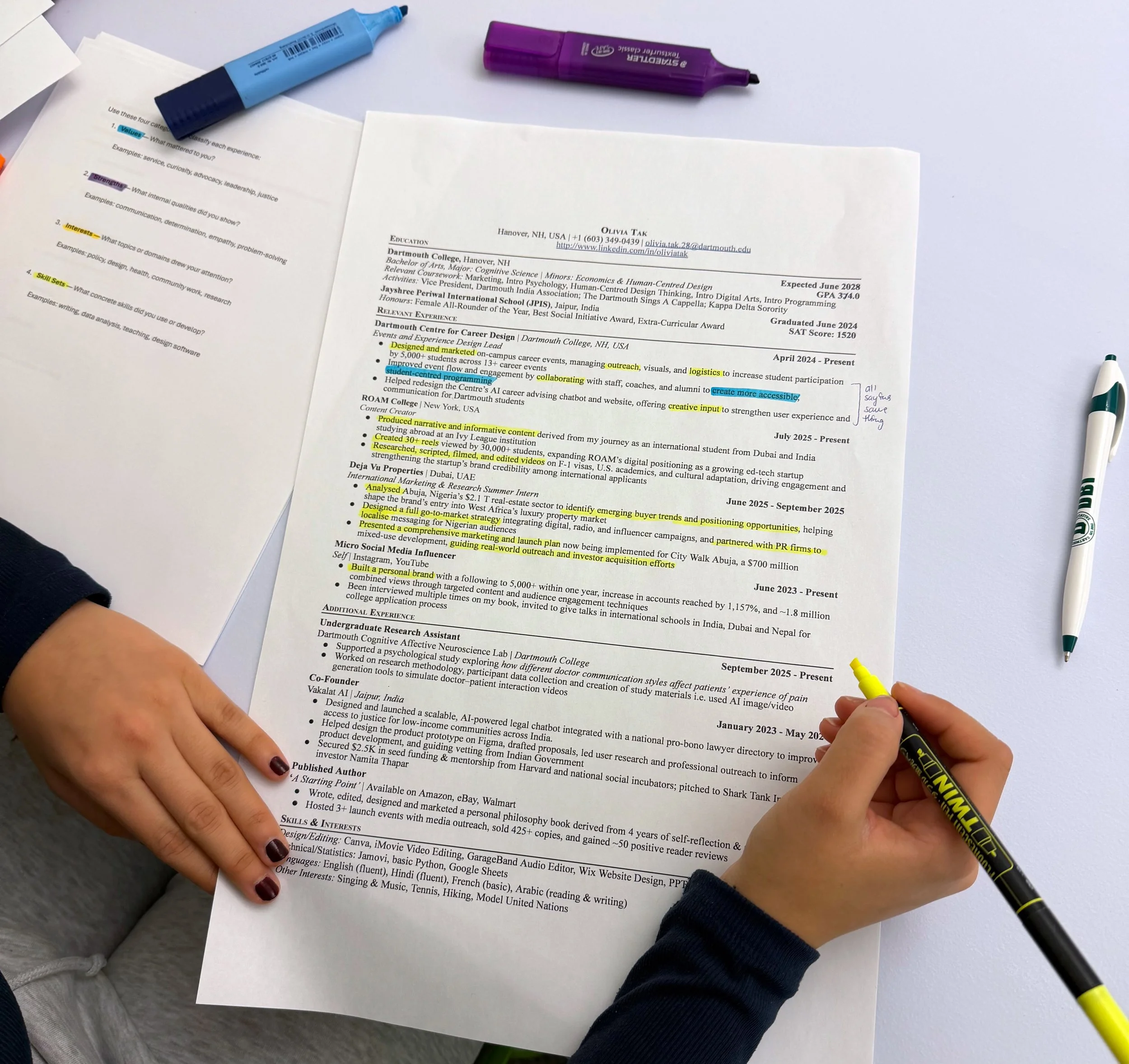
Students work with identity as something they can move, sort, and shape. The studio creates a hands-on environment where scattered experiences become visible and thinkable through material interaction. As they handle the pieces of their résumé, students slow down, notice patterns, and discover meaning that is hard to access through reflection alone.
In the studio, students engage by:
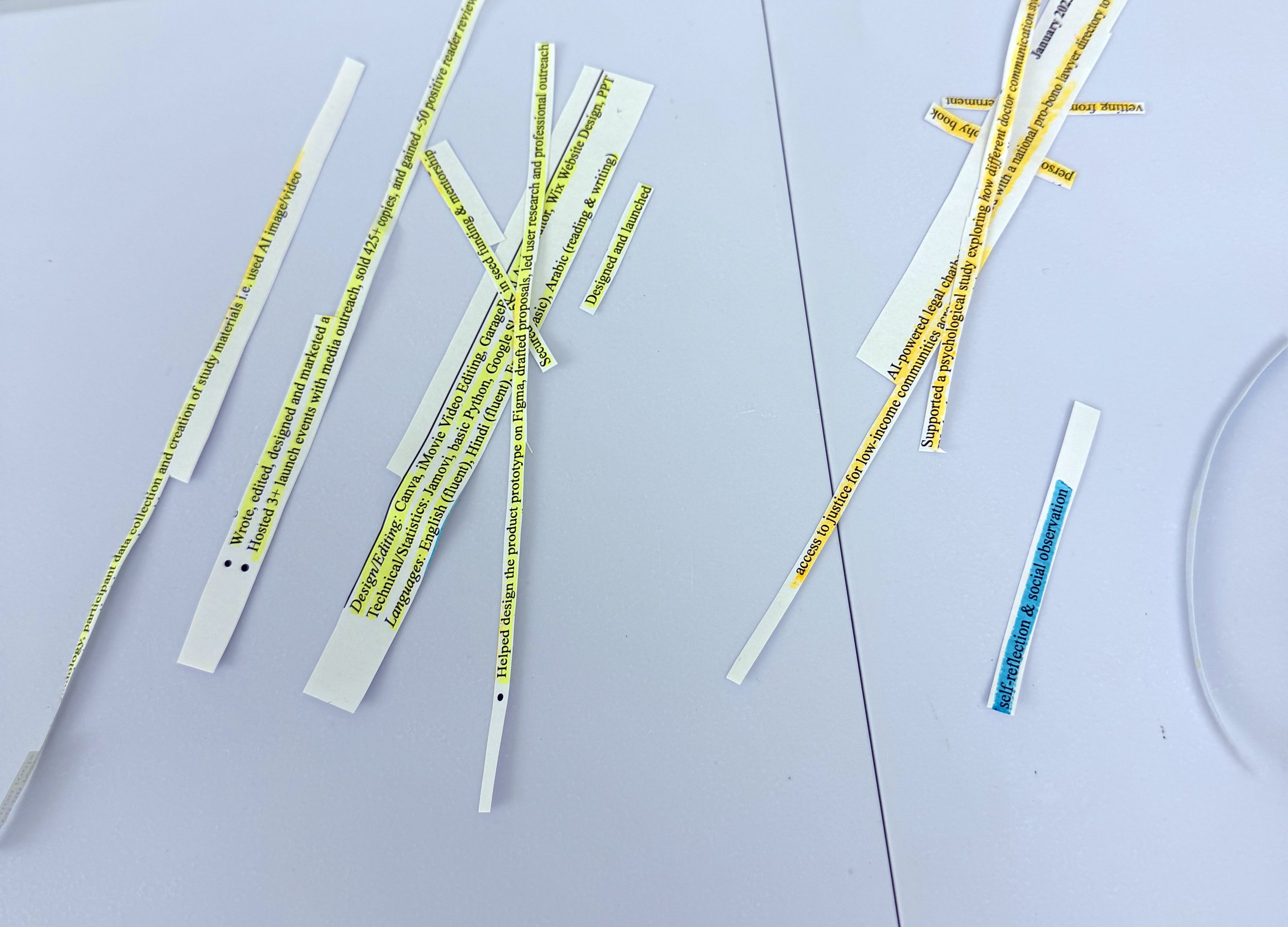
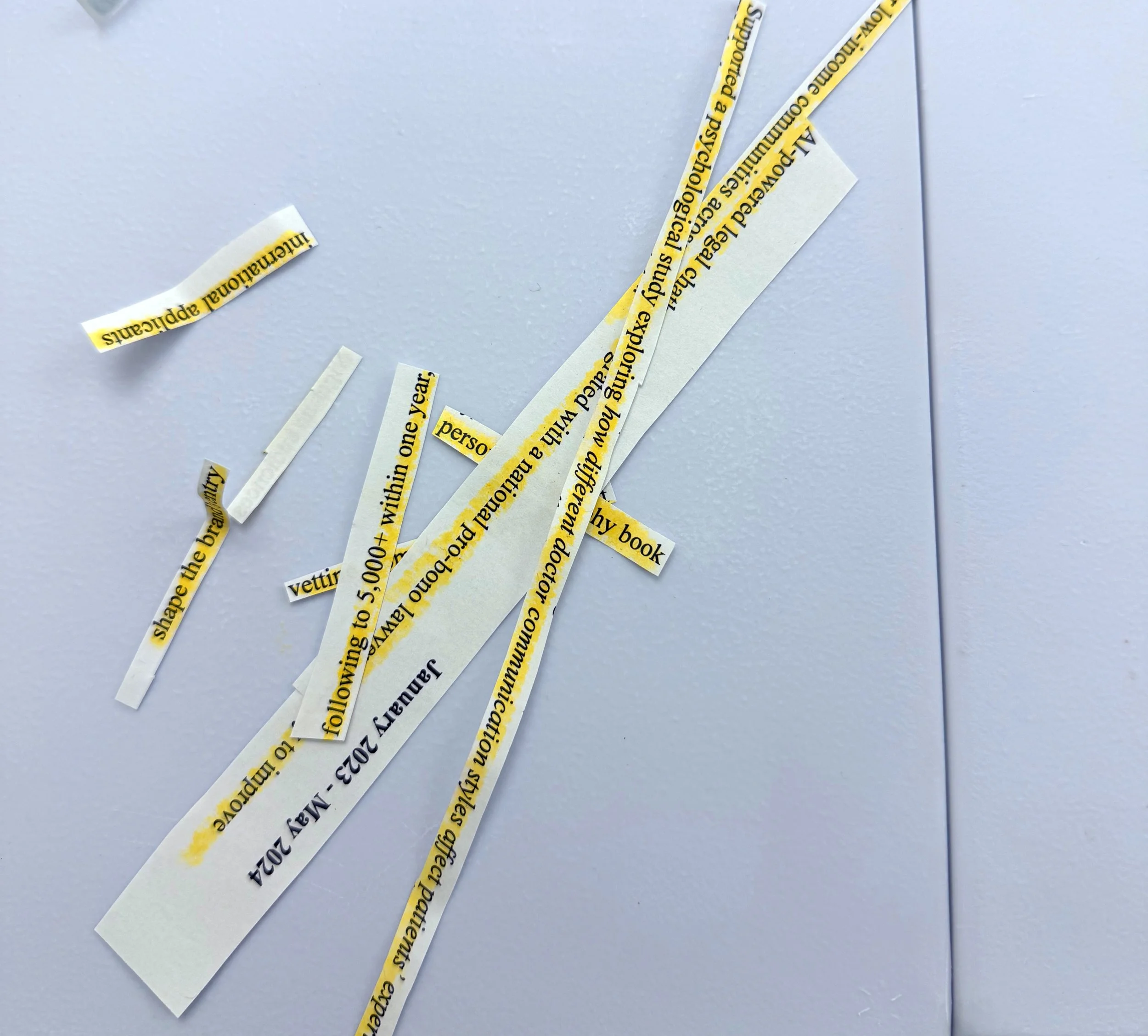
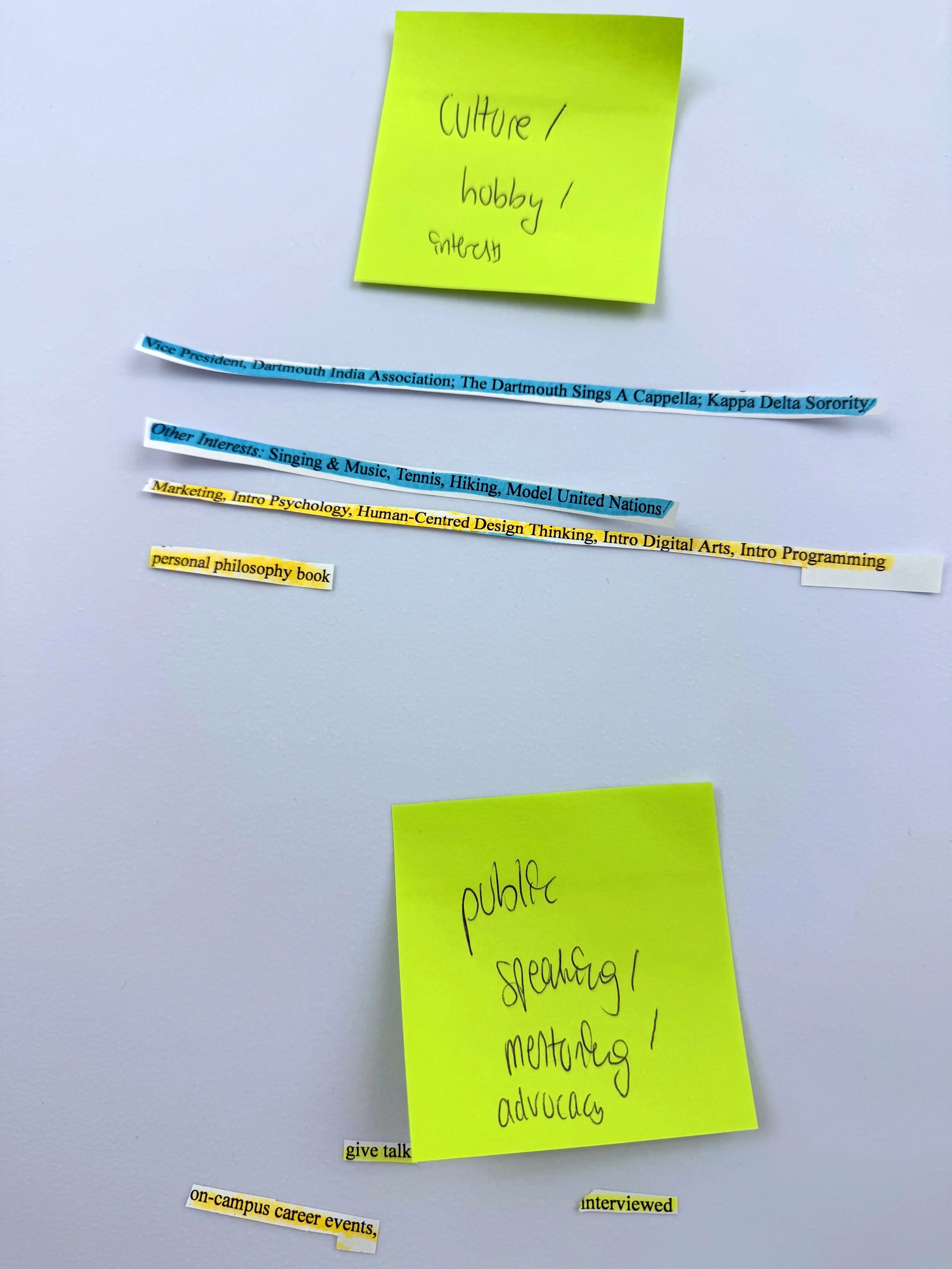
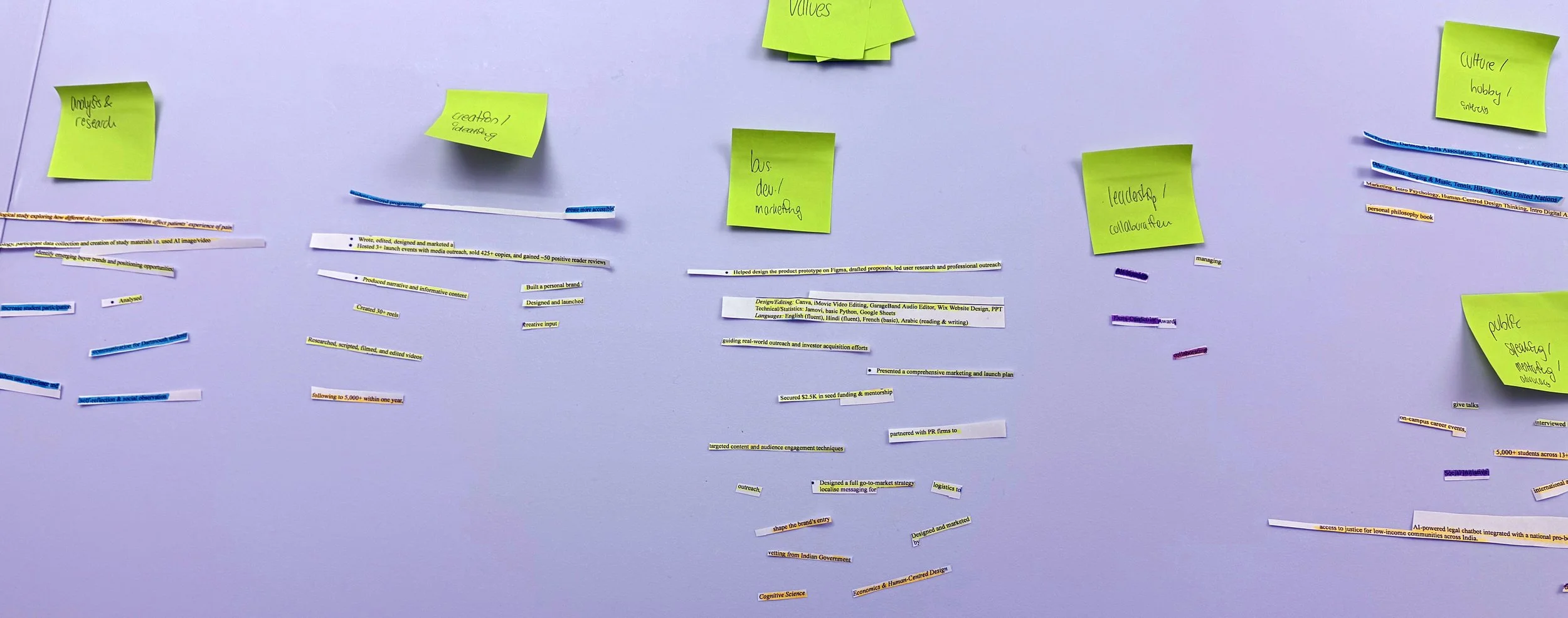
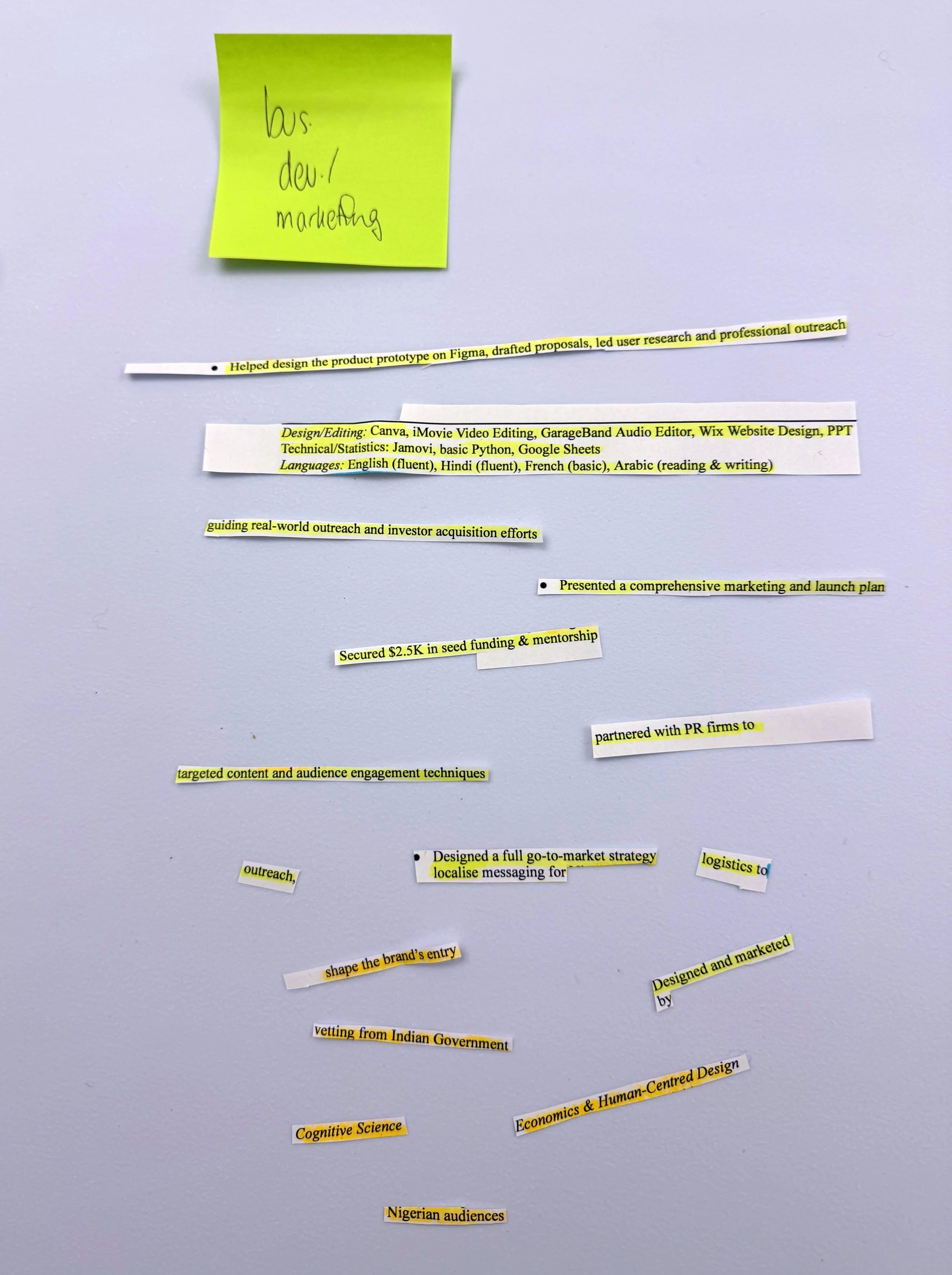
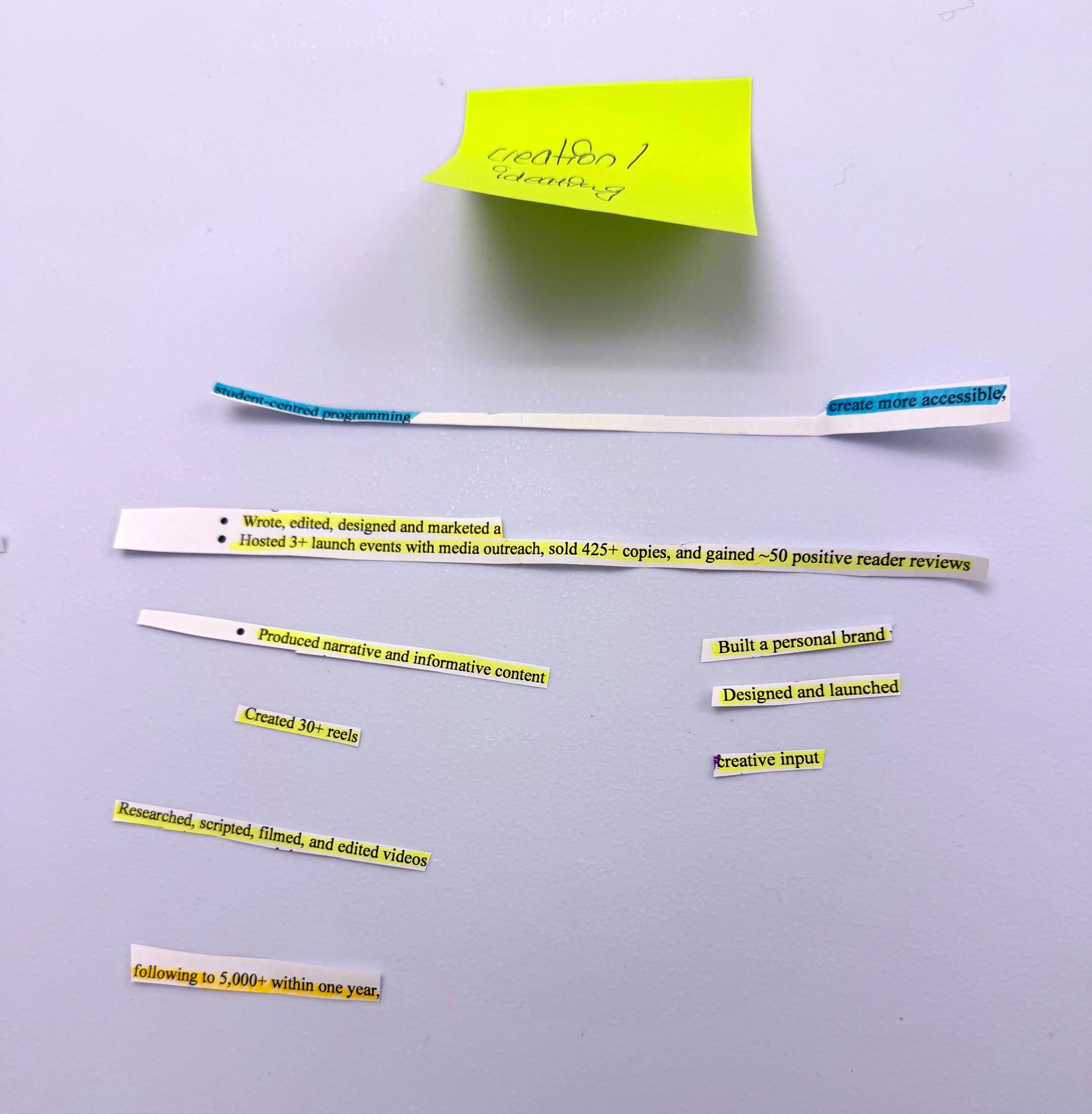
Cutting their résumé into discrete, movable lines
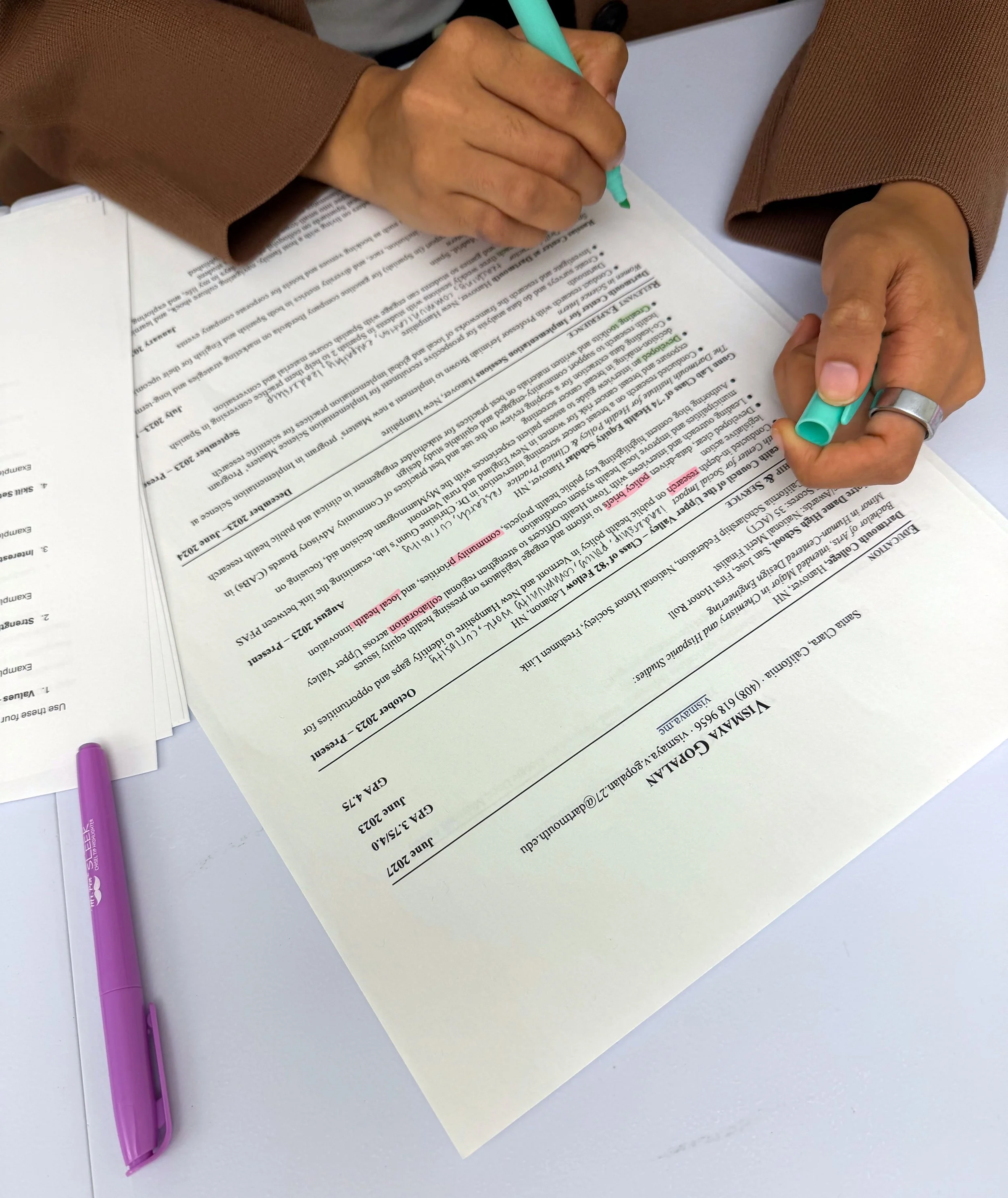
Color-coding experiences to indicate values, strengths, and themes
Clustering related phrases into meaningful groups
Reorganizing tiles to test different interpretations
Writing short summaries to articulate insights
Naming the conceptual identity that emerges
Design Principles
Narrative by Design is grounded in five core principles that shape how students make sense of their experiences and construct identity.
Spatial Reasoning
People understand identity more clearly when they can move and arrange its components visually.
Cognitive Offloading
Externalizing experiences reduces mental load and transforms abstract memories into workable materials.
Pattern-First Interpretation
Insight emerges from clustering and rearrangement rather than introspection alone.
Narrative Distillation
Reducing a story from paragraph to sentence to a single word reveals the essence of a student’s identity.
Trust Through Structure
A predictable, scaffolded sequence reduces vulnerability and creates psychological safety.
Emergent Themes from Identity Mapping
As students externalize, sort, and reorganize their experiences, shared identity patterns begin to surface. This thematic map visualizes the core themes that consistently emerged across multiple student sessions during the identity-mapping process.
Mentoring &
Supportive Leadership
Communication &
Teaching
Creativity &
Self-Driven Creation
Problem-Solving &
Systems Thinking
Value
Blind Spots
Identity
Contradictions
Student Case Studies
These examples illustrate how individual students reached clarity through externalization, pattern recognition, and reflective dialogue. Each case represents a distinct pathway through the identity-mapping process and demonstrates how the system supports deeper understanding and more coherent self-expression.
Student Case Studies
These cases illustrate how different students arrived at clarity.
Case 1: Elena
“I was lonely as a child… that’s why I care so much about community now.”
Elena articulated her core motivation for community building by synthesizing disparate childhood memories.
Case 2: Marcus
“I thought I was just observing, but I was actually reflecting.”
Marcus moved from passive observation to active reflection by identifying patterns across his visual tiles.
Case 3: Maya
“It’s not just coding; it’s applying technology to real human problems.”
Maya refined a generic interest in "solving" into a specific intersection of technology and human needs.
Case 4: Kai
“I thought I was lost in the details, but I’ve been building a foundation the whole time.”
Kai discovered a hidden structural framework linking interests he previously viewed as scattered.
Data Summary and Key Insights
Across more than thirty student sessions, students consistently reported a clearer understanding of their identity narratives after completing the mapping process. Using simple pre- and post-session check-ins on a 5-point scale, students rated their clarity about how their experiences fit together. On average, these self-ratings increased from 2.1 to 4.4, reflecting a noticeable shift from uncertainty to clarity.
In addition to these quick check-ins, students produced written reflections and identity maps that together generated more than 120 distinct insights. Reviewing these materials revealed recurring themes across participants, including mentoring, communication, creativity, problem-solving, value blind spots, and identity contradictions.
Taken together, the numbers and written reflections show that when students externalize their experiences and reorganize them visually, they tend to see clearer connections, articulate their motivations more confidently, and identify strengths they had not recognized before.
Before and After
Students often enter the studio unsure how their experiences connect. As one student reflected, “My résumé looks random. I don’t know how these things connect.”
After reorganizing their experiences visually and synthesizing insights, a coherent identity begins to emerge:
“I’m driven by mentoring, communication, and creative problem-solving. Everything I’ve done reflects that.”
Identity maps make this transformation visible—helping students understand not only what they’ve done, but why it matters.
Before: Fragmented and Unclear
Students often begin with experiences that feel disconnected and hard to explain.
“My résumé looks random. I don’t know how these things connect.”
Experiences appear as a long list without meaning
No clear narrative throughline
Anxiety about how to introduce themselves in interviews
After: Coherent and Grounded
After mapping and reflection, a clear identity structure begins to take shape.
“I’m driven by mentoring, communication, and creative problem-solving.”
Experiences cluster into a few meaningful themes
Stronger recognition of values and strengths
Greater confidence in presenting their story
Learning Outcomes
Students leave the Identity Mapping Studio with a clearer sense of who they are and how to communicate that identity with confidence. The process not only clarifies what matters most to them but also strengthens their ability to translate reflection into language they can use in interviews, applications, and academic or professional conversations. The outcomes reflect both internal insight and practical communication skills.
Coherent Narrative
Articulate a clear narrative throughline that connects their experiences and motivations.
Recognized Strengths
Identify strengths they previously overlooked or struggled to name.
Values vs. Interests
Distinguish more clearly between what they value and what they are simply curious about.
Compelling Introduction
Rewrite ‘Tell me about yourself’ with clarity and confidence for interviews and applications.
One Sentence & One Word
Compress their identity into a one-sentence and one-word structure that captures their core.
System-Level Implications
Identity mapping operates not only as a reflective practice but as a designed system with broader implications for how people understand themselves, how technology can support reflection, and how groups make meaning together. When identity is externalized into a visual structure, new possibilities emerge—both for individual insight and for the design of tools and environments that scaffold clarity, dialogue, and shared understanding.
Below, the accompanying visual highlights three system-level extensions of the work: how identity maps mediate reflection, how their structure suggests future sociotechnical applications, and how the method can scale to collective contexts.
Mediated Meaning-Making
Identity maps create reflective distance and support clearer interpretation.
Sociotechnical Potential
Visual patterns suggest opportunities for future digital and computational tools.
Collective Applications
The structure scales to group settings and shared meaning-making.
Closing Reflection
Narrative by Design embodies my belief that clarity grows when people have the space, structure, and support to reflect on their lived experiences. By externalizing identity and engaging with it actively, students begin to see themselves more honestly and communicate their stories with confidence and intention.